
Innovation Without Disruption: Balancing Growth, Cost & Strategy
About this episode
Paul's been a senior exec at DHL, CEO at Converger, and now owner and CEO of Dataline. The thread across all of that: how do you innovate inside an existing business without breaking the parts that already work?
We talked about why most innovation efforts inside established companies fail, when buying growth makes more sense than building it, and how leadership style needs to shift across business phases. Plus how Paul thinks about exit timelines and aligning strategy with what he actually wants out of the next five years.
What you'll learn in this conversation
- Paul Bellette's transition from corporate executive to business owner and CEO
- Why innovation often disrupts rather than accelerates business performance
- How to innovate close to your core without breaking BAU
- The trade-off between growth, profitability, and risk
- Why cost discipline can dramatically increase business value
- How leadership style must change across different business phases
- When acquisition-led growth makes more sense than product innovation
- The importance of aligning strategy with personal and shareholder goals
- How CEOs should think about exit timelines and valuation
- How to decide what not to invest in as a leader
Paul Bellette
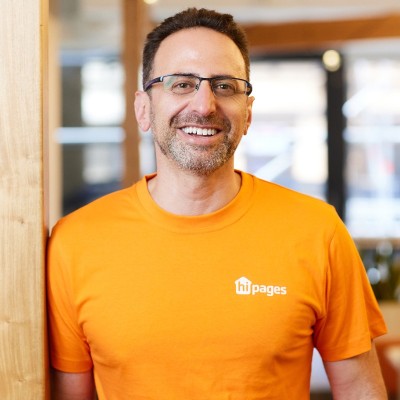
Paul Bellette is the Owner and CEO of Dataline. His leadership journey spans senior roles at DHL, CEO of Converger, and ultimately to becoming Owner and CEO of Dataline. He draws on decades of experience across large corporates and owner-led businesses, with deep expertise in innovation, cost control, and growth in small to mid-sized organisations.
Dataline
Dataline is an Australian technology company specialising in finance and process automation, helping organisations improve efficiency, visibility, and control across core business operations. Under Paul Bellette's leadership, Dataline has focused on disciplined growth, operational clarity, and innovation aligned closely to its core capabilities.


Full transcript
Read the transcript
But why is it that you still get it wrong? And I think we're working on some stuff that says what sort of personality are you? How do you align with the job? How do you align with the company culture, which is a big thing? And is that alignment a fit both for the candidate and for the employer? So, this is core to an interest that I've had. And and I know I've got it wrong so many times. People, not technology, decide the success. selling and checking in with your existing customers and partners, trying to get them to adopt. So, you're not trying to reinvent a new company, spend thousands of dollars on marketing, sales, lots of salespeople, all that sort of stuff.
You grow close to your core, you sell close to your core, and you probably wire some companies that fit well with your core. Running a business can feel lonely, especially when the decisions get heavy. Welcome to CEO Rispro [music] by Sora Jane. practical insights from the boardroom and the meditation cushion. I'm sorry. I've done 10,000 hours in three major parts of my life. I spent 10,000 [music] hours being a CEO, 10,000 hours being a board member, and 10,000 hours meditating. What we're going to do in each [music] episode is really unpack a real business challenge that a CEO is facing and see if we can work through it together. Enjoy. Hi, good day guys. Welcome to another episode of CEO Whisper.
Today I've got Paul Blet from Dataline. Do you want to tell us a bit about yourself?
Yeah, sure. Uh, I've been with Dudline, um, owner and CEO for 5 years. Uh, before that I was CEO of a company called Kim Berger, uh, which is now Canon business services and, uh, before that I was in DHL for about 16 years and senior roles around Asia and Europe and Australia.
Perfect. So, the way we run this podcast is we talk through a business problem that you're having right now. We try to workshop that together. Yeah. So, so what's top of mind for you?
Well, I think Dline is been around for 30 years and it's gone through different waves of growth and innovation. So, one of the one of the real challenges at the moment is is looking for that next innovation and doing that without stifling any growth or causing any issues in the business. And how do you get that balance right and what sort of innovation do you do you go after?
So, it's kind of like how do I innovate and not disrupt BOU? Yeah, that's exactly right. And also,
you know, where do you you know, where do you go for that innovation because there's there's lots of ideas, lots of innovation around, but you in a small mediumsiz business, you can't really afford to get it wrong too many times, right?
Yeah. I mean, you can't do everything. Yeah. Okay. So, how do I innovate and not disrupt BAU and then and what do I do, right? How do I pick what's going to work?
Okay, perfect. Well, tell us a bit about the backstory. So, how did you get from DHL to your first CEO role at Convert? Tell us a bit about that story.
Um, yeah, I was probably mainly in commercial roles um looking after um sort of large organizations sales and then I was I was connected with um a guy in DHL. He moved he moved into converger as the CEO, tapped me on the shoulder and said, "Would you like to come along?" Um and we were doing lots of innovative things and growing that business. So he pulled me in there again on sort of the solutions commercial side. Then after a couple of years in that role, the opportunity to be CEO came up
and so took on that took on that role.
And what was your role before being CEO at Converge? What was your
uh head of commercial, head of solutions?
How was that transition going from head of commercial to CEO?
Yeah, I think I think you've sort of if you've gone head of commercial, head of sales, you you should have the sort of sales part down pat. It's it's all the other dynamics of of a business, right? You've got all of the HR side, the people side, the financial side. Luckily, I'd had quite a lot of exposure to that through my career and um so I was I was reasonably okay with it. But yeah, it was a good learning curve through that um and understanding the importance of cash flow, investment, getting getting the right people in the business. Um the culture of the business aligned with those people. Um, so there's a lot of learning there, but that was that's all part of a great great opportunity.
It's always it's always double-edged sword going internal to become the CEO, right? In one scenario, you know the business, you know your area, so that's one less thing you have to learn and hopefully you've done that well. That's why you got offered this role. The other harder part is you have all these guys that you're their peer and then suddenly you become their boss.
Yeah.
How did you make that transition?
Oh, you get rid of all of them. No, I mean it's unfortunately there's a bit of truth in that in the sense that A lot of people don't don't cope with it and a lot of people do and the ones that can't cope with it
and usually and what do they do? Like how do you tell someone's not coping with that kind of
um power change?
They sort of struggle with your decisions and um a lot of push back or they don't follow through on those decisions. So you've got to then sit down and say what's the issue and you know usually I thought I would have got the job or or or I don't like the direction you are taking the company and you got to be steadfast with your conviction if you believe that you're in the right direction you're going in the right direction and this is going to be good for the company again you've just got to get you know there's the old saying is get the right people on the bus and and then get them in the right seats and and that's what you got to do because if people aren't all in the right direction it won't work and you sort of Just got to have that honest conversation.
If you're not engaged, if you're not connected, you don't like my me or my style, then
was your direction different to the prior CEO?
Uh yeah. Yeah, it was pretty different.
It was a pivot.
Yeah. Look, I think previous CEO was Brian and uh excelled at DHL. He was fantastic boss. Very innovative, very sort of market driven, moving moving direction a lot. We had sort of when I took over, we had a bit of a different objective. the current owners were looking to sell within a year or two and I needed to get the business into shape for a sale process and uh and then sell it and then sort of get that transition going. So it took a different different approach and that's the thing about businesses different times different approaches different CEOs are required at different times and and so for me it was about not so much um lots of things happening lots of money being spent.
It was about how do we how do we get direction, how do we get focus and how do we um start making good money so we can get a good return for the shareholder. So that would have made you very unpopular, right? Because you would have been the guy that was running around killing every project.
Yeah, I think so. I mean um
yeah, I mean a lot of people um do like that sort of innovation. Um
well, people like spending money, right?
Yeah. Spending money without any too many worries. And yeah, I think I think a lot of the people were okay, but and they probably sort of thought, hey, I mean, it wasn't that the business couldn't make money. was the business was spending lots of money on different things. So, but yeah, pulling that back, if you were one of the things you were getting spent the money on, you probably weren't too happy.
And then I imagine cuz if you're looking to sell, you got to maximize profit over the next 12, 18, 24 months, whatever the time horizon is.
But then all of a sudden, every cost gets scrutinized.
Yeah.
Um which I'm guessing maybe prior when it was more probably a growth story, that probably was not much of a focus.
No, that's right. We had to a lot of the managers had to get a lot of learning about the P&L, you know, and all elements of the P&L and spend and uh I know a lot of guys who I'm still good friends with that were in that time and they if they say anything, they sort of say they can read a P&L and they can know financially educated.
Yeah. The small small costs are important.
Yeah.
So it was
Did you have a partner in crime in your exec team that helped you do this or was it was it just you? No, I had a senior management team um and a couple of key guys um whether it was finance um operations that's a lot of where a lot of the money is um so
and they believed in the vision that you were
they believed in it they were on board and u helped execute. Yeah. So definitely that team the requirement of having that team there and being supportive was key. You couldn't do it on your own. So then did you do much innovation in in the last 12 to 18 months or was that cost out cost?
Um no I think that in my 5 years as CEO 10 years there in the five years CEO um probably that first couple of years it was cost out control um we successfully sold um for three times the amount they thought they were going to sell for. So everybody everybody was happy. Um, we then obviously had to integrate to the new owner. So that was another phase. Um, and we did a good good job at sort of probably staying separate.
How long was that integration period?
Well, it was probably a couple of years, but that was probably I I I did push back quite a bit because I saw a very large corporate taking over a a medium-sized business and I could see a lot of costs coming. So, so I sort of tried to keep it on its own and the CEO of of the company that bought us was supportive of that and then they decided to bring it together and you know I'm sure it's been successful but for us at that time was going to be too much of a change. So, so we kept it separate um still performed really well. Then we knew we had to sort of connect together and that was the time for really a little bit more innovation.
How could we bring these two companies together and jointly take to market new innovative solutions? And that's probably what we did in the last year or so.
Um cuz when you get bored by a big company like Canon, right, can business, you probably have insane amounts of funding for innovation. What kind of stuff did you guys do uh back then with their cash and or cash that you were generating that that worked?
Yeah. Um well I think we invested in a lot of technology and that was probably more practical technology upgrading type stuff into a pure solution new product we probably didn't do that too too much we did more like hey what's your product suite what's our product suite what how can they connect together and spent more on resources I suppose bringing those together from a sales marketing product what have you
did even historically like what kind of innovation did you find really worked in in these kind kinds of organizations?
Yeah. Well, I think I think uh
take more than one hand to count what worked.
Yeah. Um, what I I did find and from lessons of being under Brian who was very innovative to going to very cost orientation, I found that innovation that was a lot closer to your core worked really well. And stuff that was not too complex worked really well. And so um in a very innovative organization, we had ideas flying every minute and you just didn't know which ones to work on and which ones not to work on. So So I actually created this sort of simple matrix. I had sort of this thing about one degree of separation and sort of you shouldn't go much further than one degree of separation off your core business. And so I just sort of well if there's high either there's low complexity or high complexity either it's close to your core it's far from your core.
And so if you've got close to your core and low complexity that was a pretty good thing to make a bet on. But if you were far from your core and really high complexity you probably didn't want to do it. If you were far from your core low complexity maybe it was a different company. Maybe you sort of put an offshoot of three or four guys and get let them do it. Or if it was low uh close to your core but high complexity, it was still worth maybe investing it. So it was sort of getting close to the core, low complexity, that was the sweet spot and that was what you focused on and that seemed to work.
Was that evidence though in the results that that
Yeah. Yeah. I think even from my days in DHL that really worked. That's where I sort of start went back on my history and saw what what really worked in innovation whether it was converger whether it was DHL whether it was data line and when things were really quite attached to your core. So I'll give an example of those um in DHL someone came up with a thing called a jumbo box which just put your stuff into a box.
It's a big box.
Big box was pretty simple but it really worked really well. Then someone came up with a refrigerated box and that didn't work so well because you needed different equipment, you needed different cars, vans to deliver all these sort of things. So that you know wasn't wasn't as good. In data line what we found worked really well were in finance automation, people automation and um and the main thing we're doing was accounts payable automation. So if you could innovate around expense automation as an example, something we're working on at the moment is we've got all these invoices and you got all this data. What about procurement information insights? Like you've got all of this information about what people are buying at and if you could tell them if they're buying either from different branches at the right level or how does it compare their buying price compared to the market that seems to be taking traction because that's [clears throat] one step away but it's connected to the core.
So tell us about the story. So what made you finish up at Conver?
Yeah. Okay.
And cuz I want to understand like what why you finish up there and how did you get from there to data line?
Yeah. Um well um I think it was really large large corporate in Canon uh they were wanting to to bring the uh converter within in the group.
I sort of thought this is probably not for me. Um
you would have gone from a CEO to like a divisional head or something.
Yeah. So so yeah, you went you went from sort of
and someone else controlling your destiny is not fun.
Yeah. Running your own race to being more in a large corporate. There's nothing nothing wrong with it, but probably at that time in my career, I sort of thought it's probably not for me. Transition had worked quite well. Everybody was happy. The company was doing well, so maybe a good idea to go out and high. So, I just sort of thought, let's get out and, you know, I'd always wanted to run my own business, be involved in running my own business. I I then went to Nusa, which is sounds nice. So, I did a little few things up there. Um and uh and then sort of thought well I'll get back into my own business and I know Ken who owned Dline started Dline as a founder.
But what made you buy a business like instead of just being another CEO in another corporate?
Why did I buy one?
Yeah. Well, why why buy one instead of just being another CEO again? Maybe a large organization this time.
Yeah. I suppose I wanted to uh Well, there's probably a couple things there. when I I I wanted to um see the successes of of my labor, I suppose,
to get fairly rewarded for your efforts.
Yeah. Yeah. Um so,
but you can get that within a CEO of a large organization. Pick up script equity bonuses.
Yeah. If you negotiate that properly at the beginning. So, um yeah, as a learning, yeah, I didn't do that too well um when I was uh when I was in converger and we went through.
What was what was learning there that you didn't do as well? Well, um they the board came to me and sort of said, "Yeah, we're going to sell." And um I mean, I would say I shouldn't be too harsh on myself. They were owned by a government organization at the time. So,
constraints. Yeah.
They weren't about to go and pay, but I probably could have done some sort of incentive. Oh, and they thought it was worth this if I sold it for this.
Um would there be a bonus?
How come you didn't? Was it like stop trade? probably lack of knowledge sort of experience.
You said done it before.
Yeah. Um yeah, probably should have spoken to a few people or something.
And yeah, I suppose I am a bit old school. I came from sort of your work and you get paid without sort of really saying too much.
Yeah. Yeah. You had the you had the expectation of fairness, did you?
Yes. Unfortunately. [laughter] So I
it's one of the one of the 10 pitfalls of co negotiation is that you think if I just do a really good job they'll reward me.
Yeah. Yeah. And they didn't. So um so yeah look I think you just sort of
and then that made you think well the next co role that might happen again so I want to control my own destiny this time.
Yeah that's right. And I do often think if I'd gone into a large corporate CEO role I probably would actually be better off than I am if I negotiated the right uh the right thing. But but there is also something really um I don't know connected with you as a person and what you want in life when you run and own your own business. Um, and it's a bit hard to put into words sometimes, but it's it's just sort of you got a lot of risk going on, but there can be reward and it's I maybe it's achievement um uh satisfaction satisfaction achievement hopefully not too much ego and it's just getting getting that outcome.
But
do you think it's more that or do you think it's more the avoidance of the pain you experienced when you didn't get your fair cut?
Look, I'm not bitter about that much. I I sort of do did definitely take it on as a learning.
Oh, no. But but at the time like So how many years have you owned Data Line for?
Uh five.
So 5 years ago.
Yeah.
When you finished up, didn't get your fair cut. It is what it is. Life happens.
You you learned a fantastic lesson through it.
Yeah.
But owning your own business, making sure you got 100% of the economic reward this time.
Was it more about, hey, I don't want to be screwed again, or was it more about the achievement, growth? I think it was achievement and growth because of,
you know, when I was 16, I was in running my own business and doing little things. So, uh, now that I'm a little bit older, I still had that ambition. I never really did it. So, when I got out of the corporate thing, I thought, well, now is a good opportunity to give it a go. Um, and see how it will go.
And, and what what made the time right now, like 5 years ago, what why was that the right time? Not 5 years earlier or 10 years earlier. I think just things that happened in life. I was I'd been traveling in an international role for 25 years. Um and I thought well maybe I sort of refocus myself and um
just sort of try and get more life balanced etc. and uh try and bring back from a workaholic type stuff. Didn't really work.
No. I was about to say that often if you don't want to work a lot you go work for a corporate. Yeah.
You want to work a lot like you do your own business.
Yeah. Yeah. So, um so yeah, look, I think it was just lifetiming change. Um you know, we always go through these cycles, reinvent ourselves. Um yeah, you just you just wish um maybe you didn't have to go through the harsh lessons all the time, but maybe that's they need a CEO whisperer or something.
That's right. Touche. Or or or you can just tell your kids they won't listen to you.
Oh yeah,
you can pass the knowledge on. Okay, so you finished up at convert job. Um, you think about what do I want to do next? Yeah.
How did you pick data line? How was that?
Well, probably more circumstances than anything. Ken was looking for someone to come in and help him for a while.
How how did you find him?
We were sort of connected. The business was similar to what we done in converger and connected through some some contacts. Strangely enough, Ken used to actually originally come from DHL as well. So, we had some contacts there. So anyway, I went in there as a consultant and um we we sort of did a right and getting on
and and at this stage you had the mindset I want to buy business.
Um definitely I was looking for what's my next thing and um and then Ken was at that point just with some things that he was looking to perhaps sell.
Well, why did you let that organically happen, not practically go look at 30 different businesses and evaluate and run a bit of a
I had previously done that. I've done that a couple of times in my life. Um, and it's really hard to pick a good one, especially in
most aren't
in small, medium. Usually, there's a reason why they're selling. And so, it's very hard where this opportunity was. I got in there, learned it, saw it, and there were genuine reasons why Ken was wanting to to move from an owner. And so, I thought that this was this lined up pretty well. I had previously looked at a number and there were always opportunities at the time. there was a couple of opportunities to go in and do a turnaround and do this and do that. I'd done a couple of turnarounds. I'd have done a couple of other things. So, I thought um Oh, let's let's give this one a go.
Okay, fair enough. And how long were your consulting before you took over the business?
I think it was about a year.
So, you had you had a good year to understand it completely.
Yeah.
Um it's interesting that you pick something that was very close to your prior companies experience set because often I find they
people that go by business, they do one or two things. is either they pick something where the core economics are really good.
Yeah.
And it's unrelated to anything then they know or it's a company that does the same thing so they don't have to learn the industry as much.
Yeah.
What what what made you choose the latter or were the economics already very good in this business?
The economics were good. Um was wellrun. Uh was a really well structured business. Um very clean, you know, there was no no sort of hidden stuff. Um got to see it all from the inside out. Um people were trustworthy. So, so I think the economics were good and I knew it. I am a believer that you don't really need to know things because you can learn, but then you've got got to learn and you've got to get the economics right. So risk was quite low. I think that's one of the things that's definitely tested me is probably naturally risk advertent and risk adverse. Yeah.
Yeah. Averse, sorry. And um so I wasn't really, you know, I'm not I'm not I haven't got a million dollars worth of Bitcoin or anything like that.
It's probably a million dollars. these days. So, um, so I'm generally, uh, risk adverse. So, I I sort of wanted to push myself in that area.
But risking most people don't buy businesses, don't they?
Yeah, that's why I wanted to push myself. And, um, and but I could I got a good comfort feeling from that. Um, and that's that's one of the things you got to learn and know about yourself, right, is sort of um, you know, what do you gel with and what works for you? But why was that risk aversion something you wanted to push yourself in not just accept it?
Um cuz most people after their like they tend not to want to change cuz the habits are just too deep.
Yeah. Well don't want to go out with the world without giving it a go. You know you sort of you got to learning and testing you and that's sort of how you keep yourself young how you keep yourself thinking and um and really adapting. So way you know you sort of take these challenges and you find it you find these they can be quite difficult times um but if you get through the adversity um you're usually
better on that side. Okay. So you're
you did you won your consulting gig. You're now you're the CEO. You've drawn out your savings. You you're giving Ken a check. He's gone off on his merry way.
What was the business like then? Um, yeah, a bit of sort of reality, you know. Um, and it I mean it was good and it kept running as as as Ken would said it would and uh we kept getting involved in different things but what I found was certainly from a corporate if you wanted to spend money it was your money. If you wanted to
it was out of your account wasn't it?
If it was if you wanted to innovate it was out of your account. if you wanted to hire this person was it was going to impact your income
and so you become really
so so you felt like an owner. Yeah.
Cuz you were an owner this time.
Yeah. And that actually is worse for the risk adversess because you you get even more paranoid and uh what you do is you don't actually make decisions and you sort of get in this loop where I don't really want to where in the corporate I don't know it sounds pretty bad but you were sort of going yeah let's do that because
it's not your money.
Yeah. It was a bit of an error.
Overseas junk it done. Solved.
It's a surrounding error. So, but with you it was if you made a $100,000 mistake that was $100,000 that you weren't going to have and so you become a bit stuck in decision making and I spent the first couple of years doing that and it really sort of frustrated me. Was it just that or was it more that done especially your last couple years in conversion when you were getting it ready to sell you experienced a lot of success by cutting costs by being super efficient?
Yeah.
Now you're in a small business. Did you use that same habit or did you need to reset that habit?
No, I think it's fair to say I I did use that same habit to start with. Saw
even in a small business I saw places that I could make money. part of our business is offshoring teams and you knew that you could scale there with good people at a low cost. So brought a few things in that had our costs come come down but our revenue really sort of stayed the same.
The CEO can't do both at the same time.
They can't manage cost and grow.
Yeah. Well, I think that's that's the
capture of experience. Yeah.
Yeah. No, definitely. I mean, how do you do that, right? Because if you need to spend and invest, but you want to manage costs at the same time, you're essentially saying, I'm willing to forego this income for the next two years in the hope that it does that this will work.
Yeah.
And then that circles back to well, how you want to make sure what you're doing is
is right. And but I think what it also is it's not just that from an organization perspective, it's hard to do both. It's more from a personality of the CEO. It's hard to do both.
Yeah.
Especially because cutting cost made you so successful last time, right? You got 3x more than they expected for the company.
Yeah.
So, you kind of prove the formula works in that scenario.
Yeah. No, it does. Yeah. Look, I think um probably that's why the challenge is there. I've done a a couple of little things. I've I've recently invested in some people that will be able to run the business in that day-to-day sense trying to take myself out of that dayto-day cuz a lot of owners are still very operational, very in the in the weeds, which you have to be, but you sort of if you want to innovate and grow, there's sort of two loggerheads there. So, I thought if I can get some good people that can run the business, keep the eye on that and make those decisions for the business. So I'm not sort of so tied into those decisions and then I can look at how do I innovate?
How do I um how do I bring some new revenue streams?
So why why try to grow? And I'll tell you what I mean by that. Like you've got to really to be able to cut cost, maximize a business exit. That's an amazing skill. Like there's insane amount of value in that. Why not buy a fat badly run business, trim it down of 3 years, exit, buy another fat, badly run business, trim it down and exit? Why not go for that strategy? Why do growth? Because growth,
I don't want to say it's harder, but it is kind of harder.
Definitely.
Um, it's harder than profit maximization.
Yeah. Well, I think these are all things.
Why try?
Well, it's a very good question. I think um I think we have played around with different options and I think growth can you know it's a it's one word but it can mean many things right you can have growth from new new business and new products
it's revenue right it's revenue
but you could buy a business integrate it um you could grow from your existing customers so it just doesn't need to be all on new revenue new new solutions type thing and we're when we say growth we're looking at all elements. So can we can we acquire something because that's certainly a quicker way to growth. If you look at any large successful organization, most of them have bought their way to success. And yes, that skill set that I have about seeing an opportunity of being able to turn that business around and then integrate it is probably better set for that.
So why not do that? Like why not not innovate and don't bother with that kind of harder growth. If you've proved to yourself and you you've experienced success a couple of times now,
yeah,
why not just keep buy another business, cut his cost out, integrate in, buy another business, cut it cost out, integrate in.
You'll have 10 businesses over a decade or what whatever the number happens to be and then you'll have a great asset.
Well, it's definitely definitely on the table. It definitely would be. I think
But what about it is not attractive to you.
I think it is attractive. We are definitely looking at it. I think the idea of finding the new iPhone,
it's very romantic trying to innovate. Yeah, very romantic
but probably stupid. But yeah, so maybe I think there are with the lessons that we did have around innovation, we've got a couple of things that are very close to our core that we think could work well. We're not trying to come up with something that's really out out there. That's not us. So
it might be very close to data line's core.
Yeah.
Is that close to your core? Yeah. Um the one the one area that we're looking at um mentioned the procurement thing. I sort of touched on it before. One of the things I've been really interested in my life is um sort of knowing what your sort of purpose is where you're connected with why you really gel in some organizations and some and not in others. And so at the core of this is is data which data matching and technology. But I'm pretty sure you've hired people. I know we've spoken about this before. Um
my strike rate is still below 50%. For new hires,
it's very very difficult. Even you might use a recruitment company, you might um all the tests, etc. But why is it that you still get it wrong? And I think we're we're working on some stuff that
says what sort of personality are you? How do you align with the job? How do you align with the company culture which is a big thing and is that alignment a fit both for the candidate and for the employer and um so this is this is core to an interest that I've had and and I know I've got it wrong so many times um and both that's bad for the candidates and bad no one
and I've had so many occasions that this has happened and you know real simple one I hide This lady came out of government. We were in converger which was like a new innovation every day. She came in couple of weeks she was just like pulling out of here. I said what what's wrong? Well, you know government things changed every 5 years maybe 10 here. Everything's changing every 5 minutes. I just can't can't cope. And I sort of realized that
you know sometimes people's personalities don't match the
don't fit the company. And but I guess my question is slightly different now that you've answered it is um
so you kind of have your core interest and you have your core competence and it's a bit of a ven diagram and hopefully there's something in the middle.
What is what is your core competency? Like what is your thing that you do better than anyone else?
Is it the cost management or is it something else? Yeah, I've actually asked a few people this. Um went round to a few people that know me well and um yeah, I'm I'm very good apparently at taking um complex situations and making them simple and seeing com seeing a whole lot of complexity and maybe a simple pathway to reduce that complexity whether that's a turnaround, whether it's how to take cost out. So I suppose that is a skill where I can see a whole lot of stuff moving. So there's a lot of moving parts, a lot of what you'd say complexity and there's a pathway to to bringing that all to cohesion. Yeah. And simpler simplification.
And so so that's probably my core.
Yeah. Okay. And then if you kind of expand that a bit more, um, are you more the growth person or the cost optimization person? If I was to give you those two categories, cuz that ability you can use in either of those two categories very effectively. Either to see a complex situation, build a new product, solve it or see complexity and cost base and simplify it and get some cost out.
Um, probably being proven in the proven. I suppose my earlier career I was quite innovative and did a lot of innovative things in in DHL when nothing sort of really mattered. Then I moved to more sort of costs orientation. So I have touched on both. I probably know the cost thing. It's a lot more tangible. Probably fits me a little bit better in my
risk. Um, so you probably say slightly to that one maybe.
Cuz my question I'd ask you then is kind of my early point like why innovate? Because I hear the growth story that's amazing but it probably depends what what the win is. Is the win to build the next iPhone or the win to make as much money as possible? Yeah, I think I think back to the core reason of D line was to get into a good company that was structured well that I could run and own as an owner. We've done that for 5 years and then sort of now was the next stage. Are we going to sell in a couple of years? Are we going to merge with somebody else or are we going to innovate?
What are we going to do? And we've gone sort of through the path of people being interested in buying us. and that's a very distractive um path and and until the right person comes along it can be very distracting and not really a great outcome. So we're trying to stay away from that one. Um I think growing through through acquisition is or or merging is a real possibility. Um and innovation was probably to show um some some growth back in the company cuz anyone who wants to buy a company is looking for that growth
and and so you want to prove that to anyone that's looking to acquire you in when three or five years. So that's probably the core.
But it but so it sounds like the course is to make make the money, not to change the world and that kind of stuff.
Yeah. Yeah.
Nothing wrong with that by the way. Like that that is my main motivator. like like how do I do well in life? So if that's the goal
in what time scale is it? 3 years, 5 years, 10 years, 3 to 5 years. So say by 2030 something.
Yeah.
See how old?
What are we in 26? So yeah, by 2031 you, let's just say you'll be sold.
Yeah.
You'll be out.
Yeah.
What's a lowrisk way to
in 2031 have the best valuation possible? Well, at at the moment, you need to be both growing at a reasonably good clip and profitable.
So, have you heard of the rule of 40s?
No.
No. It's a good one. So, um, if you add up your growth rate and your EBIT contribution, it should add up to 40.
Okay.
So, if you're growing at 20%, you should really make 20% EBIT.
Yeah.
If you're growing at 40%, you can make no money. If you're not growing, you got to make 40% EBIT.
Okay. Um, for SAS business, if you can kind of do that, that's where you get your seven to 10 times multiple.
Or if you're going 80%, you can actually lose 40%.
Right.
Um, so that's kind of how you want to balance.
You want to try and get a 40.
Yeah. You you want to make sure those two numbers add add up to 40 cuz otherwise you're spending money and you're not growing.
Yeah.
And and and that's not a good investment.
That's a good one to to aim for.
So, okay. So, you want to be able to show some growth so you get that side of the 40. Yeah.
And then you want to make a bit of money on the side as well. So you can fund itself and fund some growth and those kind of things. So what would be the lowrisk way to get there?
Well, the lowrisk way I think is doing any innovations around our core. So not going too far off that. I think selling and checking in with your existing customers and partners, trying to get them to adopt. So you're not, you know, you're not trying to reinvent a new company, spend thousands of dollars on marketing, sales, lots of salespeople, all that sort of stuff. You just, so you c you grow core, close to your core, you sell close to your core, and you probably acquire some companies that fit well with your core.
I think that that kind of makes sense. Um,
unless you've got some great insights, uh, CEO, but please please
that's why we're here. So I think you're right on the growth side, but I've always found growth takes longer than expected and costs more than expected.
Yeah.
I've never seen a great organization turn out a valuating product in less than 5 years.
Okay.
Because like even historically converger context like it just takes a couple iterations.
Yeah. Yeah.
And no matter how smart you are, no matter how well you know the industry, you just get stuff wrong.
Yeah. Well, you'll have a great person leading that, but then they'll get an amazing offer from Google and they'll go there.
Yeah.
And then you'll get a huge hole in your in your all team.
Yeah.
And then all you've experienced is the cost space yet the growth didn't happen.
Absolutely. Yeah.
So, if you had like a 10 year time horizon, I'd say totally innovate, build new product, keep it close to your close to your core.
But the time horizon is a lot shorter.
It might be very iterative.
Yeah. It might only be like, I don't know, we charge you a dollar per transaction.
Here's an extra module. It's an extra 10 cents. It does AI blah blah blah blah blah.
It might be something very very iterative.
Yeah. Yeah.
Um to your existing clients
and I agree.
Yeah.
And but that I think still doesn't exploit your your special superpower of being able to cut costs out of organizations. So if you did that plus you bought a company every whatever cadence it is, once a year, once every two years, whatever it is, you cut their costs out close enough to what you do
and and incorporate them in and keep rolling them into the organization because because that's growth, right? That's topline growth or be through acquisition, it still counts.
Yeah. No, it sounds good. We're looking for investors. Uh
well, it's I mean hopefully you can fund it through the profits. Uh but if you can't I mean there's there's plenty of places that you get that from these days.
Um yeah. No, I think you're you're absolutely right. I've spoken to a couple of guys and I know who run their businesses and they're doing well. They've got different plans, you know, they're just sort of making the money. Um, and I'll say, "Oh, so your business is going so well, you know, and they'll go, "Yeah, it's a 15year overnight success." So, um, you know, it's not it's not going to happen in a year or two, right? So, if you want to align things with your timeline, then maybe you got to go look at a different pathway.
Yeah. Because the original question was had like how do we innovate and not disrupt VIU?
Yeah. Um the other challenge
you were saying don't innovate.
Well I think what it is um companies tend not to ever be able to be successful at innovation
like it's rare
it is so rare right
I reckon like one out of 100 one of one out of a thousand one out of 10,000 what whatever the number is
cuz what invarably happens um I see this on the companies I'm on the board of like someone's got this great idea oh my god it makes so much sense
but then all the structural rigidities of the organization pull it away. Yeah, that's right.
Um the CFO will be like, why are you spending money on that? The head of sales will be like, you know, why are you building that product when my product needs more help?
Yeah.
Um the implementation guys will be distracted.
So unless you have like insane resources you can hire off a team of 12 people
to go solve that,
I don't know. I don't know of any success. Do you know any success story in that space where it's been a small company?
No.
I mean, they've usually started with something um good idea. But then they've got to a point that's their core.
Yeah. Um and then from that point they yeah usually sell to a large organization or they struggle with it or they just
I suppose milk that business for what it's got at that time.
So yeah the a lot of companies do struggle with that next level of innovation. The next wave down's done quite well. It's gone through through a couple of waves.
Yeah. Um so it's got that pedigree but yes it would um it would still be quite a challenge. So
well to give you an idea like um if you run an AI startup today you've got about a 7% chance of success.
So about one out of what 140 companies will succeed.
Even SAS businesses it's I reckon my experience is about one out of 50 succeed.
Wow. Okay. So if you're successful already you should just um what should you do? Just stick to it.
Just stick to it. I wonder I wonder whether that's that's it. Um again, it's fundamentally depends on what the time frame is and what the desire of life is.
If the desire of life is actually change the world, build a new product
and you're happy to sacrifice cash and future profits to to run that gamble, then that totally makes sense.
Yeah.
Then you should totally get rid of your profits, spend it on three or four more people
and try to do something fun and exciting. M
but if the goal of life is to make money in 5 years time
um which I'm kind of guessing is in this scenario is is to do well out of this um that will be a fantastic way to burn cash and have a great nent product the next guy's going to want to take off you and they'll probably get the economic gain and they may or may not give you any of that
any of that money back
cuz it'll take it'll take a couple of get my son to do that one. And uh
yeah, we get some free family labor. That that's even better.
Yeah, that's right.
Cuz I think what it is is um I don't think you can innovate and do
BAU.
That's that's my bitter and twisted view of the world.
Okay. [laughter]
Cuz um unless you think otherwise. I've just not experienced it.
No, I think you might be right. Yeah. Yeah, I think you might be right. Um I think you can do what you were describing. You can do literations of of your product,
but that will be Yeah. from a dollar to a dollar 10. It's not going to be some shooting star that uh its own thing.
Um and I'll tell you cuz I've tried this. So when my last um actually three public company CEOs roles ago, company company called Urbanize, $100 million market cap.
Um so we were a SAS platform, maybe 102 million a year ARR. Yeah.
Um but we did we held a billion dollars of cash in our account every night on behalf of our customers.
Um and we did about $150 million worth of transactions every month of trades people you know you get your light bulb change would you know help collect the cash would hold it would make sure it got paid. And my great idea is look we're making you know $12 million of SAS revenue. I reckon a percentage of that billion dollars in the account is actually worth a lot more. Amazing. Got the board on side got some funding. Got 12 people separate project. I got so much hate. I did not succeed despite getting the board on side because what happened was we spent money.
Yeah.
Um it was all within budget but we spent money but I got so much hate from the internal team.
Yeah.
Like the head of sales was like you know you put 12 people there but I need more people on my side.
The CFO was worried about the cost space.
No one was willing to wait the two or three years. That that's what it was going to take. Two to three years.
If you ask me that would have been revolutionary. We would have turned this into an air task or high pages without the marketing cost because we already had all those guys on our platform. But I found it to be impossible.
Yeah, that's interesting
because everything that makes a company succeed makes it so it won't change.
Yeah, I think it's a good point. I I'd written something down obviously asked AI about innovation and uh as you do and um and it said uh people not technology uh decide the success.
They totally do.
Yeah. So, you know, it's it is all about people and getting them on board and and and making that
problem with the people in your current organization will invariably be they'll be incented to not change.
Yeah.
Cuz that's what they're used to. That's their day-to-day job and and and they've experienced it working.
Yeah.
Um they don't have the longer 5ear vision that a CEO has.
They've got more of a divisional role and like a executive will have a 5year vision. And a manager will think maybe like a quarter, two quarters the employee worries about this day or this week.
Yeah.
That they won't see that far in the future.
Yeah, that's right.
You know, um
I hate to give you that depressing.
Yeah. Well, that's No, but I think it's it's good. Sometimes you got to you got to hear the the hard facts, don't you? And um but I think that that that could be true that the the other thing is, you know, you sort of want an outcome. How much do you try and align yourself to get the outcome? Because if you're trying to sell your business in 5 years and you know people are looking for the 40 rule or they're looking for this or that, do you do you just manipulate your business to do to do that or do you do things that seem right and that feel right for you and equals the right thing for you and then if success happens, success happens.
You know how we spoke about the expectation of fairness. If it was me, what was right for me would be 2031. I want to maximize how much cash I got to generate for my family.
Yeah. Okay.
Like that is my goal.
And what is right aligns to that. What is wrong does not align to that.
Yeah. Okay.
And that's what is right and wrong over the next 5 to 6 years. Or it might be in 2031 I want to create a great family environment in an organization where everyone feels happy and healthy and when we're just one big happy family.
Um and that's totally cool goal. Um I'm guessing that's probably not yours. Um, in that case, whatever is right aligns to that.
Yeah. Yeah. Okay. I mean, I don't mind the harmony at work. That's that's that's a good thing, but it's probably more age, you know, what's your next thing? What is you doing? So, um Okay. Well,
it's been insightful.
So, if you do that, so how do you how do you go about this then? And how do you actually implement a plan like that? Yeah, I think well I think if if the goal is what we're saying is you know I want to be structured to realize the benefits in a financial sense of the business in 3 to 5 years time without necessarily innovating something new. You've got to say, "Well, what gets me to that goal?" And you look at yourself and your skill set and you look at your resources that you've got available and you start working on what the pathway will be to achieve that. And I don't know,
you said there was insanely insightful cuz perhaps what you you had done before is you started with the solution.
Yeah.
The solution is I want to innovate
and now you're starting with the what am I good at? What do I want to get out of life in the next five years?
Yeah. And how do I get there?
And how do I get there? Yeah. Is that fair to say?
Yeah. No, that's fair to say. I think that's that's been a good thing because if you start that way, then maybe the pathway will be a bit clearer. So, I don't know if I'm going to solve that right here. But, um,
what what would be the gist of it? Like what like what what what are the core competencies? What do you want to get out? Like you just sort of to quickly highlight them. Well, I think it would be finding something that I can turn around and bring, you know, hopefully bring into the business, turn around um and do that. If I could do that a couple of times over the next couple of years, I know you probably can be successful at that. I could get the company directed at that. We keep our core going. We we add value by bringing in these companies. We we show success on a bottom line sense and that will reward ourselves at the end of it.
Um,
and you get like a BAU manager to run each business and you move on to the next integration.
Yeah. And I I can Yeah. I run that acquisition integration I suppose new sort of P&L look for that that business.
And would you enjoy that as much as the innovation side of things?
Yeah. Yeah. Yeah.
And why would you enjoy that as much as innovation? The outcomes are very different. I think there is a lot of satisfaction in achieving seeing a business in a particular way turning it round integrating it seeing that success there's a lot of uh achievement in in that um and then you're you're adding to your end goal I think so that would be good
like an analogy I'll give would be like like an oracle um or be probably 400 bill $400 billion more market cap um so they start off innovating databases
but then They became very good at acquiring companies.
Like that is their core competency. I don't know what the stats are today, but
historically they would they would acquire like 400 companies a year.
Yeah.
And they were a machine at acquisitions.
Yeah. If you look at Microsoft, same thing.
Microsoft I think is like over a thousand acquisitions or something. It was it's unbelievable.
And you sort of think Microsoft and you think about Microsoft but you don't know that it's just
it's actually a thousand different Same with Google. Like Google Maps wasn't then, Gmail wasn't then, Google Sheets wasn't then.
Yeah. So um
yeah, if those companies can't innovate in their own right.
Yeah, they they
they had to go by instead of actually trying to build it themselves, maybe there's something to it.
That's right. And their skill set is to recognize what to buy, when to buy it, and then how to how to fold it in.
And then the good thing is as this gets as you get better at this, you can scale this skill.
Yeah. Um, so you might build I know like a $5 million business, might buy a $10 million business or just do five smaller transactions for this for this data line entity, package it up, sell
and then you might go buy larger organizations and and do larger kind of cost out and optimizations.
Yep.
No, it sounds good.
Yeah, I could get into that. Enjoy that.
Perfect. So if we scratch out that question that we asked recently asked, you know, how do I innovate and not disrupt BAU? What would be the right question we actually solved for today? Well, how do I where where do I want to be in 5 years and what do I need to do to achieve that? And I suppose then an added thing was and what do I enjoy doing? What achieve that.
Yeah. And I think it's enjoy. It's always a
what gets me out of bed in the morning.
No. What what am I good at?
Not a lot good at
what am I good at?
Yeah.
Um cuz you've got kids that are millennials. I've got I've got a younger brother, much younger. Um,
Gen X's.
Yeah, Gen X's, right? It's all about, you know, fulfillment and all that
because they haven't got a mortgage to pay them. They pay private school fees. They, you know, all that kind of stuff.
Yeah.
Um,
I reckon you do well in life if you do something that you're really good at.
Yeah.
Um, and in the second half of your career, like you've already actually figured out what that is.
So, you make so much more money leveraging your existing skill rather than trying to actually build new skills.
Yeah.
And you just try want to get better and better at that skill and go from the top 5% to the top.1%. H yeah no very good yeah
perfect anything else you wanted to ask or wanted to mention
no I think the CEO has whispered and uh I have heard so I think it's good excellent um
yeah know it's been
perfect well one question I always ask people as I finish up what is something that you've always known to be true that
well it's not as um rosy being a small business owner is as people make out. You know, it's sort of a lot of people say, "Oh, you own your own business or you you run your own business." But um there is a lot of stuff that comes with that and you sort of think it it doesn't sound as good as it sounds, but uh and the reality is it's not as good as it sounds.
Yeah. I mean, like, you know, Albo talks about, you know, small business being the backbone of the country.
Yeah.
But oh my god, it's hard. I mean it is the backbone but it the the
it holds the weight.
It holds the weight and there's a lot going on for those small businesses and I don't know every time doesn't matter what government's in decision but whatever decision they make seems to make it more difficult
make it worse.
Yeah. So, um, so yeah, it's, uh, getting getting that pathway for small businesses to really be not just the backbone, but the backbone and the future, um, would be would be a big difference because at the moment, they're just back backbone because they're carrying all the carrying all the weight, right?
Yeah, totally. So,
awesome. Great. Thanks, Paul. Thanks for your time today.
Thanks, sir. Thanks so much. Thank you.
Thanks for listening. I hope you enjoyed it. [music] If you do want to be a guest, make sure you hit me up and do follow me on socials and make sure you