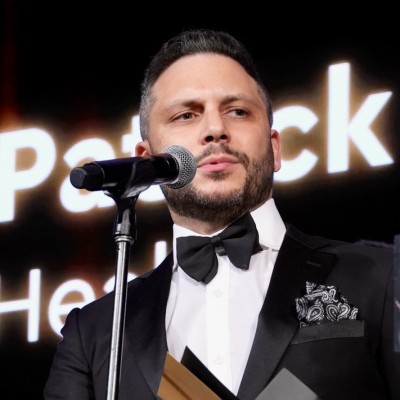
From Neurologist to Entrepreneur: Building CU Health
About this episode
Patrick's a neurologist who built CU Health — a virtual multidisciplinary platform connecting GPs, psychology, dietetics, health coaching and leadership support for corporate teams. Going from clinical medicine to running a tech-enabled healthcare business is a different muscle.
We got into the realities of scaling health tech, raising capital while protecting founder rights, what 'wellbeing economics' actually means in practice, and how prevention-focused healthcare can be both ethical and a real business at the same time.
What you'll learn in this conversation
- Patrick's journey from neurologist to digital health entrepreneur
- How CU Health was built as a virtual multidisciplinary healthcare platform
- Why wellbeing is becoming a strategic driver of business performance
- The role of technology in improving patient outcomes at scale
- The challenges of raising capital while protecting founder rights
- How investor culture impacts long-term business success
- The importance of governance, leadership, and shareholder structure
- What "wellbeing economics" means and why it matters
- How CU Health supports corporate teams, leaders, and employees
- Why prevention-focused healthcare creates stronger businesses
Dr Patrick Aouad
Dr Patrick Aouad is a neurologist and founder of CU Health, a virtual multidisciplinary healthcare platform. He has built brick-and-mortar medical practices and launched a scalable digital wellbeing system for enterprises, combining clinical practice with healthcare entrepreneurship.
CU Health
CU Health is a digital healthcare and wellbeing platform that connects general practice, psychology, dietetics, health coaching, and leadership support into one integrated virtual system. It is designed to improve employee health, reduce burnout, strengthen leadership performance, and help organisations grow sustainably through better wellbeing outcomes.

Full transcript
Read the transcript
became clear that I was trading my time for money. There were lots of people in the world that were not as highly trained as me or thoughtful as me, making more money, investing in things cleverly and almost like money hacks in a way.
No matter how nice they are to you pre, they will split your throat if it suits them.
I want to be able to help people and do a good thing and live with integrity, but I certainly don't want to be exhausted all the time just trading my time for money. Running a business can feel lonely, especially when the decisions get heavy. Welcome to CEO Rispro by Sora Jane. Practical insights from the boardroom and the meditation cushion. I'm sorry. I've done 10,000 hours in three major parts of my life. I spent 10,000 hours being a CEO, 10,000 hours being a board member, and 10,000 hours meditating. What we're going to do in each episode is really unpack a real business challenge that a CEO is facing and see if we can work through it together.
Enjoy.
Well, thanks guys. Thanks for joining us again today. Today I've got Patrick from CU Health. Um, do you want to tell us a bit about yourself?
Uh, yeah, thanks S. Um, look, my name's Pat. Uh, I am a neurologist. Um, did all of my medical training at uh in in at Sydney Uni and A&U in Canberra. I was born in Canberra actually
uh and grew up there in the early days. um relocated to Sydney and my family and broader family are here. Uh I've had an interesting life um generally uh very fortunate to have had lots of experiences in my life and I've always had a strong interest in solving problems at scale as much as I enjoy seeing patients one-on-one. And that led me down a pathway to um medical business. Yeah.
U medical entrepreneurship. But from my perspective, it really wasn't about medical entrepreneurship. I think that's more of a label for me. It was how can I solve problems through the vehicle of business in an efficient way that can improve patient outcomes and that's
and tell us a bit about the company that you have now. What does CU health do?
Yeah, so CU health uh CU stands for connect us. Um the vision for CU health was to build a virtual multid-disiplinary healthcare practice. Um this came off the background of having built and operated brick and mortar general practices. So along my journey through medical business uh I had started a medical education business then a brickandmortar general practice uh business looking at I guess how to build a a medical environment that had appropriate allied health care support really good continuity of care use technology in ways that empowered physicians and GPS to do better work. Y
um and then as time went on the idea was could we build a digital version of a really really good quality practice and a really good quality practice is measured by the outcomes it can produce
uh in a in a digital space uh and why you do that well it's to give access to more people that would not necessarily otherwise access care. So CU health um the the tech vehicle is a virtual practice we've built which has tools um pathways um workshops built into it as well as lots of consultative care
that include general practice psychology dietetics health coaching there's preventive and responsive care. Uh it also has a very strong emphasis on executive and leadership coaching which we integrated into one model uh of collaborative care and we uh put that uh proposition to businesses to look after their employees and their leadership teams. It's essentially like plugging in a very uh wellestablished healthcare practice into a business and the premise is that if you take care of the people in the business and the leadership team the business will perform they'll do better
better. Yeah. Perfect. So the way we run these sessions is we try to talk through a business problem that you're having today. Well, what what's top of mind for you?
Yeah, look, coming into 2026, um CU Health is in what would be traditionally referred to as a scaleup phase.
Um so our the challenges we face are ensuring that we're continuously governed appropriately as we um partner with many businesses both from anme through to an ASX listed
profile company. Um the challenges around that include things as you know um data security include good client relationship and retention of your clients producing the outcomes you say you're going to produce which is so important uh to us um supply workforce which is u not so much of a challenge for us I think we've created a really great place to work but it will become something we've got to solve in different ways over time and of course the number one thing that a CEO has to be concerned about is appropriate resource allocation. You've got people, you've got money, and you've got to appropriately allocate that in a way that's smart and can produce a sustainable result.
Yeah. So, if you want to be really narrow, though, like what what's something that's really top of mind that you want to solve today that's that's on top of your that's that's causing you some level of grief?
Yeah. So because January 7th, 2026, so I'm thinking, okay, uh this this the next 6 months for us, we're facing a a good problem in that there's a lot of onboardings, new companies coming on board.
Um however, um one of the CEO level challenges is I need to look at our shareholders, our investors and create value for them over the next 6 months. um that will come in the form of the next liquidity event or capital raise and als and and looking for the right strategic partner to do that with. I've started conversations there, but there's a challenge ahead that's both administrative that the sort of the bureaucracy and the logistics around what you'd call a cap table tidy up or clean up or consolidation and also raising the right amount of capital to not dilute
Yeah. further. So that's a challenge ahead of me and one thing I've learned is the culture of the capital is as important if not more important than the quantum of the capital. So that would be my main I I suppose overarching uh challenge.
Okay. So just to summarize that so look at some point you'd be looking to raise some capital. Y
and you're trying to figure out who do I get that money from?
Yeah.
Okay cool. And and what what kind of quantum are we talking about?
So in terms of your percentage of your existing shareholders. So, um, what we're looking at is somewhere in the vicinity of $20 million capital raised, but that 20 maybe 25 million will um make up uh in part growth capital, which which could be uh organic growth or inorganic growth through acquisition.
Uh, and the other part will be to uh allocate some for liquidity events, liquidity opportunities for some of the smaller shareholders
if they want to get out. Correct. Okay. Okay. So, let's just say you want to raise 20 mil. You want to keep some of that for yourself to grow uh fund the business. I assume the business still still loses money today, does it?
It it does deliberately
because you're growing.
Cuz we're grow because we're growing. But we're in a a very sort of a good position toward profitability.
Okay, cool. Um and have you thought about the split between the 20 mil like how much would be for growth, how much would be to clean up your existing cap table? Uh yes, in theory just based on sort of some good estimates and looking at where what the position of the cap table is, different shareholder positions and interests versus as well what we would need. One of the good things about the way um I built Calth uh from the beginning is that I wanted to to be a strong unit economic model um a model to profitability where the business funds itself uh it has growth capital that it generates itself and so therefore the amount that we need into the business um doesn't need to be substantial.
So it might be let's say 25% of that. Um
okay
so it could use a lot to clean up and it could use some some for growth.
Correct. I mean, give us some of the backstory. So, so you start off as a neurologist. You're a practicing neurologist. How does one make that pivot from the medical career to to this to actually run a kind of a hybrid tech/services/halthcare business?
Yeah. Um, yeah, it it's it didn't happen by accident. At the same time though, a million different um uh factors led to the specifics of how I got here. Um so going through school um obviously very interested in science um was raised one of three boys and a father who was quite academic
and um all myself and my brothers all are academic in some way shape or form.
So that was kind of like the the tone of it
and and why was your family academic like what did they do to
So my my dad my dad's a professor of engineering
studied all over the world. Um sort of education was the the vehicle. that uh enabled his capability to work all over the world. And
your parents were born here.
My dad was born in Lebanon. My mom was born in Australia.
Um and uh and so and so I guess I had a you know a very um broad and deep upbringing globally thinking from the beginning not locally thinking very much locally contributing but but globally thinking about the way in the which the world is whether culturally, religiously and so forth. So that gave me really good grounding in terms of thinking broadly about the things. Um however um when it came to education it's kind of there's not much wrigle room. You just maths, science, English um and the results speak for themselves.
So you do your HSC I'm sure you get a cracker result cuz you got into medical. Um how do you decide medicine? Why not decide a business pathway?
Yeah. So that's a great question. So I think that you know and I think that a number of uh the listeners will resonate with this. Uh it was kind of like, you know, there were kind of only a few options that were highlighted. We had a funnily enough, we had a small business growing up. We ran a cafe. Um mom ran a cafe. Still does.
No, not anymore. But but
her her family generationally has been entrepreneurial, hardware stores, hotels, different things. So I was definitely exposed to business,
but the technical element and the curio curiosity element in science was so alluring. And my dad was such a great science advocate
that I was just drawn toward it. And the careers of medicine, engineering, uh those more scienceheavy, I was just influenced that direction and I was good at it.
So that helped. And business for me was kind of like this
other world that I had I had something to do with but I didn't realize it wasn't conscious. It was just more osmosis. Um uh but it was sort of like I didn't even think it was challenging enough in that the technical element. I didn't realize business is really really challenging but the um I guess the scientific element of it isn't isn't there as much. So
I uh I embarked on you know medical science and medicine with an actual interest in neuroscience from the beginning. So that was innate. Uh I think I just had a in intrinsic interest and curiosity in the brain. It's this as I've said other podcasts it's sort of this cauliflower shaped organ. Yeah. that you can't see what it does, but it literally decides our entire reality.
It does everything for us.
Does everything for us. So, that in of itself was really drew me in. I don't think I don't think anyone who has any degree of interest or curiosity could argue that the brain isn't an interesting organ. So, for me, deep diving into that organ was, pardon the pun, like a no-brainer. So, I I did that. Um,
and what was the logistics? So, you went to University of Sydney.
Yeah, I went to Sydney. So what I did I did medical science first neuroscience.
Okay. Y
I did neuroscience because I was really really interested in um pathways behavioral neur neurology all because medicine is about pathology. So medicine is literally about the development of disease.
You're not considered going straight to a medical degree like at UNS. I no I I did I did I but the the reality is most medical schools had changed to postgrad at that time
and um I uh wanted to go to Sydney
and um and so I I did um and I'm really pleased that I did that because I would never have had the opportunity to study the brain in the same way medical school medical school you're sort of studying to become a professional whereas neuroscience you're studying to become a scientist and I did advanced physics I did advanced mathematics and I did neuroscience in my undergraduate degree. So I I got to I at one point I didn't know whether I wanted to be a physicist because I just really enjoyed questions that were difficult to answer.
So I've done a A&U you've graduated from that. Then you decided to go to postgrad university. AU was
in Sydney Uni. Then I went back to my hometown A&U and um did medicine there. Then uh was an intern at Camber Hospital. But during my medical school years, experienced a lot. Did lots of things. Never wavered from my interest in neurology because at that point, you know, you can radiology, anesthetics, oncology, cardiology. There's so many options. Um other things were interesting but neurology was just I was fixed on it and I already had a good grounding uh in the basic sciences around it.
So so you get a what six year degree that would have been five years four years. Yeah. So then you get your your intern, your residence and you got to get on a program. Correct. You got straight onto the neurology program. You went through whatever exam
exams they have got through.
Yeah. Okay.
So So that's another thing that I think enabled me had I not got through first time and and look I never will um take that for granted. I my my my driver for getting through first time was like I don't want to do this study again. And also you know you've got to repeat a year somewhere else and go to a different hospital. And I was like no no no I'm going to get through this first time. And I think that if I hadn't I would have been in a bit of a loop of persistence cuz I'm quite a persistent person. So I getting through first time enabled me to then go okay well it was very challenging but I didn't get into this sort of stuck in this um this well I've got to get through type thing and exhaust myself in that capacity.
So then plus it would have been for most academic people it's the first time in your career where there's a chance of failure.
Yeah.
Like in the HSC if you're smart you'll get through do really well. you knew, you're smart, you'll do really well, you get through every single gate. That's probably the first time where there's there's legitimate chance of failure.
Legitimate chance of failure and exposure because you you you've got your colleagues and what you're doing, you're being paid at the same time. It's public failure. Correct.
Um and and look, you know, I I it's interesting you say that because the first business I started was to help candidates get through those exams.
Okay.
So, the first business I started was after you had done your exam or Okay. Yeah. we were doing it before I would had no credibility. So, so I started it with a now cardiologist, a really great cardiologist uh in in Sydney and we both went through the exams together and we started a course to help physician trainees going through their exams with difficult questions and we built up a huge question bank. We wrote it all ourselves that content and um and then we you know to put it simply and this was over a decade ago. We sold tickets.
It was physical. There was no virtual like it was before AI. So we but then you know people flew in for the course. We'd have like 100 people there.
We teaching them because they're really desperate to get through their exams.
What year of your program would you have been on stage?
By this by that point in time I had um finished my uh exam phase but started advanced training neurology.
Yep. And that's what four years six years how long?
So it's three plus three. So you do three of basic or or or your exam phase and then three of advanced training neurology. So that's when you choose your sub specialty. Help help me understand why you did that because I'm sure neurology my wife's medical but I'm sure neurology is the same like the hours are crazy during training right
correct
like you just you just have to do the hours to get good at this kind of task
there there's no shortcut to it
correct
so you're super busy doing that and you're doing this side hustle
yeah explain that to me
yeah so that that's where I I can remember I can distinctly remember driving to the hospital one day and I was like well and I'd won a lot awards as a junior doctor. And so I I was good at that job.
It became very clear to me that uh I was and this is where I'm switching now to speaking from a passionate academic and clinician to an entrepreneur and is that it became clear that I was trading my time for money.
And whilst that's a very cold thing to say in the business world, it's not. You say this stuff all the time, but as a clinician totally a thing. It's totally a thing. As a clinician, you're like, it's vocational in a sense. You're helping people. Yes, you're being paid, but I'm being paid by the government at this point in time. I don't have private practice. I'm an employee. Yeah.
With a highly qualified employee with a very specialized skill set, but it became clear to me that there were lots of people in the world that were not as highly trained as me or thoughtful as me, making more money, investing in things cleverly and almost like money hacks in a way. I'm not saying it's easy, but the point is is I thought, you know, I want to be able to help people and do a good thing and live with integrity, but I certainly don't want to be exhausted all the time just trading my time for money. So, is there a way that I can use my skill set to multiply my my uh expertise in some way?
And and
can I can I maybe
education was a good way.
Yeah. C can I maybe rephrase that in another way? Tell me if this resonates with you because with medicine, at least in Australia, it's a fantastic career, right? You'll be the top 1%. Even if you're bottom your medical class, you'll be the top 1%. But you won't be the top.1%. Like that's saved for your entrepreneurs. Is that saved for CEOs?
Yeah. And did you is that what you wanted? You want the top point one, not the just the top one?
It was never a percentage model. I
was it was about the the money.
It's about it's about control.
Explain more.
It's about control. It's the It's the same feeling that people have when they have a mortgage.
Yeah. and they're um incumbent or when you're using it they're a slave to their mortgage.
Yeah.
Uh I inherently do not like uh living in a way where I'm constrained by certain other structures uh that I'm dependent upon and then are in a framework that feels like a hamster wheel. I just don't like intuitively I don't like it. So I knew that. Talk to me like what's your what's your view of respect of authority? Is that a thing for you or is authority not a thing that you
No, authority is an important thing. It in to the extent that authority has integrity and authority has an aligned set of values that ultimately improve society. So
which is rare
which is rare. So to answer your question, do I believe authority should be a thing? Absolutely. Do I believe expertise is really important? Absolutely.
But is it a thing that resonates with you to be in a system with a box and control and authority kind of thing? Uh I
do you need more freedom in your life?
No, I would much prefer to fail off the back of my own decisions than off the back of someone else's. It's as simple as that. Um so you know and also I'm I'm I'm creative as well. So that the medicine is very interesting and there's a diverse number of patients but the way in which you engage with that profession is quite one-dimensional
and I'm not built that way. I like reading and books and writing and outdoors and all sorts of things. So
on and art uh but I'd never want to do something that doesn't add or contribute to a bigger picture. So business is a great way of bringing those things together. So for for me it wasn't
but wouldn't all your friends at the time say oh my god like you're crazy you'll make I don't know a million bucks a year for the next 30 years being a neurologist probably more. You you'll make a seven figure salary. Um, why would you risk that and go do your own startup?
Well, it's an interesting my friends would say I'm crazy. I I kept it a secret.
I didn't.
Why is that? Because you know, particularly that now it's different. I teach medical students now and
the world's changed dramatically in the last decade in terms of attitudes and perspectives. But, um, back then in Australia, not in America, not in Europe, there's different there's totally different cultures around um, doctors who think about entrepreneurship. And also too, there are many doctors that develop um uh patents and all sorts of things that have done very very well, but it's not publicized. It's not something that the professors that you learn from at uni talk about. They stay very much on the topic. They don't talk about how your career can be. And actually, little side note, there's now there's now actually a group called Creative Careers in Medicine that has over 20,000 members, most of whom are doctors, that feel this frustration in a system that is disenfranchising and exhausting and doesn't align with their values a lot of the time or limits them.
So, going back to the 0.1 your comment about 1% versus.1%, I think that is the conclusion. in order to create that freedom,
yeah,
you kind of need to have a pathway toward that. And I and I also knew that if I didn't have that aspiration young enough, I would accumulate my I would become entrenched. I'd have thousands of patients that are dependent on me and I would be in a system that's very hard to undo. So I thought I I should do this prospectively and strategically ahead of time build my life around that goal.
So that I mean that makes that makes perfect sense. But but why did you keep your first gig a secret?
Oh, the first gig wasn't because of medical education, which is kind of like
kind of selling to your selling to your peers. And that was kind of acceptable in the sense that it was like, well, you know, you've done well. You've got the credibility to pass stuff. You're working with other colleagues, you're helping others. We didn't charge very much. It was like literally we were solving a problem. we were solving a problem uh with goodwill and it was a great opportunity to build something that was like a it was a proper side hustle a course once or twice a year and uh and and that was that but it it was off the back of the direct experience I had getting through the exams uh myself and it was my first time building a website and PayPal integration you know stuff like this where you know you and a pricing model uh and work out what time of the year to run it so it didn't clash with holidays so you start thinking about stuff you basics of business basics the real basics.
Um and uh and then so time went on and I became this is where it gets really interesting. Time went on I became a neurologist, got through things, had a very good fellowship.
And so what happens that how many years did you run that event for?
Uh the that company still exists. Yeah.
And that particular event actually we closed down last year after about 10 11 years. The the topic itself I think everybody knows what we've taught and they've got videos of it everywhere. But that company still exists with other courses and and and projects under it. Um,
and but how long were you involved for in that
or you still involved?
I'm director. I'm directing that company. I I I'm I'm I'm involved with it. I'm the only director uh in that business. I've got an operations manager and
Yeah. Come to
And why not scale that? Why why think do something else?
Yeah. Yeah. Yeah. It's it's so um so at that point that I guess that the you know you're so busy doing medicine and doing a good job and there's no half good job when you're a neurologist you've got a responsibility to remain up to date.
It's every waking hour.
Correct. And I'm a consultant at that point. You know the buck stops with me and I still am and I still see people.
Which hospital were you at?
Uh I was going between Royal Northshore Hospital uh in St. Lens in Sydney and Liverpool Hospital.
Okay. So um so you know that's something you take with the greatest degree of respect and responsibility and always will and um and so that comes first. So it's literally a side hustle or it's just a side project and other people might have a side hustle in crypto or they might be in investment property or whatever it might be you know so um but you know so this was just a little bit more entrepreneurial. So then uh I finished this is where I think my when people say you mad comes into it. My first year out as a consultant I had a fractional position at a public hospital um and was good and I was handling it on call strokes these sorts of things.
Uh I had started private practice and you build your book so I was doing one day a week and my books were starting to fill. But before I became too busy, I started exploring uh different models of care in the business world in because as you know there was some medical businesses in Australia already with different reputations and so forth. You know there was genesis care in in in in cancer there's IPM used to be primary health care. there were already commercial aggregators of specialists and general practice
and uh Douglas Hley Moyes Sonic Ramsey healthcare these are big healthcare businesses so they existed
and um and I was sort of interested I wrote to some a partner at Deote and I said how would I get into some consulting with you guys I sort of sort of thought can I be a put on a doctor's hat but also think commercially about things and help because I I naturally understand the commercial world I know that's different a lot of people say doctors don't naturally do that. I I for whatever reason
that's been my experience. So for whatever reason I did and um and then I got involved.
Perhaps there was an actual reason. Perhaps your parents running a business.
Yeah.
Running a cafe. You being exposed to that that that's probably the reason.
Absolutely. I mean and and the the stories from sides of my family about business and things I think probably see
you talk about money over over the dinner table. Talk about business.
People I'd see mom balancing books at night and things like that and and and that sort of thing. But yeah, I just sort of I guess it was always there in the background. So um this so the next thing is is I I started consulting to a startup
in the healthcare space and I and I'm not going to tell that whole story because it is an epic story in of itself but um I became the group chief medical officer of that startup which was capitalized by some quite wealthy uh people and they were the directors and then I negotiated myself a significant portion of the company over time due to the value I was creating for the company and I was like okay and suddenly I've got trust agreements being set up and shareholders agreements and I'm designing brand families and I'm looking at for cash flow forecasts and I was like now doing my I guess MBA by fire type thing and
I was that I told nobody about uh and that I just well I was too busy to talk about it to be honest with you I talked to family
about it um but colleagues wise I just sort of was like you know in medicine most of your colleagues sort sort of believe that if you're not doing just one thing and one thing all the time then you're not really dedicated to it is a very um rigid view of you know whenever you're you're you're um interviewed for specialist jobs you kind of used to say one of three things you'd say well I wanted to have a staff specialist job at a hospital I want to do some private work I want to do some research in a PhD like you just and a posttock there was actually a formula you so anything outside of that just made people like they don't understand so they probably was Was it more about them and their perspective of you?
Or was it something inside you that made you not want to tell people? No.
It wasn't something necessarily inside me, but it was a conversation that would make them uncomfortable that I I didn't was a waste of time for me to have
cuz I guess like you don't fit the mold of a typical neurologist.
Yeah.
And they might not understand that perspective cuz they are typical neurologist.
Correct. And and you know a lot of language in medicine used to be people that did business were sellouts. you know like there was this condemnation almost if you got into but then as time's gone on a lot of really eminent professors and so have scalable businesses uh whether they're imaging business and then it's sort of like ah okay the people condemning it actually um missing out on potentially opportunity
it's quite interesting because I mean I've got a lot lot of medical friends but it's quite interesting that albeit it's that profession that on average gets paid more than anybody else
uh the top one the top two the top three according to the ATO
yeah Yet somehow you're not happy
to talk about how much money you make.
Like you feel almost tiny bit of shame about making a lot of money.
Absolutely.
And then you're overcompensated. You say, "No, it's about helping people. It's about this kind of stuff."
And you say, "I don't really do it for money." Sure, I'm the highest paid person in the country, but I don't really I don't really do it for the money.
Yeah. I Why is that? I think I think that look the thing that's a bit a little bit misunderstood is you study for so long that the highest paid salaries are for people that sort of the the bankers and that they finish earlier and they're earning money earlier and they've got bonuses and so forth and there's also they understand tax effective ways of doing things too. So what's reported to the ATO is not necessarily what's
medical is a bit harder. high salaries. Look, when you look at a surgeon, whatever, it's usually a 50-y old surgeon who's well established at their prime of their career,
30 years of training.
Correct. So, so I think that that that there's a lot of like um early you you you fight so hard in the early days for positions on um training positions, you're sleeping under the desk, you're living like TV dinner type lifestyle that by the time you get there, there almost chip on your shoulder. there's almost a chip on your shoulder where you're almost like, well, yes, I'm I've got money now, but I didn't have much of a youth and I didn't have all of this stage. So, there is a bit of a chip on your shoulder for the what you've gone through to get there. And additionally, the you know, intellectual ego is far more has far more currency in medicine than financial ego.
So,
that spend that more. Well, you know, if you're a plastic surgeon,
that's a cosmetic plastic surgeon and you earn a lot of money,
you don't you can't, you know, and that good on them. I mean, great, it's a important area of need, but if that person walks into grand rounds in the hospital and there's a complex case uh with someone with, you know, bowel cancer, the the credibility in that old brownstone world goes to the professor who solves the case, not to the guy with the Ferrari. Mhm.
So we stack intellectual and empathetic uh currency much higher than financial currency in the medical space and it will always
be that way. It's sort of part of the values of the system. When you start with the hypocratic oath and you've got these people that write textbooks, that's kind of where the soul of medicine wants to live. Even if it doesn't, it's where it aspires to live. And people who go, you know what, I'm going to just do this procedure six times a day and make 10 grand a day. Uh, like that's not applauded in medicine, even though people are probably jealous of it to an extent. They're on the boat at Christmas or at New Year's, that's not a flex in medicine. It is in the business world to some people, but in medicine, it's almost a turnoff.
Yeah, it's interesting. I mean, I've I've only come from the business world, so externally that's the flex to do really well financially or to make a lot of money or to buy whatever to have control to buy whatever you want in life and do whatever it is you do.
Yeah.
But I guess I I see the medical perspective, the flex is the intellectual, right? The procedural, the understanding of medicine, the patient interaction.
Correct.
Okay. So, so you're you're consultant, you're working a day a week, private, bit of public. Um you're you're consulting for this startup. Um how long were you consulting for that startup before before you finished that? So it was probably 12 to 18 months and then things took a turn south with that company for all kinds of like all the reasons governance failures. There were there was criminality um which is kind of your white collar crim and and and all this sort of stuff was going on and I was totally naive to that stuff. I'm I'm very good at I'll learn quickly and I'll um read between the lines, but I was shocked at, you know, how blindsided people could be.
Ve very good people in a business and very opportunistic people in a business. So, there's a lot of um hot air and a lot of like talk that goes on, but when the you know, when all is said and done, it comes down to what's the culture like? What are the profit and loss look like? what does a balance sheet actually look like? And and there's recklessness and there's actual, you know, astute sustainable business growth and there were both types of people in that business and there was sort of a background war going on and I was in the middle of it with other people who were in the middle of it. I'm grateful for the learning and I'm grateful for the wonderful people I met during that time.
Um, but I was at that point in fight or flight mode more than ever, more than my exams for I thought what am I in here? I I was thinking about all the things that you worry about with financial risk, reputational risk, all these sorts of things. So, um, so you you pull the rip cord or you
Well, I remember this meeting with this emergency senior leadership and board meeting and everyone was like, "Look, we need to um we need to rethink this entire business." And so, a number of us were sort of out. Um I the the people on the board were very good people and they recognized that I was you know involved doing a good job but not involved with anything untoward at all the opposite and they looked after me and that they made sure I was remunerated for my time and my contribution and I exited that um thankfully and then I most people would be scared by that point probably go I'm just going to go I'm a neurologist I've tasted that world I've got a sure bet over here but not So this is where
what about you made you not go back to the safe option. I think it was because I saw how it was being done then I understood that the sheep was pulled away and I thought I could do this way better like I could do this way if if the difference between doing uh building a business well and not was demonstrated to me in that I thought well maybe my unique selling property maybe my secret source is the fact that I can bring integrity hard work um and expertise to business that is lacking a lot in I mean that's that's um often what separates the entrepreneurs is when something goes bad um
if it's not their fault they don't personalize that responsibility.
Yeah.
You actually totally get no that guy screwed up, that guy screwed up, that guy screwed up. Here's what I did, right? A couple things I could have done better.
Yeah.
Um but people who aren't entrepreneurs, they get scarred by those kind of things and they somehow think it was their fault,
right?
And they don't use that as a learning opportunity.
Yeah.
Okay. So, yeah. So that mindset makes sense. flipping it around as CEO now I think everything's my fault so
and everything is by the way it totally correctly correct so so in that scenario I wasn't in charge I was within it and I was developing influence in it but I wasn't in charge and I certainly wasn't the one signing things but now that I'm signing things and recruiting and whatever it might be at the end of the day it's my responsibility to decide so you're you're right I take accountability as a CEO but at that time that that did scar me but it also inspired me at the same time. So then
because of what I'd learned through that, I thought maybe I could um help build out contribute to building out as a leader in a business and a director and a founder uh general practices and because and why general practices because it's the cult that was a bricks and mort
bricks and m bricks and mortar and the reason general practice and not specialty world is two reasons. One is I kind of wanted my specialty world to remain um isolated sort of segmented off. It's a world I go into. I look after my patients and do things. I didn't want to muck around with that so to speak.
I would have thought the opposite. I would thought you've got so much more domain expertise in neurology. Yeah.
That you're actually going to want to leverage that more to set up, I don't know, more neurologist clinics for example.
True. that see the amazing thing about general practice is I didn't um it's where it's front line so when it's front line and I put my business speak on it's direct to consumer
so when it's direct hot water
oh no I'm good thanks when it's direct to patient like that you've got to think about so many things and it's also the greatest opportunity for prevention
see I I um genuinely it it isn't just about business for me. It like business either uh aims to address a need uh it either aims to create a need and then address a need or solve a genuine problem or a combination of all three or some some combination of those. For me, I've always um seen business as a vehicle to solve something and I'm a systems architecture kind of person. So I'm like well sickness is a state of being. Illness and disease is a state a human state. It's not about like where can I find leverage in the system and then exploit that for business. That's kind of how a real thoroughbred business person thinks.
I don't think like that. I think well how can I reduce the burden on emergency departments? How can I reduce how can I reduce people coming into w with with advanced disease? So you can do that through immunizations. You can do that through cancer screening. There are lots of So for me it's like what kind of business can more upstream in a more scalable way reduce the burden on health and and and then it's like then I think about a business model second. So I think about what I want to solve first and then it's like how do I commercialize this is a secondary thought.
And why did you want to solve that?
Um I think it's because I just don't like I don't like the reactive nature of the world full stop. I don't like um putting fires out. Um I prefer to because a lot of the time people go people people genuinely think that life happens to them and it's just like ah and then in that moment and they're solving for this whereas it's not like that at all. I mean this is why governments are meant to exist. This is why great businesses are meant to exist. It's to it's to come up with a mechanism, some sort of innovation or mechanism that decreases the problem load downstream. Now, some people profit from problem load, right? That's not my stick.
That's not to me. I I'm not inspired by that. Sometimes I find that unethical. So instead I'm like well and I also came to understand the corporatization of general practice in some sectors had degraded the way that GPS work and GPS don't want to work in a corporatized volumebased model of care. As much as they've been forced to they don't want to they want to practice slower medicine good quality care fewer patients but go deep. So I thought could I create a model of care or or enable one with the support of GPS not not in a authoritative way because you can't do that it's you've got to do it as a group um could we create one and so that was a challenge so then then after that I set out on that challenge and I built a brick and mortar general practice business.
So I mean how skilled would you have been running one of those businesses you've started as a neurologist you had these side hustles to run a bricks and mort GP practice I imagine that's completely different
completely
at scale
completely different so I had a co-founder
who was their background
project management not
like construction or it
property okay
property um but had an but had knowledge around you know design fit out okay
forecasting physical stuff for
physical stuff physical stuff business plans things like And then the next step was needing a practice manager with real experience setting up a practice for accreditation.
And was the plan just one practice or was it a multi practice?
It was going to be look, it was start with one,
get the model right and then expand without compromising our values on the practice model. We'd prefer a fewer number but to have a very strong value brand presence as to how we work than to have many many many. So
you thought there's there's a huge cost to set up one of these clients. I would imagine you got equipment, you got fit out,
huge and it was on it was on in a very affluent suburb on the main street.
Y
So
you guys funded that personally or you took external funding?
We funded it personally and people how did you get that capital? Well, this is how I got that capital. I had bought one investment property in my mid20s.
Mhm.
And I leveraged that to contri and my business partner got a personal loan as well. and um between the personal loans and then on top of that we got a business loan uh from against the and it was at a time and you can't get this facility anymore but it was at a time where the business was willing to lend us an asset finance loan and a business loan based on the forecast of the business so it was I was leveraged to the hilt like it was maximum risk okay maximum risk no goodwill no patients coming in dust Did you know it was going to cost that much before you set up set out on this journey?
Did you have an idea?
Um,
that's the level of risk you have to do.
We had an idea and that's it. So, there was like the idea probably 47 No, probably let's go that way. 57% naivity, you know, and the remainder was a decent idea based on a spreadsheet. the the bit that bites you is your as it does with any business you start is the are the unforeseen costs the complications the contingency you require and the time to break even. So in a business like that you have to actually have good doctors on the seats waiting for patients with no one coming through the door. You need a nurse there, you need a receptionist there and obviously we've got our rent and so forth which is very expensive where we work.
So it was extremely difficult but did we turn into a profitable practice? We did. Did we acquire another one? We did. Did we build two more? We did.
Um and that was just through sheer grit and will and um
and were you full-time in this gig at this stage?
No. No. I was working I was working uh I was working like two FTE. So, I was working as a as a neurologist uh publicly and privately um on the roster.
We got to fund this debt somehow, right? You got to have some money come.
Yeah, exactly. I had no cash flow from the business. It was bu um I've got young children at the time. uh and I'm just working like I just and and and so at this point in time my ability to make decisions um compartmentalize uh that skill set was like and to be honest sometimes sometimes not sleepless nights um but I was able to manage it and able to get through it. Would I do it again? No. that's a part of your entrepreneurial journey and did it teach me pretty much every everything about how to run a business with diligence uh unit economics HR legislation insuranceances tech lots absolutely working with government I learned so much and if not for that there's no way I could have translated to see health
and how long have you did you run that business for how long
I was yeah I was co-founder and director of that business for seven or eight years.
Okay. Wow.
Yeah.
So then at what stage you did you decide to exit that? Was that did you guys sold the practice or you exited yourself?
No. So So basically um uh we went on to have CU Health as an idea. I went on to run CU Health. Um the the other party uh exited CU Health and um we sold um one of the practices. the rest of the group. Um I transferred across to my original business partner and um that was that was the end of that that chapter uh for me and then sort of see health was running they were overlapping at one point they were all overlapping. So at one point I was full neurology running the bricks and mortar
with my team. Um,
the medical education was ongoing and I was raising capital for CU Health on a safe note.
Well, at at the start of CU Health, that makes so much sense, right? Cuz it know you've had the medical experience, had education experience. Yeah.
You figured out how to run a small business, how to deal with physical people, physical premises, how to balance books, run a payroll. Um, so they're all the major constituent parts you probably need to run a tech company.
Yeah. Um, and that's probably why a lot of doctors who go straight to running a business, they fail the first couple of times because there's you got to actually fill all these pieces together until you're whole enough to be able to run something,
right?
So, okay. So, you figure bricks and mort GP, that's old world. I want to go this digital health world model
which is CU health simple mind. For me, it just sounds like a GP practice, but the digital version sold to corporates. Yeah, I mean that's right. I mean what we what the advantage of the digital world. So this is where it's really important to be clear. Um there is GP telly health there is psychology counseling EAP type stuff. Um there's you know digitalies with a click and collect and get a script. CU Health is none of those. CU Health is actually a fully in-house clinical team
with the psychology, fertility, GP, everything integrated together to one record. So whilst it is a V virtual G general practice um I can't stress enough that it's a really yeah holistic whole person well-being platform that's also been designed in such a way that it's not it's very enterprise in that it uh aims to really improve the wellbeing of a population as well as an individual
and help me just a a nuance question about C health in terms of your cost space today how much of it is on the tech side of things like how big is tech in your world
yeah know it's quite substantial So, so, so the the practice is a technology vehicle and so we have three components I guess when we talk about tech there's the dev side which is everything from your like Python program all our whole tech stack including AI then there is our IT world which is a lot of the way we connect the national New Zealand group and then there's our server architecture which is AWS best and we've got a team for each.
But if you were to bundle it all all three of those together, like what percentage of your cost space would that be today?
Yeah. So it it does it does fluctuate. So when we do massive sprints and drives and and and new versions, it it sort of is is higher as as a fraction of the opex. If you look our cost base, we've got our cogs actually which so the business is separated out a bit because you've got the service
tangle is like how much of this is a tech business? is is a services business. That's what I'm trying to get right.
Yeah. So, so the the the tech part um so for every dollar, let's say 20 cents is spent on tech.
Okay.
Okay. Yeah. Um
and 80 cents are your doctors, your people, your admin, your sales, everything else.
Correct. Yeah.
Correct. Correct.
So now you have to learn the tech worlds, right?
Yeah.
And everyone loses all their money the first couple of times. Yeah.
Um especially if you're not from tech.
Yeah.
It's a bit like going to a bills and saying, "Build me a house." If you're not a builder, yeah,
you'll totally get screwed the first couple of times.
Um, but that that's great. That's that's another bow for you to learn.
Um, why did you raise money when you started see health? Why not try to selfund it again?
Yeah. Well, um,
was the cost going to be too much?
Yeah, cost cost too much. Also, the risk, it's so novel. It was it is and remains novel, but also it's extremely obvious. The technology and the system is what every private health insurer and workers comp claim insurer wants to have in their arsenal. But it was it is novel in that someone's built it. But for us to go from Butcher's paper through to what we have now to selfund that really would have been irresponsible.
Did you have a new co-founder or was it just you this time?
No, I had the same co-founder I had in the brick and mortar world, but pretty soon we realized that I was more suited to this. Um so the way that um the the thinking was okay uh and in terms of selfunded that's not true. We did we did we used cash flow from the other business to absolutely selfund it. So we did we selfunded and we paid ourselves nothing so also to its time equity you know sweat equity. So there's our time our expertise and we were to the extent that we could while supporting our family. So it's absolutely the to the point at which we had a sort of prototype model uh to present to our convertible note holders and and and the message to our convertible note holders was really quite straightforward.
It was we want to build a virtual general practice with allied health attached. Um there is a significant unmet need in employee well-being that impacts the business and we are going to sell to corporates.
Why go to raise money? Why not still slowly organically grow with extra cash GP practice?
Yeah. So the the issue was to build the prototype. So so in order to prove that you've got product market fit in a B2B enterprise health tech there's a lot of capital because you've got to a you've got to build a pro an MVP and our MVP is complicated. It's not an app only. There's lots of stuff. There's admin system, there's a healthare system, there's a user interface for the patient or the member we call them.
We've got to run pilots to make sure it works. We've got lots of licenses cuz there a lot of APIs that plug into it. You then have to run it with a company. So you got to pay professional services time,
you know, without any remuneration. Um, so there's all of this money you need in order to get endorsement or get somememes onto it. So to go to market you had to go you needed you know an MVP then you needed to update your product so it was at least early ready early stage ready for anme group. Uh then you had to have some branding some sort of brand at least that would speak to like we we want you wanting chief people officers from banks to show up you know like you can't do that just off a few you know phone calls and things. So we needed to come out strong and so we needed to frontload it with some capital.
Now we raised 1.25 mil in our first trench of and then
who did you raise that mostly from?
That was all just from
just friends and family.
Friends, family and and and investors that we met uh just investors I met at I raised it all. I met I met people ad hoc that
you know I knew had been that was 2020.
Okay. So five six years ago. Yeah.
Yeah. Okay. So, so you got enough cash in. Was that enough to build the prototype?
It was enough to build the prototype u and also for us to get a grant. We won the accelerating commercialization grant through government which funded dollar for dollar. Uh so we got another 400,000 from that. We we barked up a few as you do in a startup wrong trees early on. I went directions. This was by the way our idea was all pre- pandemic.
The idea was pre- pandemic actually. So
this was actually in our favor. This wasn't an opportunistic leap off the pandemic. We did a lot of work with the government during the pandemic, but this wasn't like okay, let's exploit teley health because of the p the pandemic simply accelerated the adoption and understanding of digital health uh for us. So, but a lot of our build was happening and and MVP testing was happening during uh the pandemic. Um and how long before you had your first set of paying customers?
We had our first paying customer in uh late 2022. And I'm guessing what your proposition is, hey, look, we'll charge you an adult a dollar per employee, whatever, whatever your fee structure is. They'll get access to all these uh health services, allied health services. Employees will be happier. They'll be healthier. They'll like you more. They'll stay with you more. I'm guessing that's the
it started off I mean it it's become very sophisticated now. So basically we we now um look at you know when when we it's the market's changed. Firstly, the market's changed. It's matured a lot. um and we have helped it mature. So the reason I do so many keynotes on um employee wellbeing as a strategic tool is because you pretty much for employees you've got salary remuneration then you've got this sort of nebulous term called culture and culture is intrinsically attached to well-being and well-being is again a nebulous term. So I try to I've tried to define that. So now I I talk about wellbeing in terms of discretionary energy. So, Sorab, if you've got Y, if you've got, you know, surplus discretionary energy, like disposable income, then you can actually give it to others, give it to your team, think strategically, creatively, empathetically.
If you're on the well-being poverty line, the energy poverty line, you can just show up for yourself, nobody else. And if you're have a deficit, you're literally below the poverty line. You you can barely afford your food in the cupboard. And that that person is going to be a damaging person to themselves, others, and to the company. So we're there to increase the discretionary energy of a company through wellbeing as a tool in a scalable way. So the sellers now become okay looking after your employees health and wellbeing is a good thing to do. Fine, that's nice. Secondly, does it have more tangible impact on the company than a 5% pay rise? That's an important question.
You know, is is it more cost effective to care for people's well-being than it is to just give them a pay rise? Are you going to have better attrition score, lowers work lower workers compris lower absenteeism? You know, are these metrics that in impact your P&L going to be better served through a well-being strategy and a wellbeing tool? So, I've gone from speaking in sort of what you'd call a fluffy light space to HR managers to speaking to boards about strategic levers they can pull within their company and us being the leading solution for that. And that is now let's so without making a joke about it now when an ASX listed company's share price doubles and they're using us I take credit for it.
I say look you bought us on you're only as good as the sum of your parts which is your team your AI and the other thing I talk about too is the AI strategy. I sort of say to them, look, um, in the era of AI, you can you can optimize your your operating expenses and automate as much as you like, but human beings that are left behind doing the job. They're not inspired by the AI, if anything, they're dehumanized by it. So, the only way to offset this AI curve is to protect your people. So, it becomes a protection. So I went from CU health being a like from being like a a reward and benefit that matters to literally a protection tool for your human capital that impacts the P&L significantly and that that understanding that I call it wellbeing economics we've we have uh highlighted and we haven't it's not it's not a brand a marketing exercise it's research that's been done a lot it just hasn't There hasn't been a a good tool that's commercialized it well and created a solution cuz it's quite challenging.
It's a messy to build. But it requires tech. It requires people. It requires expertise. And that's why that's why CEO is doing as well as it is.
So help me fill it. So 2020 you started building it. 2022 you got your first set of customers. Um or you got your first paying customers. So it's real your your servicing people. Um at what stage did you need to raise more capital?
Well when we needed it.
I mean as much as you should raise capital when you don't need it. Uh,
no. Was that in 2022 or we have
Oh, no no no no no yeah no no no. So yeah 2022 I think we raised another trench of capital and then basically from from 2022 to 2025 early 2025 we raised capital on a rolling safe note as a means to get us toward profitability. So, it was kind of like we want to minimally dilute it, which is in the best interest of all of the shareholders. Um, because it wasn't institutional capital, I could be much more flexible in the way and the timing and the way I did it, which I'm very grateful for. I think it's led to an outcome that's better for all of the investors and for the governance of the company.
Um, but we rolled I've I've raised in c in total somewhere in the vicinity of 8.5 million uh since inception. Um and our obviously our burn rate is decreasing quarter on quarter and now it's really it's shifted our pipeline the quality of our customers the size of our customers means that um raising capital now I can I can raise some debt we are in a solid enough position to raise some debt and we can service debt because we've got a growth model that's happening that can that can substantiate that. So it's shifting now into a more sophisticated framework. Um but yeah, we we we raised in order to obviously I think that we we knew we were on to a a good thing.
It's a and it's a and it's a good thing. It's a three-way good thing. It's it's a good thing for humanity. It's a good thing for the economy nationally and it's a good thing for the business owners. Um we've prevented suicides. We've picked up cancers. We've we've reversed diabetes. We've this is at the individual level. It's a beautiful thing for the team to be involved in and it's a great thing for companies to take credit for. Um, and it's a great thing for and the other thing as well is is we're not dependent on the Medicare model, right? As much as I respect Medicare as a legislative tool to make healthcare universal, it, as you can see, it's a highly political tool which uh in some areas of Australia works beautifully.
In other areas of Australia, the private funding versus public funding model is really difficult to get right. So working with businesses directly and working with great health care providers that practice gold standards.
Do you guys get Medicare rebates for your consult or it's not under that?
Not generally. Under some circumstances we can.
Okay. So it's completely funded by the company then.
Yeah. As as a general rule, yes.
Okay. So So let's fast forward to now. So what's the growth rate like now? Like how how well are you guys doing? So, we literally went from in 2020 three like trickle revenue um you know and I don't want to disclose figures over this because I've got um I've got to have them signed off but we we are on our we will be profitable um this financial year
and it's it look electively if so sometimes I sort of you know as I should do the go through the exercise of looking at the cash flow forecasts and thinking well if we just converted the clients that are in our pipeline uh and we didn't invest further in brand awareness and marketing as much we didn't do that nice to have tech element you know would we be break even today and we'd be very very close to that but have I have we got a sort of I think a good balance between uh where we allocate
like you don't want to give up growth right correct
if if if you don't have to
correct correct so so that's right it's that fine balance to make sure there's enough contingency in case something happens uh on you know that it's unexpected and in today's world that's a million different things um uh but at the same time you know you you want to um you want to invest in growth so um so for us um I maybe a good way to summarize it is our goal is to go from um having privately funded this through individual investors to private equity
why is yeah and that probably let's go back to the original question about the you going to raise 20 mil, some to clean up the existing, some to bring new people in. Why why clean up the existing guys? Why not just leave them? Let let them let them keep riding the the rise. So, it's a good question. And they'll have the choice.
They'll have the choice. I think that it comes down to the fact that we've got a large number.
Well, why offer them a choice? That's what I'm trying to say.
Oh, yeah. Why offer them a choice? Look, a lot of them want one. I know that. Like some of them that came in in 2020, they
better get out. Yeah. and they can't follow on and and you know and I think that um I think they just be happy with their money you know after that time and I think that a substantial number of people uh will be so I want to give them that option as a matter of fact for me I feel as though it's um and I you know you could I could test this out psychologically a bit but for me I feel I have an obligation to give them an option um and uh and you know and if they don't take it well I gave them an option and and I think that's a wonderful thing to do after this period of time for the really early ones.
Um so there's that that part of it. The second part of it is is it's a large number by the way it's over 100 individuals. So um so it's also about governance. So it's about uh is as we go to the next phase of the company where you know you want decision- making to remain as efficient as it is now because people say the benefit of startups is their agility. Well sometimes if you've got the wrong leadership team it kills you. So it's not agile at all. But we are at a point now where we've got a wonderful leadership team and agile decision-m not because it's reckless. Agile decision-m because we've got clarity clarity boundaries that we won't cross and absolute clarity about what we're doing.
So I don't want to lose that. Um what we want to see
but I reckon you'll have more of that with a wider shareholder base because if there's 100 shareholders that they're rarely band together and actually ask you to do something. That's true. So you actually get a lot more control versus if you had one shareholder that owned, I don't know, 50% of your company, they get an insane amount of control. They'll be on your board. They'll be coming to exec meetings.
Correct. I think that, you know, again, it's a two-sided thing. You've got to weigh up. That's why this the culture of the capital. That's what I was talking about at the beginning. So we we like my job now is to put CU health in the most advantageous position so that in negotiations with any institutional investor there's no desperation and it really is about uh are you on board with our vision mission culture and my leadership and the team we've got
um and also a a respect for the nuances that we've collected as a team and I've collected over the years going through all that I have it's a very unique set of expertise and that is what sets us apart. It's why a lot of companies that say show us your IP, I don't mind because I know how much it takes to run this and it's a real combination of human skills and techn technical skills and all sorts of things. So, there needs to be a capital partner that respects and understand. The second part of that which I agree with you is is it's about the way you structure that capital in the board. Um it's about the way decision-m is done.
Um, and it's also about making sure that we are in a position where we're not publicly unlisted, which we're not currently because they're most are safe note holders. They're not shareholders. So, we're not in that position, but we don't want to be in a position where we're exposed to more auditing that slows us right down unnecessarily. So, there's a few in terms of a challenge, that's a technical challenge, it's a it's a uh a structuring challenge, a governance challenge, but it's been done many times before.
Yeah. I mean, the only benefit I can think of about cleaning up some of your existing shareholders as you get as you get your new one. And tell me if this is one of your goals or a side benefit is when you get an Insta on the hook, you got to get them set.
Yes.
They got to have a meaningful cut of your company to make it to make it worth their while.
Yep.
Or if you're get going to raise money from someone who's eventually going to buy, you know, the other 80% of the company.
Yeah.
They've got to at least own 20% so they can
Correct.
And you don't want to over raise cuz they're diluting if you don't need the cash. Correct. And that might be an easier way to reallocate some capital from people who are not going to be your exit partner to someone who is without doubling. Does that kind of
It does. It does. So, so okay, they're narrowing a bit more. If you're going through a filter of capital partners,
ideally we have a capital partner that has the capability to follow through all the way along and also that has the capability to distribute.
So, they need to have a portfolio themselves that would benefit from CU Health and and
they could crossell your product to their own.
Correct. and they underell they sorry underell they underwrite their investment immediately they literally can look at the forecast and say we can help you exceed your forecast within 6 months with our portfolio and the great thing that I'm proud of with C wealth is it's the best solution for this problem and this problem is ubiquitous it's universal so I have zero um I have great excitement that a a controlling party on the boards of many organizations can recommend us to their CEOs because we'll help their companies uh will help will it it's again a win-win. Uh so the the the strategy comes down to having a culturally right fit uh a a distribution partner with solid businesses on their books which is why PE fits that they're slower longer exactly you know exactly what their mandate is um that uh that can follow on and see us through so the the growth multiples make sense for them and uh for us and that you don't have that anxiety about future capital partners and things, you're kind of like, you know, you you are married to the right in.
Yeah. I mean, the strategy makes perfect sense, right? If you can get one of these inos, get them set, get them on the hook, get them believing in your story, get them cross-selling, that's worth so much more than 100 small shareholders. So, where's the ambiguity in your mind? Like, this makes perfect sense.
So, there's not I don't have ambiguity. That's the thing why I'm so relaxed. I have clarity that it the the challenge is the execution. So I what I've got ahead of me is I've got ahead what I have ahead of me is is hitting our targets over the next six months to make those negotiations where land where I want to. The challenge is making sure that the legal the new shareholders agreement that I'm sure will be drawn up is structured the right way that all that I've bled over for this is protected in the next phase because I think that when you move into an institutional agreement as you know you kind of have one opportunity to protect your founders's rights and I know that the right partner will accept a degree of them.
Um uh hopefully they see my value in in the business. Um but the challenge is just basically as you talking before with meditation you know you stop that dialogue with yourself the dialogue often is or the monologue sometimes is really about the machinations of how you know how so if I do this and I speak to that group first and then do that. So you're sort of like building up and you could write it all down or map it out or AI could do it but at the end of the day there's a bit of it's a bit like being an athlete. you've you you you're kind of visualizing the steps toward a championship and in in in the world of sports you do that a lot.
You you often visualize the the steps and road toward which helps reinforce that clarity. So I don't have an outcomes problem. Um it's now we're in the how space. The why is clear, the vision and mission is clear. For me, when people ask me, you know, when would I want to exit and they want to exit, you know, my mentality is one of the build a company like you don't want to exit to be honest because that's when you really you're really building. So, it's important to have the systems, processes, documentation, governance in place to exit. But for me personally, my um you as you can tell someone that's a neurologist that's gone on to build this, I'm not looking to flip this around and make a quick buck.
So my experience with investors, mostly public, um that makes sense for you, but that doesn't resonate with investors.
Yeah. Investors want to hear the exact opposite, be it true or not, that you got a three-year exit plan or five year exit plan, whatever the number happens to be, and in five years they're going to make a gazillion times more money. And they want to they they actually want you to want an exit.
Yeah.
Whether that's real or not, but that's actually And look, for me, um, when I talk about exit, I don't necessarily mean financial exit. I I mean what I'm doing. So it's
investors only care about financial exits, right? And I think I think they want us to hear a CEO that's aiming towards a financial exit.
Yeah. And look, I mean, and that's fine. And look, my exit might be there. It's one thing to exit altogether. It's another thing to sell a significant portion of your holding. And that is your partial exit, but they also at the end of the day, the whoever it is that ultimately owns the company um it might be in the best interest of the company that I continue doing what I love doing or it might not be. I'm open to whatever is I'm I'm very outcomes focused. So, whatever it is that continues to improve the lives of the people that use our product and and and enhance the businesses that sit within our client base. Great.
So, the original question we had, you know, how do I raise and who do I raise up from? Is that is that the right question to be pondering?
Um, so I wonder whether it's something a bit more nuance. I wonder whether it's like because I reckon you'll do that fine, right? You you'll sort that out. You'll either raise from private equity, you'll raise from inst whoever is the natural owner for this product like yours, be a health insurer, be it some of the large GP practice. There was like probably 10 different possibilities and you'll figure that out and you'll target all of them and you'll find whoever fits best.
How do you make sure you don't get screwed during this entire process?
Yeah. Okay. Well, that's a good personal question. Um the the way I I look I mean
I mean is that of importance to you?
No no it's super important. I mean I didn't do that. I'm not an idiot.
You're not here for fun.
I didn't Yeah, exactly. I I mean I do want to go to the beach one day and just actually lay there and just listen to the ocean. Um so um but it's a very good question. So how I go through this process and not get screwed over and to be honest as a founder you actually feel like you're being screwed over every single day for the first 5 years of being a founder. So that it's almost like when I talk about doctors before they got a chip on their shoulder by the time uh by the time you get to crystallize or materialize your efforts you kind of feel like you deserve a lot uh for it particular with something like this.
Um, so I um I think that the key things to do are one, do a really really good job. So how you how you protect yourself and not being screwed over is I think being an effective useful person to start with.
Got to be good at your job.
You got to be good at your job. Uh and never take your eye off that because and I'm not saying that because you want to make yourself indispensable because I think someone indispensable makes a poor business. It's got to scale beyond you. But you've got to be very good at your job and you've got to um present value for the next 5 to 10 years for that business so that people like you know what Pat like driving this this car you know captaining this ship is a good thing for the business and that's first thing I think the second thing is really um ensuring that whoever becomes your capital partner sees that and understands that and you can tell they do so they take an intrinsic interest in the way you lead, the way your team is structured, how your what your journey is so that they can appreciate.
So they need a curiosity uh in it and they need to be people who love founders and there are certain do and certain some very transactional and so I think that that is a cultural part of it. Then it gets technical then it's about having the right legal advice. I mean I think the third part is the right legal advice in terms of structuring things in such a way that because at that point in time I know that it's the maximum opportunity for opportunism. So everyone comes in and thinks what's in it for me cuz I'm the only one waking up each day living and breathing this. Everybody else goes, "Oh, okay. Pat's done something decent.
Now I I threw my money and I backed the right horse. everyone pats themselves on the shoulder
and I have to make sure at that point in time both the incoming investor and the existing investors that that there's protections in I think that the only way to do that is to have a very very trustworthy advisory team that's longstanding and and and your legal expertise has to be rockol that has a good experience in in leading through these agreements and so forth and how do you do that? Well, one, you pay for it. And two, relationships. Relationships that one of the key pieces of advice I can give people is in business, have a small group of key relationships that transcend the business that you're in. They can be from childhood. They can what the kind of people who are very very good at what they do.
They might be lawyers or accountants, but the kinds of people who also would be ashamed if they did something cuz your parents wouldn't like them after that. you know, people whose reputation to your community uh matters more than paying the invoice. I think that that um that kind of and goes for me too like I have that relationship toward others where I will undercut myself to look after them because my relationship with them matters more than the and I think when you you need to have the and look after them otherwise you just become a meal ticket for everybody and everybody's trying to take a clip of everything. So I think that this is going to be legal and at a certain point I will just sort of go help me, you know.
So a couple things I'd add to that though. Um look you do keynotes on this area like one of my areas of expertise is actually how CEOs negotiate their salary.
Yeah.
How do you make sure a CEO gets a fair economic return for the work that they do?
And there's as there's a natural tension between CEOs and investors cuz both of those two parties think they're the guys that do the real work.
Yeah,
they totally do. Right.
Yeah.
If you ask me, I reckon it's the CEOs.
I think they're the guys that actually took the risk and actually did this. The investors actually think they're the brains in this operation.
Yeah. Yeah.
Um
Yeah.
So, I mean, there's about a dozen things one needs to do. So, um just the key one from our conversation that I'd point out would be is um don't have an expectation of automatic fairness.
Yeah.
It's actually completely your responsibility to contract this, right?
Yeah.
And to make sure that you are rock solid. Um, the other kind of things I'd mention is I'm sure you'll find the right uh capital partner, but no matter how nice they are to you pre, they will split your throat if it suits them.
Yeah.
So, just cuz they're nice like like read nothing into that.
Yes.
Um, and you can look at their experience or other things they've done, but it is very very thin.
Yes.
Um, it is very thin their love for you.
Yeah.
Their love for money is much greater than their love for you.
Yes. The other parties I'd say probably the biggest one that I didn't know when I was a CEO of a public company and I wish somebody told me and I learned afterwards is there's three main things a CEO has to do. One, you got to be good at your job, right? That that's a given. You got to run a good business.
The second thing is you got to show board leadership. It's actually your role to appoint the board point the board in the right direction because now the board might have external people, right? It might have people from these investors. It's your job if if they put the wrong person on the board to get them off and get the right person on.
Yes.
And the third, probably the most important is don't get sacked.
Yeah.
And and there's a lot of things that about not getting sacked is it's a lot more than performance.
Yeah.
It's about do I have the same vision as these investors? Are my KPIs tethered together? Are we the right partnership to get married? Or if you might figure out like in 18 months time, look, it's actually not really working out work it out. How do I divorce these guys and go get somebody else before they get rid of me?
Yeah. Yep. I mean, I I think that they're probably they'll make sense to me as questions you got to ask and answer to a degree before you even put pen to paper, like draft anything. and and I think that it's a really great sort of um you know it's really interesting you talk about CEO salaries and you look at the the CEO salaries when they're published uh around the in the top 50 and I was reading the other day you know through uh the different CEOs I was quite amazed at LVisa the the the dress jewelry brand it's the second highest paid CEO in the country I think um and I think that you know obviously mccory bank CEO is the the highest bank CEO in the country and and um and and then you look at these ridiculous things like where Elon negotiates stuff
trillion dollar package
trillion trillion dollar package
and um and at the end of the day you know part of it comes down to what's formally been agreed to and legally but but I say but because legal agreements can be ripped up or paid out if people have deep enough pockets they just won't follow it
they just won't pay you so constantly have to create value and this is where it gets very strategic. So I but but leverage is such an important thing
uh in business and and and it's one of the only things you can often rely on because it's like well how much value am I creating for the important stakeholders in this which are obviously your investors and and can the as you said leading the board I I feel as though leading a board is there's two key parts one part for me is demonstrating that you are performing performing well objectively and aligning with what the plan business plan was. That's just good stuff. And and providing key insights hygiene that's hygiene and then providing key insights that sort of set you apart in terms of a leader with you against your competitors and the market and so forth.
The other side is uh as you said being two steps ahead of everyone else on the board and directly and indirectly creating that leverage as you as you move along.
Let me say that another way though. Um, so I don't think performance is this much. I think it's this much.
Yeah.
I know that sounds so counterintuitive,
but to get paid well as a CEO and to keep your job,
I've seen CEOs that are doing a cracker job, but they go get sacked.
Yeah.
I've seen CEOs get paid a lot of money.
Yeah.
Um because there's a promise of a future.
So like on the on the Elon example, right? So
like his killer thing that he did was he got his chairman, the Robin, the Aussie lady. Yeah.
On side. So she was like on CNN and all those channels saying, "Look, if we don't give Elon a trillion bucks, we'll lose him."
Yeah.
So she was campaigning to make sure that he got his trillion dollar package.
Yeah.
Now think about what did Elon do to convince his chair to put her reputation on the line to get him a trillion bucks.
I'm sure she's made billions out of it. I'm sure they make billions more.
But what he did, there's really no what he did. He actually has the board working for him.
Yes. He's got that complete power dynamic flipped around where these five or six guys or girls are working for me. It's not the other way around. Um, so another analogy I'll give you, so like you know whenever you have a CEO, board chair,
the natural inclination is to actually think that they're superior and me as a CEO I work for them.
Yes.
And I think what works a lot better is you want to be peers in this.
Oh yeah.
You you want to whatever noose is around your neck, you want to wrap it around each of those necks as well. Um, so they come down with you and if things go bad it's they were they were in this together and if things go great you you all do well together completely. I mean I I would you know I think that there's founders and there's founders. So there's founders who kind of had a great have a great idea, have great hustle, have a high risk appetite,
potentially not much to lose personally where maybe and I I'm be really it's really important to state this, but maybe don't have kids or a family. Uh so they're sort of like, you know, I'm going to do this ride or die. If it goes down in flames, I'll just
I'll do something else.
I'll do something else. So when you're in that headsp space and you start you find you you hit something could be a widget it could be an app it could be something and you you get it going you kind of you're like well wow and you got this quick flip you're a founder maybe you sell it completely to another larger group or maybe but that point in time that person probably hasn't had sufficient experience and governance experience with a with a board and also hasn't built the relationships over time with institutional people uh to even understand what's and they just don't want to they like want to move on like that that sort of you know that seed founder that can get things to quite high valuation but when I think that then there are founders like Paul Ramsey right who who
led Ramsay till he died and um and same with Colin Goldmid at Sonic So they're sort of founders with subject matter expertise and deep passion for what they do and create an institutional culture themselves where they're looking at uh you know it's a different mentality. It's a diff it's not the quick buck mentality. And so what what you said before when you said most investors want to hear an exit. I can tell you that Ramsay and Sonic have made a lot of people very wealthy but it's done in a way that almost isn't seen often these days. It's it's done in a way where you only work with people with integrity and deep expertise that you you know you follow your word
depends who you raise money from.
Exactly.
Depends who you raise from.
Exactly. Exactly. And I think that that's really important. What I've seen, this is just an observation is there are healthcare consumer businesses that are about high volume like fastm moving consumer goods.
They're good for VC businesses and often they're not run by healthcare leaders. their sort of opportunistic business models. They're consumer centric. They're focused on that they they borrow business um sort of plans from other FMCG businesses and they prey on social media fear type tactics. In real healthcare, which is harder to govern and requires deeper expertise, harder to copy as well, you really do need mature capital to come into it. If it's immature capital, it dies because they look at your opex and look at your cost base and they make all these recommendations that make zero sense when it comes to patient care. They make complete sense to short-term numbers looking better.
Y make this quarter better.
Make this quarter better, but they shoot themselves in the foot. So, you're 100% right. If you raise capital from the right group that can go okay there's there's sort of pseudo competitors in the market which are going to die and many are graveyard now and VC back ones too because they get to sort of their series C and they're not profitable and they've started to take on what we call patient care or they've got governance issues. It's very hard to reverse a consumer business into a patient care business when you build it that way. But we've built it from the ground up with solid foundation. So the point I'm making is is it's it is easier not easy but it's easier to have a board that's values aligned and instit sector aligned uh in a business that's got sort of roots like us than it is if you've spun up a marketing app or you've spun up that's where they're like okay is this a HR app is it a matching tool is a dating app it's it's a different psychology attached to it.
uh there's more dispensability. I think it's a little bit dirtier to be honest with you the way that and and I've done everything I can to angle us away from that culture um and at the same time be popular you know cuz you got to be you know cuz so so but I I think you're completely right. So yeah so our the board that I work with needs to be a collaborative board
and but the challenge you'll have now is that you'll have people that you don't pick coming onto the board.
Yeah. Yeah. So this whichever investor you get, they're going to allocate someone in their team. Great. Awesome. Your job is to work with Pat, go on the CU health board and make sure investments are doing okay.
Yeah. Yeah. And that's and I mean that's my job.
And and that's invariably going to happen.
Yeah. And look, I mean that when I see them coming onto the board, my my perspective is I know about this a lot more than you. I mean, not being arrogant, but I know everything about this and you know nothing to start with. So I'm I'm there to teach them. what they know about is probably good like the same business fundamentals across every business and secondly they might have some industry specific expertise but um my job is to be able to foresee answer guide mentor and that's what I do I mean I I I advise PE and I advise Boston cons I advise groups on markets but I wonder if your job in that scenario is a bit different it's not so much to educate them on CU health it's to leverage what they already know and just remind them the domain that they're an expert at.
So their domain expertise is not running a healthare business. Their domain expertise is how do I keep the mothership happy?
Yeah.
Um how do I love that?
How do I invest? Well,
so how do I have a good external view to investors?
Yeah.
And you're you almost like give them that's their KPI, that's their objective.
And that's great because then you're really building a team at your board level
and then you really get them to focus on that and keep them busy on that and keep them accountable to that.
Yeah. Well, that's
because what I've seen to go badly is when you don't do that with external investors, they have this fallacy that because they're an investor, they're good at running businesses and they're completely different competences.
Um, completely.
And if you don't keep them busy being an investor, doing investor stuff for you, they'll start trying to run the business.
Well, it's also it's also a bit Yeah, that's right. And I think it's also um a lot of investors don't realize the value they have to the CEO.
They don't realize it. and the CEO like I I know that if I went out and I've kind of done this a bit. I haven't in I haven't systematized it, but if I went out to our 100 investors and I gave them three bits of homework over the next quarter each and I said, "Look, if you all even just do one part of your homework, which might take you two hours over the next quarter, I guarantee you it will bring our forecast forward. like you will add this much to our top line because of their networks, their influence and so forth. And I really think that is a um a really important lesson. I agree with you and I think that's great advice that you know if someone does have a skill set, maybe it's in HR, maybe it's investor relations, maybe it's in whatever it is.
Um the the the beautiful thing about CU Health is because it is actually a really great business to to work with, to partner with and so forth and does a lot of good. Every person that knows a director on a business, every person that knows a decision maker in a business 100 investments they've made. Right.
That's right. Yeah.
They just And if that their job is to just get me in front of them, then they're participating in its growth. they're aligning with what what I'm what we're trying to do and we'll become a teammate and then you know you're giving feedback to each other like how did that go? Let's hone it this way and and
sim simultaneously they're they're actually doing their job which is making sure the company stays afloat.
But the key part is you want to make them think that doing that is part of their job.
Yeah.
That helping with leads, connections, other investments, external investor presentations, that's actually a core part of being on this board.
Absolutely. And as they kind of interview in and get into that and then um as you pick your chair be you'll be someone external that will kind of be their core competence
to make sure that each of these guys actually understand what their role is to play. Yeah.
We don't muddle in each other's pawn too much
and that you actually hold these guys to account.
Yeah. And I think that's great. It's I think that's so much more effective than going through an oldfashioned board agenda not that you don't but you tick tick tick tick tick you know and then you're like let's create value now you know I mean I think that your responsibility as well in in businesses at our stage is you know there's growth and innovation and there's that risk right and there's a there's a a tension between the two and I think that you have to stay on the solution side of the business rather than the risk side of the business uh at this stage otherwise you're just going to end up dying and and you can spend so long and I and this is one of the things I found is this people who've not run businesses but been it on corporate boards they have abs they've got great governance expertise but every hour that's spent pouring over risk related matters is an hour lost in terms of the company's phys viability and being surrounded you need someone I think with that trait
but I I definitely don't think it's worth overinvesting in
I And I think that the nuance will be I reckon you a lot of those people that have been in corporates maybe not being a CEO cuz you don't get many CEOs on boards cuz most CEOs hate their boards and will never go on board again.
Yeah.
Um so it's often like a CFO or a head of legal like or a lawyer they'll be the guy that will get on the board or or an investment banker. Um is you want to pick the one that has already succeeded in life. And I'll tell you what I mean like I'm sure you see these in your meetings, right? People just need to talk to show value. Yeah. So they feel a bit better about themselves. Look, I've added some value back to the board.
Yeah.
And that's actually not what you want.
No.
And it's it's insanely hard to find someone who's already has that self-realization, self-efficacy, self-actualization that I'm happy with myself. I don't need to talk about a risk register for an hour to make you think I'm a good person that should stay on this board.
And I reckon like less than 1% of board members actually have that. Well, all all of my advisers are currently
and and they've been self- selected or by whatever it is. They're all they're all gracious humans that only ask how can I help with deep expertise,
but they don't but that's that's spoken for. It's a track record. Oh, fantastic.
So, so I I I already know how to figure that out. Well, I've got them figured that out. So, know how to carbon copy, but 100%. They're there people that literally like I've got a lead. They'll do the most humble things for me like just set up a coffee with their friend or they'll connect me with an ex politician. It doesn't matter. But this is what they do and then they get back to whatever putting their feet in the pool. But they know and and that's the only caliber now that I can tolerate to be honest with you. I can tolerate. I don't have time. I don't have patience.
I don't have the time or the patience um uh for it. And I and I and I call it out pretty quickly. Not in a rude way, but I just am like I'll just move on, you know, because I think that as someone that like one of my I think my key skills is actually resource allocation and prioritization and sort of there's things that require time and there are things that don't require any time and can almost be assumed and if they can't be assumed there's a problem. And so anything that can be assumed that is being talked about or or or or we're going into the weeds too far, we have a problem. It it also degrades culture of the B.
And yeah, so also too, you know, this sounds a bit fluffy, but there are people that, you know, give you energy or take it away.
Yeah, totally.
And I think that your your board, your leadership team need to be people that they they're not people that are yes people. It's not about being a yes person.
They can contradict. They can highlight things that I've missed, gaps, flax, fox, but you can feel the undercurrent, the the the tone, the undercurrent of their their operating style is such that you actually are multiplying your your value in the room together. And and and you walk out of that that room with a smile on your face
and and they figure out that they they exist for you, not the other way around.
Yeah. But then I start to exist for them. See, it's it's reciprocity when someone exists for you and you can sense that you're always there for them as well. And I I I mean, again, I'm accomplished enough as an individual and I have great people in my life that I'd have no energy uh left over to not have relationships like that in the business I do. I wouldn't do it otherwise. I mean, I I am already at the point where I only want to work with people that I like the company of. I mean, I know that, you know, when they say beggars can't be choosers, blah blah blah, I don't feel like I'm a beggar and I think that if you go into it with that mentality, you're not going to have the right outcome.
And look, you might have been in 2020 when you were first starting up, but not so much now, right? You got a business that's growing, that's doing well.
We ran into all sorts of trouble because you kind of have to say yes before you you sense check or even listen to your gut. You kind of almost like, okay, let's go.
Let's need someone's money for it.
Correct. Yeah. Correct. So,
perfect. Yeah.
Anything else you want to cover? Anything else from that perspective? Because probably we spoke a bit about, you know, how do you raise money from the right people, which I think you've got totally solved. And then how do you now navigate this new world, right? And make sure that you do well out of the next part of this journey.
Yeah. I I think that, you know, that that's something is, you know, there's the human element which you just spoke about which is essential, the cultural element, the strategy around, you know, holding people accountable and making sure that the dynamic is right. Uh but I think it's going to be one of those things where as well too I'm I'm laying a few bricks in front of me and then making decisions as information reveals itself and that's uh okay. Um you know and then the number one thing is is cash flow management right now. Pre that raise I'm still in the trench mode where I'm still don't run out of money.
How many Yeah. Don't run out of money.
Yeah. Get get the payrolls done.
Yeah. Don't run out of money. get it at get the power line which is due today, you know, and and I've done every and I've got my team that prepare it, but I always do the last flick to make sure and cross check it and uh yeah, I I
I'm excited at the prospect of being in a position where, you know, the business washes its own face. Um, and you know, you can actually just look outwards. You know, I think there's a sense of rear vision mirror and the and I just don't want, you know, looking through the side mirrors all the time is and not enjoyable. Um, so you kind of as a founder I look forward to and I have my enjoyment in the business. A lot of people love the early like ideas stage. I don't mind that stage but for me it's very frustrating because there's look there's so much variability that you almost can get nowhere. But I actually am really looking forward to the stage where more established.
I think that I
are cheap. Yeah, it is a cheap.
Yeah,
spot on. Yeah,
last thing on my mind I ask all my guests. So, what is something that you've always known to be true that later you found out wasn't?
Oh, great question. And I'll
take a moment.
Yeah. I always thought to be true that with enough goodwill, collaboration, respect and manners that you could I genuinely believed that collaboration and diplomacy um requiring skill and dedication. But if you did all of that, you could reach an understanding that created a shared consciousness in a way toward a vision or or toward an outcome or even a simple decision. And I've learned that that's certainly not true. Uh what I've learned is that there are many many wonderful people that will operate that way. Some are built that way, some evolved that way. And there are others that have absolutely no framework or tools for operating that way whatsoever. And it's an absolute waste of time.
You'll meet a lot of them in investment. Well, I guarantee that.
So that's something I learn which is which was sad for me to learn. It was actually sad for me to learn,
but um but it's a fact. And so I now understand why a lot of the experienced people significantly older than me that are built that way, but also great leaders uh talk about protecting me from those people.
Mhm.
Because I I tend to not recognize them immediately. Um probably because it's just not the way I'm wired. Um, so you know, you know, I've learned that strength is different than toughness and toughness is different than being an and uh and you know, so that's something that I've I've I've learned.
Yeah. Perfect. Great. Thank you very much. Thanks for your time today.
Thanks for listening. I hope you enjoyed it. If you do want to be a guest, make sure you hit me up and do follow me on socials and make sure you check out