Should CEOs Build Systems or Double Down on Their Strengths?
About this episode
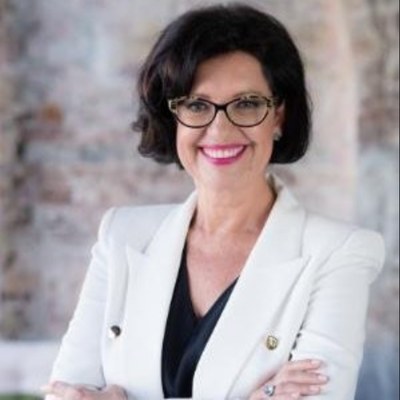
Stephanie Christopher runs Vistage Australia and New Zealand — the regional arm of the world's largest CEO coaching and peer advisory organisation, 45,000 members across 40+ countries. She was hired twelve years ago to lead what was then TEC (The Executive Connection), and stayed through its sale back to Vistage Worldwide. The question she brings to the room comes straight out of Frances Frei's Uncommon Service: a business can't grow sustainably if it relies on heroes. So should she keep being one?
Because Stephanie is, by her own admission, naturally a hero. Sales background, thinks on her feet, galvanises people, gets the quarter across the line herself when it matters. The management literature says systematise. Her instinct says the system won't close the gap in the last week of the quarter. That tension — build systems stable enough to scale, without killing the heroics that actually work — is where we start. On the way through we cover her path from speech pathology (20 years) to MBA to managing director, the imposter syndrome that followed her up the ladder, and the moment a mentor finally broke it.
Then the conversation takes a contrarian turn. Management books are written for the average CEO — not for you. Maybe the answer isn't fixing the weakness at all: maybe it's doubling down on what made you successful and recruiting half a dozen more heroes at your level instead of building systems you'll quietly resist. We finish with what separates the successful from the ultra-successful — the ability to attract brilliant people and treat them like gold — and the one belief Stephanie held her whole career that turned out to be wrong.
What you'll learn in this conversation
- Stephanie's journey from speech pathology to leading Vistage Australia & New Zealand
- The difference between heroic leadership and systems-based leadership
- Why founders struggle to balance execution with scalability
- Whether leaders should improve weaknesses or amplify strengths
- How communication and emotional intelligence shape executive success
- Why hiring exceptional people creates more leverage than doing everything yourself
- The role of executive coaching and peer advisory groups in leadership development
- How imposter syndrome affects even experienced CEOs — and how it breaks
- Why leadership growth begins with self-awareness and metacognition
- Why CEOs leave their peer groups exactly when they need them most
- How Vistage helps CEOs navigate complex business and leadership challenges
Stephanie Christopher
Stephanie Christopher is the Managing Director of Vistage Australia and New Zealand, the regional division of the world's largest CEO coaching and peer advisory organisation. With a career spanning healthcare, corporate leadership, executive coaching and organisational development, Stephanie has spent more than a decade helping CEOs, business owners and executive teams make better decisions, strengthen leadership capability and build more successful organisations. She is recognised for her expertise in leadership development, communication, executive facilitation and creating environments where leaders learn from one another.
Vistage Australia & New Zealand
Vistage is the world's largest CEO coaching and peer advisory organisation, supporting more than 45,000 business leaders across over 40 countries. Through confidential peer groups, executive coaching and access to world-class speakers and leadership resources, Vistage helps CEOs and business owners make better decisions, improve business performance and become more effective leaders.
Full transcript
Read the transcript
Hey guys, I want to apologise — there's some user error. You'll find the audio in this episode not great. It does get in and out as we switch from one person to another person. Apologies.
A business can't grow. It can't be sustainable if it's relying on heroes. That you need the systems to back it up. You're not hiring people to be you, but you're hiring them to be the best they can be. And if you're doing all the stuff and getting the glory for it, well, you're not leaving much room for anyone else.
Running a business can feel lonely, especially when the decisions get heavy. Welcome to CEO Whisperer by Saurabh Jain. Practical insights from the boardroom and the meditation cushion. I'm Saurabh. I've done 10,000 hours in three major parts of my life. I spent 10,000 hours being a CEO, 10,000 hours being a board member, and 10,000 hours meditating. What we're going to do in each episode is really unpack a real business challenge that a CEO is facing and see if we can work through it together. Enjoy.
Hi, good day guys — Saurabh here again. Today we've got Stephanie from Vistage. Stephanie, do you want to tell us a bit about yourself?
Yes, love to be here. Thanks for asking me. So I'm the managing director of Vistage for Australia and New Zealand — we're the world's largest CEO coaching and peer advisory organisation. I've been there for 12 years now. I was hired as the CEO of what was then a privately owned Australia and New Zealand business, and — well, three years ago now — as part of the board we sold back to the licensor, Vistage Worldwide, which is great.
Yep. A fully owned subsidiary of the global organisation — 45,000 members around the world.
Yeah. So it's good. So quite a shift. One of those jobs where you have a few jobs in the same job. Yeah.
On this — what's top of mind for you?
I've been giving a lot of thought to this concept of heroics versus systems. Frances Frei talks about it in her book Uncommon Service — the idea that a business can't grow, it can't be sustainable, if it's relying on heroes. That you need the systems to back it up. And the reason I'm thinking about it, Saurabh, is I'm naturally a hero. That's how I've kind of got things done. Maybe that's a sales background, because heroics kind of drives that. And I know that I have some people in my team who can tend towards heroics. And for me, it's the balance — because if you've got a goal you have to achieve, or an end of quarter, it's not going to be the system that's going to get you across the line. And so for me, I guess, as a leader: how can I build systems that are stable enough — and it's not as easy as just to say build systems — that will really work, but that still allow for heroics. It's that tension that's on my mind.
So it's worthwhile just pausing for a second — I'll just explain what Uncommon Service is. It was a book written by Frances Frei about 10 or 15 years ago. And basically it's about, you know, when you get great customer service. When you call, I don't know, a telco or a government organisation, every now and then you get great customer service, and you don't get great customer service because it's designed to be good for customers. You get it because there's a hero — someone who bends the rules, who plays in the grey, who escalates and gets things done to make sure that you have a good experience. So the moral of the story for customer service — a very narrow lens — is that to get consistently good customer service, you've got to build the systems. It's not so much about having individual heroes that break the rules to get good customer service. So I understand why Stephanie's using this as an example. Just in the back of my mind, I've just framed that that kind of makes sense for a service organisation, but I wonder if that makes sense for a CEO.
Well, that question — take it one step further back. I mean, heroics works for you. It has worked. I totally get the literature, and all the speakers are saying go systems. Should you even do that?
Okay. Well, here's something that you've got me thinking. What about if we park me — but it's thinking about my team. So then it's relying on people to give so much that it's not replicable potentially, but also you just potentially burn out.
Yeah. But I wonder — so you do need systems so you can grow and make stuff happen and hire people and onboard them. Right. But with you, was it maybe about how do you find balance between heroes and systems?
Yeah. It's the balance between heroes and systems. And then I guess it's interesting with — should you even change it anyway? Well, that's it. How do you get the right balance for me?
So it's really about how does she get the balance — the balance between what she wants to systematise and where she wants to be a hero. So it's really trying to see what's the lens from a CEO's perspective, not so much a customer service perspective. How did you end up here? Tell us a bit more about your career background, way back.
I was a speech pathologist back — years ago. Like, not quite 100, but a long time ago. Yeah, it was a long time ago. I really loved actually being on a ward with acquired brain injury and multi-disciplinary teams, and the transferable skills of interviewing, diagnosis, working in a team. So that was good.
People who take clinical roles — they don't pivot out of it. It's very rare. They get into clinical roles — doctors or dentists, you know, speech pathology in this case — they tend not to pivot out and do something else. And when they pivot out, they often only did it because there was some other factor that pushed them towards it, not because that was their true passion. So not that it was their true destiny, not that there was a true skill set — they often did it for some other reason. So I'm very curious about Stephanie — what was her reason for doing it?
I nearly got into law — arts law, which I should have done at Sydney Uni, which was my dream. But I don't know if I was passionate enough anyway then. I didn't know — you're 18, you don't know anything. And so I should have done it. All my friends went to do allied health courses. I thought, I'll just go with them. So you know, it's ridiculous. It's at this age you should be deciding what you want to do — not when you're 18.
In India, kids don't decide. You're just told by your parents — and they'll get it right half the time, they get it wrong half the time. And the theory is you're actually too young, too naive, too inexperienced to actually figure out what to do in life yet.
And you know, it was funny — it was my mum who said there's no jobs in law. You know, look at your brother, he had to go to the country to get a job. I think you have to do something else.
Did you pick speech pathology — or speech therapy, sorry — did you pick that yourself?
I don't know. I must have applied for it. Well, I got in. And you know, I know it sounds weird, but when I left school I don't think there would have even been a Bachelor of Business. I don't think that existed — it's relatively new. And in those days people would have got into business via accounting, which would never be my thing. So that background — and then I sort of grew out of that. Got bored with that.
How long was that?
20 years.
And that's pretty amazing. Stephanie — she found herself doing a university degree she was not really excited about. She said that she was bored on day one of the new job, yet she still persisted for 20 years. Which is, you know, half your career. So I'm super curious what about her allowed her to keep pushing, keep doing well in something she didn't actually enjoy. How did you persist for 20 years? What gave you that grit? Because these days, like, after about a 7-second TikTok video people are bored, right, and they want to go and do something else. What made you persist for 20 years?
Maybe life happened around it and it worked. Oh no — do you know, well, that's really interesting. So you know, I got married, had kids, and private practice — it sort of worked. It was expected. But you know, you're probably getting into something quite deep there. It was my now husband — my second husband — who is the one who said, no, you've got more potential than any of this. How about I move my business back home and let's see how far you can go. And I did my MBA and I talked myself into a couple of things.
I think he's always — well, it's about him too — 100% comfortable in his own skin, so not one bit of threat. But I think he always saw something in me. You could be better than this. You could be great. You could do something. Let's see how far you can go — was his thing.
What was so obvious to probably everyone, including Stephanie, it took her husband to point out to her. And it took 20 years to figure out that she was actually destined for more. And it's just one of those things — it happens to everyone. It's happened to me. Even if you can kind of see yourself, as Stephanie said, you can't name it yourself and you can't act on it. You need someone else to point it out.
Often you see that in yourself, you know. I think I always probably did, but I didn't know what it meant. I think probably — yeah, I think my parents saw it too. I think I always kind of knew that there was more. But in those days it would have been — you're talking about culture — a traditional path. That would have been a traditional path for a privately educated North Shore girl in those days: a clinical career, and you do that career and that's it. I think it's a more modern construct, this idea of "that's not enough for me, I could be better, I could do more." Yeah, I did see it. I did see it, but I probably, number one, couldn't have put a name to it, or number two, could have put meaning around it — like, well, where does this take me? What could I do?
Did you feel unsatisfactoriness in your speech pathology?
Yeah.
Okay — so you completely experienced that.
Yeah. And I mean, I do know, however, I was surrounded by smart people. Really smart. And science — and I enjoyed that, and learning new stuff. And you know, people used to say, oh, it must be so satisfying. I'd think, no, not for what you think. It was kind of perhaps the outcome or the achievement. So that was that. But again, that's a long time ago. I walked away from it when my husband said, you know, do this — and I went into the corporate world. And at the time I had a very close friend who had an amazing job, and he said, you could do my job — you just have to learn the words. And so that was really exciting for me. Sort of like being in a whole different language.
So you decided, okay, we're done with speech pathology, we want to go do something else. Went and did an MBA, worked in my husband's business — small business — which was great. And I learned: you get paid by your customers to pay your team, you've got to hire the right people, what happens if you've got the wrong people — all that. Which was actually really good. Probably two years, and then that was when he really said, okay, go and do something else. So I talked myself into a job in the corporate world. It was operations manager.
Ops manager. Okay. Operations manager — which is hilarious, because I would never hire me as national ops manager. Look at your resume: you've got 20 years speech pathology, you've got two years in your partner's business. How do you get that job? How do you talk your way into that?
I have an interesting thing — get me to an interview and I'll do quite well. So I think it was — oh, I know. It was injury management, was the career. So the whole idea of marrying my business experience with my clinical background kind of was it. And there were a lot of people there who were OTs and psychs who worked in that field. So they sort of got it. And so I was there for probably a year and then started my MBA. It was an interesting business actually, because it was owned by HIH — so I was there during the collapse of HIH. We were the only part that didn't go bankrupt. It was really a very interesting time.
I did the MBA part time. Took me six years. Deakin, so I did it remote. And I mean, I had kids — I had little kids. So I'd get up at six in the morning and study, and learn and study on the way to the bus, and get back into doing assignments.
What made you do the MBA?
Do you know, I think in the company I worked with it was all about growth, and there was an expectation that you would do further study. And they supported me to do it, and it was just an assumption. Yeah, it's great.
So MBA done, HIH is winding down after the year and a half — what happened next?
I went to a really wacky organisation — what was my title for that anyway? I ended up being head of, like, customer service — no, it was sales. Head of sales. And I was there for a bit. That was a complete — not the right fit for me at all.
And what made it not fit? What was different?
The culture, the people, the product — everything about it was completely off. There's one: I walked in on my first day and the CEO said, "Oh, we've got a great desk for you down here somewhere or other." And I remember my head going: walk to the lift, press the button, go downstairs, never come back. And it took me two years to do it. But that was just a strange and unsatisfactory diversion.
And Stephanie — you should have walked to the lift, gone downstairs, and never come back. Way too many people make that mistake: they stay in the wrong job for way too long. And what it does — it wastes your most valuable resource, which is time. You just end up burning time, burning your life, and not achieving what you should. Way, way too common, and it totally shouldn't be.
I think I was still quite naive about what was out there and what the options were. I think I was probably happy that they were happy to have me. I just hadn't worked it out yet. The next one was really good — an assessment and talent management organisation, and that was really interesting. It was a UK-owned business, and while I was there they sold to an American organisation. So the interesting part of being the MD for Australia and New Zealand for an overseas owner — understanding all about that. Really smart, back to science. It was a really smart business. The people I met were so smart.
Back in the good old days — in paper. Saturday morning, there was a job ad, and I showed my husband. He said, "It's saying Stephanie." And I just knew from that ad I was going to get that job. It was really good.
What about when you left that sales organisation where you didn't quite fit — did you resign first? Did you go look for another job first?
The other job. It was next door — it was hilarious. It was literally next door. Lunch, have your interview, come back. It was an assessment centre. So I remember I went to work really early — I was there before anyone, at about seven — and then as people were coming in, I said, I'll be back — and then went next door to the assessment centre. It was a really interesting job. Again, smart people. Lots of psychs worked there, lots of research, assessment — psychometric testing. At first I was — I can't remember titles — I think I was sales VP, and pretty early on the global CEO was over and he said to me, I think we need to get you around the world. So I had been there a matter of months and I had this great tour. And then after maybe three years in that role I became the managing director. They moved away from a matrix organisation — a siloed organisation — and switched, and I was the MD of the territory, which was great. And I did that for a while, and there was a lot of change there. And then I was headhunted for what was then TEC — is now Vistage.
Vistage. And how long have you been at Vistage, TEC, for now?
It's 12 years.
Okay. Wow. So your second longest job.
Yeah. My second longest job. It's a really long job, 12 years.
Very long. I mean, think about 12 years ago — like, smartphones were still kind of a new thing. A lot of people didn't have laptops. The first set of tablets had probably just come out.
Yeah. It was a very different operating world back then.
AI was not a thing even, like, two years ago. That's right. So — what is the common thread of success across these roles in your world?
Communication skills, presentation skills, thinking on my feet, and adapting — learning very quickly.
And they're all things that make you super effective in an interview, right? So that's why you said that was your superpower — when you get to an interview, you can get the job.
Yeah. And you know, even sometimes when I'm just feeling crummy or flat or whatever, and I'm talking to someone or answering a question, I'm thinking — how are these words coming out of my mouth? So I can do things on automatic pilot that I think don't come naturally to other people. But then obviously there are things I can't do — or that aren't my long suits — that come naturally to a lot of people.
I think what it is, often, is raw intellect. I'll tell you what intellect gives you when it comes to speech — and you're the speech person, not me. If you're not very clever, it takes all your mental work to get words out of your mouth. But if you're clever enough — like, I reckon 20% goes to getting the words out and 80% goes to: how's that person reacting? What are their eye movements like? Where are they sitting? How are they reacting to what I'm doing? Is that your thing?
Yes, absolutely. And also a deep intuition at the same time. So my gut might be telling me something even before I pick it up — like, this is going bad — and then I'll see the body language and go, get out of here.
And where did you learn that from?
Mum had that. So it was always rewarded. Do you know, it's something I always wanted to get better at. So giving speeches at weddings, parties, whatever — I just found I had a natural skill for it. And then I love getting better and better and better. After a big birthday party, my husband said to me the next day at breakfast, "Great speech. Really good speech." And he said, "It was really polished." And then he said, "Maybe a bit too polished." And I went, oh, I love that. And I said, "Get more human?" And he went, "Yeah, I think so." So I really — I just want to get better at things. And this was an area that I guess I had natural talent in, and then I got better at it.
Like the metacognition, with intuition, with enjoying self-mastery. You love getting good at things. That makes sense why we get along so well, because they're two of my things as well — I love the metacognition and intuition, and I love getting good at things. And then you just find what is the right thing to get good at.
I think you're right. Your metacognition is next level. And your awareness of it — your self-awareness of what you're thinking. It's almost like you've got all these systems going all at once. Massive heroics.
So what I'm confused about, though, is — you have those capabilities. Why did you stay in that speech pathology role for 20 years? Because after that, when you weren't happy, you switched, right? Even when you're young, if you're completely in a horrible place, two years is actually still pretty normal, because you're still not quite sure of yourself — you don't quite have the self-efficacy. So what made you stay in your first role for so long?
Probably personal stuff, really. Probably the environment that I was in at that stage, and the relationship I was in, and not much was expected. So just kind of day-to-day, it was satisfactory. Probably felt like I was mastering stuff — and at some points, in some of the teaching hospitals I worked in, there was a lot to master, and that was interesting. And the people around me. I do think it was — and it's wrong to say it was "of the time", because there are lots of people of my time who have had incredibly exciting careers from the beginning. I mean, now I find myself with where I am in my career, or what I've achieved, that's different from a lot of my friends and peers — because they're at different stages, but I still have this kind of desire for something.
Because I wonder what it was — because most people have this niggling self-doubt: can I actually do the next thing? Will I be good at the next thing? It's almost like imposter syndrome. I feel like 99% of people have it, and the 1% who don't are lying about not having it. Was there any of that?
Yeah, definitely. I think — you know, when we're talking about mastering things — I'm unlikely to do something if I think I can't do it. So whether it's sport or, you know, Wordle — you and I joked once, I said I can't do Wordle. And I probably could if I really got into it, but I probably tried it once and couldn't get the words, so I figured I can't do Wordle. So I think that was probably it with a career, or a next step, or something.
What she was saying — that if there's something that she doesn't think she can master, she actually won't do it. So going back to the original question of heroics versus systematising: I wonder if she actually has that ability in her to do it — to focus and be good at something that she is naturally not good at. My gut says probably not, but we probably want to delve a bit deeper to understand that a bit more.
I may not be able to do it. Maybe that. But for me it was looking around at people — family — and seeing what they were able to do and thinking, oh yeah, okay, I can do that, I can do that part. It really helped when that friend said "you just have to learn the words", and I was like — there's no big gap in me, I just didn't know parts of it. But then I think, through my corporate career, for a while I probably felt there's something missing. And do you know, a leader once — he was out from America — said, do you know how you're seen? You're seen as this, this and this — but there's something missing. And it really stuck with me. So I guess it probably spoke to an imposter syndrome. And it was some years after that, when I was actually at TEC — now Vistage — that a speaker, one of our experts, was just talking to me about something and she hit on it. And it was great. She said, "What is that? That's ridiculous." And kind of broke it, and healed that. And it went away. But I think I believed it.
So I guess inherently there's a part of you that feels you may not be good enough or you can't do it. If someone said that to me now, I'd just be like — that's a you problem. Who taught you that you couldn't do something, way back?
Well, everything comes from childhood. You're the one who said everything comes from childhood. It does. Your childhood — big family, you know. The way that I would talk to my now adult children or my grandchildren — the way you'd talk to kids — very different from how it was. There's probably an element of "yeah, but you're not good at that" or "you can't do that". There was a saying, you know — I think Stephanie would be a really good PA. Which by itself is hilarious. And Mum saying, I think Stephanie would be a really good boss. So I think it was just more the dynamic of the time, and parents from an older time — even being enlightened, and Mum having a career and stuff like that. I think, yeah, everything comes from childhood.
Except we never blame our children — I mean, we do better than our parents, and when you see your children with their children, you realise they're doing better than you did. And that's the win, right? To be able to pass that on so they do better than we do.
Okay. So now you're at Vistage. How did it start off 12 years ago? What was your role right at the start — was it MD, CEO, from day one?
Because since the acquisition, CEO reporting to a board. And how's the last 12 years been? If I could go back now to 12 years ago — which is a lifetime, isn't it? Was there a company here that did something significant?
The company had been doing this for — well, however long. We've been around 45 years now, so they'd been doing it for a long time. Our founder brought the model to Australia from the US in '86. I started in 2014. No, it's a really established business with very established partners, shareholders. Do you know — when you say what did my husband see in me — the chair of the board was the one who hired me, and he was amazing. And my husband has said to him over the years, "What was it you saw in her? Why did you take that risk?" And he never really answered it. Pin him down, get an answer — now I'll take him for lunch. He was so supportive. And he'd say things to me like, "Remember — you're the CEO talking to a board. You're not a local MD doing a business review with the boss." He was really so good and so patient and so supportive — and actually still is, from afar.
So the thing about this is — you pick and choose, but there are some really good people around. Really smart. Some good mentoring, and some really good people in the community, here and overseas. So in that time I just made some really good connections with some smart, interesting people.
That would help you perhaps have more self-awareness and keep improving. And, you know, the thought leadership that we get at Vistage just makes you smarter, smarter, smarter.
Quick segue — do you want to do a quick plug for Vistage? A lot of people probably won't know what Vistage is.
Vistage is for CEOs and business owners who are facing challenges in their organisation, or within themselves as leaders, that they're typically having to deal with on their own. And Vistage gives you perspectives from people who aren't competing with you at all, but who are so invested in your success — guided by a mentor who's done a lot of what you're facing now. The idea of being in a group of non-competitive peers in a safe, confidential environment is incredibly powerful. And we have thousands of groups like this all around the world, in 40 countries. So we've been doing it for a long time. We have a powerful model of how your peers challenge you in the group and help you to see what your problems or your challenges really are, so you can decide on the next best steps.
My plug: I've been a member now for five, six years. I was actually told by a board member to do it when I was the CEO of a public company — that was seven years ago actually. We love moments like that. The board member said, "Oh, it's so good. Take a day." I was like, "Sorry, I'm just doing it." I'll tell you what it did for me. As a CEO, you don't have any friends. Like — I had a great 2IC, fantastic, probably the only person I could confide in. But no one quite gets your world. My wife was medical — she has a completely different world. And when you're a CEO, at least in my experience, not many of my friends were CEOs, and not many of my friends would have the context of my business and my problems. And you get a bunch of 15 friends. As simple as that sounds — you get 15 friends that are going through similar machinations. I reckon 80% of the learning is not me going through my problems; it's actually hearing someone else's. And you're like — oh, I've never quite connected those two things in my mind. They're not getting to where they want to get to because of X, Y, Z perhaps — and you kind of test it with them.
I love that analogy, and that idea about how lonely it is. You're not necessarily going to get it unless they're in the safe context — because if they're in your industry, then everyone's posturing. Yeah — things are great, everything's great, fantastic. You go — no, they're not.
What you guys do — you make it okay to be completely vulnerable. Which normally, when you meet a CEO at a conference, you can't. "Oh my god, we're growing. We're going to double this year. We're doing this. We're doing that." You're completely lying, but that's what's expected.
It's exhausting having to be so — yeah, it is. Having to pull yourself up and galvanise everyone. And it would be really irresponsible to confide too much in your team. My 2IC — absolutely, but there are limits. Decisions affect them. Are they the right 2IC? And they won't see everything that you see, so they will not have the same perspective as well.
So you've been at the business for 12 years. What's the growth been like over that period — what were you when you started, what are you today?
Not significant. I think — again, as I said, 12 years ago — probably some areas that we expanded into that we shouldn't have. We should have stuck with the clarity of the business model. Some of my colleagues around the world have grown a lot more. But we are on a path, which is interesting, which is growth through new business — finding new mentors, growing — and we are very close to nailing that, which we never have in this market.
You've got 40 MDs around the world fundamentally solving the same problem, in fundamentally the same context, right? The CEO peer advisory groups. And every MD needs to figure out for themselves how to make it work. That makes me think head office has actually not solved this problem completely — and that's why they've delegated it out to all the local MDs. And that's probably just an example of a company not taking best practice and being able to standardise it out. I reckon by mimicking what other people are doing around the world that's working —
You have to figure it out yourself. It's figuring it out for yourself, that's all. I would have thought someone else would have solved this somewhere else. Yeah — but in their own context. It's different in the Australian context. And I haven't worked for a global organisation like this. It's very much a global kind of context but local implementation — a lot of freedom within the strategy.
Because — I was chatting to you before we started recording — I'm on five company boards. I've told every CEO to join Vistage, and I've had zero success rate. So there is something there. Maybe it's such a foreign concept — to actually have a group of 15 peer CEOs and to meet with them once a month. Or — well, it sounds like a cult. You're with this group. "I don't need friends. And there's speakers — I can get that on the internet." It's kind of interesting.
The other thing that struck me the other day — I think so many Vistage members don't talk about it, because some say, overtly, it's their competitive advantage. They're better at their job because they've got this peer group. And they don't want anyone vaguely competitive in Vistage. So I think there's that. For me, it's actually finding the right person to be a chair — a CEO mentor. They are everything. It's a completely distributed business model, and we're getting tougher on it. The right chair comes with the ability to own a practice and build a business — a business for themselves, but not by themselves, with support from head office. That's the business model. And, you know, I've worked on it, and sometimes it hasn't quite been the right fit. It's finding someone at the right stage, age, who's got the skill set, who's interested in it. And the rewards are great — for them and for us — when you find that person. But it's finding them.
Finding them, keeping them, finding them. The other point I've noticed about the Vistage model — obviously members come and go, but often members leave at the worst possible times. They leave when they shouldn't leave. They've just lost their job. Or — often they're very busy at work, there's a big transaction happening, which is actually when you need your group more than ever. Or they've been made redundant, or lost their job, or the company shut down or been sold and they're not sure what to do — and ironically they need the group the most then.
A great chair, Bob Dabic in the US, says: you don't cancel your house insurance when it's burning down. You don't phone and say, "My house is on fire — can I cancel my property insurance please?" And it's the same thing. You're in trouble — it's when you need the group. And we saw it during COVID. Our retention was really strong.
Why do people leave when they need it the most?
I think it's kind of that immediate thinking rather than deeper thinking. You know, when your chair said to you, you need to be in this — "I haven't got a day a month." Well, actually, you really do. I said it today to my chair. I've been a member of a group for 10 years, and even if you think you don't want to do it — just by virtue of getting in the car on a Vistage day, I start thinking differently. I'm out of the weeds, because it's that day. So I'm not thinking, what am I going to do about this tiny little invoice thing. I'm just thinking bigger.
Probably not for today, but I think there's a problem to solve there around people churning out of groups.
Yeah — if you've got the answer, I'd love it.
I'll tell you what the symptoms are. They're often paid by their employer — which was my case. I used to be paid by my employer; I got made redundant. But then I just chose to pay for it myself, because I got so much value out of it — and I have for the last five or six years. I reckon they just panic. And maybe there needs to be a model where — I don't know — say it's two grand a month, whatever the fee normally is: you don't pay that for three months, but then you owe it when you get another job or something. There might be something there. Because I reckon if you can hold them through that three-month transition period, in the next job they'll just negotiate it as part of their deal — "I'm part of this group, I want that as part of my package."
And some do. We have people who have been through a number of roles. I think it's not so much when they leave the job — it's more when they think they haven't got time for it. And for me, it comes down to value. Because if the value that you're getting is so good, nothing's going to drag you away from it.
Totally. I mean — I go on a lot of holidays, but I'll always book them to leave on, like, a Thursday night, because I know I've got my Vistage group on Thursday. I will organise stuff around it because I don't want to miss it.
You were at a retreat with us and you were leaving that night, actually. You plan all your holidays for after a Vistage group day. It was Japan — you were in the mountains, you had to get home and get to the airport.
Interesting. Okay. So let's wind back. You've given me really good context. We're talking about heroes versus systems. So tell me how being a hero has made you successful in your current role.
Well, it's what we talked about, I guess — that I can apply something quickly and do it. I might get to an answer — maybe it's not the answer — pretty quickly. And I can galvanise people around me, and I can sell, which means influencing people. So doing things myself has worked.
Well, it's kind of worked. Yeah — doing things myself has worked. Delegating them, or something simple, trivial — just do it yourself. I'll just do it. And it's fine. I can turn up and do it.
What makes you think there's something wrong with that? Because I'm going to say — oh my god, Stephanie, it's worked, right? You've done this for 12 years. You've got a great job, it's a great organisation, assume you're hitting the right metrics. Why would you want to change?
Because you could probably do so much more if the people around you were able to do more. I mean, you know that from every Vistage group. Our mutual chair, Ian, said to me the first time he talked to me: "You're a one-man band. What's that about?" So that's limiting. And it's not fair to the people you hire. You're not hiring people to be you, but you're hiring them to be the best they can be. And if you're doing all the stuff and getting the glory for it, well, you're not leaving much room for anyone else.
I don't know. So — I used to think that. Then I listened to a fantastic podcast. Airbnb CEO — $100 billion company. He was the original founder. He went down the systems path. He got some management training — you know, you've got to delegate to your people, have these structures and all that kind of stuff. It went horribly wrong, and he went back into founder mode. And he's been there for about two years. So he works 100 hours a week — that's just what tech CEOs tend to do — but he makes every decision himself. And he reckons it's been the best thing he's ever done. Because — I'll tell you why — if you listen to him, you'll just know there's probably not many intellectual peers for this guy. And I think when you're really competent, really clever, really smart — other people just aren't as gifted as you are. And maybe there's nothing wrong with hero mode. That's what I left that podcast thinking.
So then — playing that out — well, there's always going to be more than one hero. I mean, you're not the only hero. Then he's saying other people are just there to do what you tell them to do?
Just to remember that being a hero isn't actually all bad. Because being a hero has actually really gotten her to where she is. She's a CEO of a large organisation, very successful — been a CEO of quite a few companies now. And being a CEO for 12 years is no small feat. Most CEOs — the average half-life is normally three to five years. So she's doing something very, very right. And I don't want her to forget that. I'm saying that you don't have to assume, just because the management books tell you, or mentors tell you, that you have to scale outside yourself. You don't have to assume that's correct for you. I think that might be correct for a lot of people and a lot of CEOs, but it doesn't necessitate that it's correct for you. That would be my conjecture.
Because if you look at — let's go, you know, Elon Musk. Crazy hero mode, right? He's got 60 direct reports across different companies, and he's got four different companies worth trillions of dollars now. I reckon that's kind of worked. He's the richest person that's ever lived in the entire history of life, and it's worked for him. And if someone told him, "Oh, Elon, you should start delegating this, delegating that" — there's a wonderful quote in an interview once about him: he's the smartest guy in the room, and he generally is, in any room in the world. And sometimes, when you're so intellectually gifted, or you've worked really hard on yourself, you shouldn't play to a weakness. You should just double down on the strength.
You know, it's interesting — I had a consultant once work with us who said: "You know, you don't talk. It's important you don't talk. Let your people work it all out." And I'd sit there and go, yeah, that's fine — but they're not saying what we need, we're not getting to where we need to be. And it was one of my team who said to me, "Can you stop doing that? We actually need you to talk. We need your ideas. We need what you're thinking we should do." So — but there has to be balance, doesn't there?
So, two things. What about when you leave?
Yeah — I'll take a step back. We'll answer the "when you leave" bit. But then — the default thinking is you can't scale her. I reckon you can. He really is an outlier, the Airbnb guy — he's making a hundred-billion-dollar business. One of the guys in one of my groups — he's grown from, you know, $50 million to $200 million. He controls everything. So you can scale. So then you want to think about it like: what is it that I'm doing that I can replicate? And what Elon Musk does — he asks, how do I recruit other heroes? How do I recruit other absolute rock stars that are as good as me? They probably won't be in most areas, but fantastic in their actual domains. And he completely gets his incentive model. The way you communicate, you convince someone to do something — he completely convinces them: hey, don't go home and spend time with your wife and kids, work on the factory floor with me till four o'clock in the morning. Love it.
So that's really interesting. But the idea about whether it's heroics or not — there's something about surrounding yourself with really good people, isn't it?
I mean, my view on this is still evolving. I've kind of given up trying to change CEOs, because they kind of did well — and their last 10 or 20 or 30 or 50 years of experience has reinforced that whatever got them here is actually an insane skill set. So now my current thinking is: rather than changing someone — saying hey, look, don't be the hero, focus on implementing systems — how do you double down on their strength? How do you make them more of a hero, and maybe supplement them with somebody else? So perhaps in your world, you're still the hero, but then you supplement it with a 2IC or someone else in the organisation that does all that systematising stuff.
Yeah — you know, I think that's really interesting. Because I know, in the past, that kind of visionary-and-ops-person pairing — the two things. And visionary people are more likely to say, "Oh, ops people are so good. There's something missing in me — I'm on to the next shiny thing." They see it as a negative. And it kind of hit me at some point, and I thought — that's not true. It's just different. Visionary people often have a bit more awareness, so they're aware they don't have that part in them. And maybe people just don't see that that's the thing you need. You need to be visionary. That might have been that thing — that "there's something missing in me" — because I'm not going to be ordered, or operational, or whatever. I'm going to be who I am.
And I wonder what your life would be like if you just doubled down on who you were. Because I should have clarified, and I didn't, but I want to clarify — after the entire conversation: heroes versus systems — was that within you, or within the organisation?
The organisation.
So would you have ever tried to implement systems yourself?
No. No. You'd find someone to do it. I mean, I could think about it. I could say — do you know what we need? It'd be great if we had this, this and this. But I'm never going to implement it.
So I ask the question — if you need to implement systems, then could you just recruit three or four more heroes? Well, that's sales, isn't it? That's kind of what you're good at. Like, that is your thing, right? And sales people love other sales people that are just alive, if that makes sense — that are just alive and excited and love what they do. So tell me a little bit about an organisation with, say, six Stephanies.
Well, I don't know — there's the truism: you can't just hire in your own likeness.
When I say likeness, I'm talking about hiring at your level of ability and competence.
That is the hardest thing to do. That's insane. Who said, "I'm going to have 16 people like that"? I can't picture it. Does anyone have that?
Well, the problem is that CEOs are probably the top 1% in terms of the org chart, right? It's hard to find a lot of other people like you. But that's where one should spend their time. My humble view is — if you've got, like, a three-year horizon of growth, which most growth plans are, 12 months or three years (no one ever thinks five or ten years unless you're a Japanese company) — I reckon if you want three years of rock-star results, it'll be half a dozen of you. Half a dozen rock stars. Great staff, or great marketing, or great customer service, or great chair engagement — whatever the problem is. I reckon it's six or seven people at your level of ability. I think that would have a greater impact than having great systems and processes. That would be my conjecture to you. What do you reckon?
Interesting. Yeah.
Let's make success black and white: revenue, profit, right? They're the only two things that matter.
Look, I think it would be — because I think the kind of function of the capability you have is the result you get.
Yeah. And I think the other reason that it might be more successful is — you'd love doing that. You'd love building that. I mean, to find those people — oh my god, that's the hardest thing ever. There would be a couple of hundred people in Sydney that you could probably get into that role, that you could convince. But I reckon you'd enjoy it so much, you'd make sure it worked. Whereas I reckon the systems and processes would grate you so much — you'd kind of do it, because you're told you've got to scale outside yourself, what happens when I leave, who's going to be my successor — but you just won't want to implement it. How does that sound?
Like food for thought. Really interesting.
Management books are generic documents, right? They're made for the average CEO. They're not made for you. So always take their advice with a real grain of salt, because sometimes it just won't be for you. You'll be trying to improve in something that you're actually not very good at — and instead, you should just double down on what you're good at and be great at that. I reckon there's a fallacy about a lot of the management books out there that say you need to be good at this: you've got to delegate, you've got to systematise, you've got to get good at something that you're not good at.
Yeah. Because — well, you can't. And business is inherently stressful, and you're going to revert to what you're good at.
The problem with the systems-and-process route is you'll have a bit of a dip, right? It'll take 12 months of cost — you've got more consultants coming in, and things are slower, and they're not perfect. And if you're a real ops person, you'll go through that and be happy that, hey, I've done the right thing, it's going to work out on the other side. But if you're a hero, you'll be like — oh my god, this is not working. Get rid of it all. Get rid of it all! I knew it wouldn't work. I told you all.
So what was the original question? The balance between heroes and systems for me. I think it's really interesting. I'm going to go and have a think about that. Talk to my Vistage group about it.
Right here! Because I wonder — this is something I reckon you could do really well at, and this would be that next level of self-mastery for you. Because what all the successful people — like the ultra-successful — so there's two levels, right? The successful and the ultra-successful. Successful people are really good at what they do. They're smart, they're gifted, they're communicators, they've got great vision, all that kind of stuff. The ultra-successful go attract the successful, and they somehow convince them to go work for them. Anthropic — albeit they pay zillions of dollars — they've got the best people in the world working for them. Facebook has not succeeded in that. Mark Zuckerberg — his average package for an AI engineer, some of the very senior ones, like $100 million. A hundred-million-dollar sign-on bonus. But he's not succeeded in getting other great people. Mark Zuckerberg and Elon Musk are both very smart, very competent — but Elon always talked about how great his people are. Have you ever once heard Mark Zuckerberg talk about how great anybody in his team is? So I reckon what it is, is: you see the value in other people's brilliance — you see it, and you grab it, and you just treat them like gold.
But it has to be real brilliance, doesn't it? And you'll see through that. You'll completely see through it. And I think real brilliance is really rare.
I reckon if you could master that — that would be amazing to master. Imagine what you could do in life. Because — I mean, you're in the Vistage Australia MD role, but that's really what the global role is, right? To go get 40 brilliant heads across 40 countries. This is a great opportunity for you to learn that skill set. And it's something everybody always complains about, right? "Oh, my team's crap. They can't do this. They can't do that." And I always think — yeah, but you kind of picked them. Or you're the one that hasn't fired them all. And maybe that's the next great thing to solve for you. What do you reckon?
I actually have a good team. But I think the concepts are really interesting, and I'm always interested in counter ideas. I'm going to go and sit with them and think about it. That's good. Good session, good chat.
Let me — so I've been going, as we've been talking, writing down for you specifically — I've always wondered what's made you so successful. So I'll tell you what I've got here. It's the life — like, you're so alive, right? You're so enthusiastic. Obviously the intellect. And the metacognition. And I think you just touched on it then — I view it as, like, a healthy disrespect for authority. That counter view of life. I reckon that's probably one of the major things that's made you successful. Anything else you'd add to that?
I love the metacognition — that's what I'm really interested in. I think it's grit. You said it before — grit. You stuck through, right, for 20 years. And grit with — if I fail at something, I'm determined to fix it. It kind of motivates me.
Brilliant. Cool. So let's go back to the original question — the balance between heroes and systems for me. Where have we landed? How would you summarise it?
Yeah — I don't need to focus on it too much. And don't let the systems thing get into that "there's something missing" past. Don't let it dive in — you know, "you're not an operations person and you should be." Don't go into that. And dig more into — well, heroics itself may not be a problem. Success itself isn't a problem, being successful isn't a problem. So what could that look like in other people? And then — how do you find those people? How do you attract them? How do you sell to them? Because often the very capable people are very hard to sell to, and they're hard to find. And I'm sure we know that.
Okay. Brilliant. Anything else you wanted to add?
Yeah — thank you. Well, just on that — I've mentioned it twice because I think it's so important: once you've mastered this, whatever you do next, you'll do even better. Because I think that would be that last little skill to absolutely nail.
Brilliant. Well, one question I always ask everybody — all the guests — is: what's something that you've always known to be true that later on you found out actually wasn't?
Probably — something that I've always known to be true that later on I found out wasn't. I think I always thought, probably in my younger years, that people got to a position of authority and power because they were good at their job, or talented, or worthwhile. And I think over the years I've realised — and met a lot of people where you can't understand how they got there. They got there some other way. And to recognise that — not to feel it, just to recognise it. There's a certain kind of strength in that when you're in that situation. Anyway — which I'm not these days, but I have been.
Cool. Awesome. Thank you very much for your time.
Great. Thanks, guys.
Thanks for listening. I hope you enjoyed it. If you do want to be a guest, make sure you hit me up, and do follow me on socials — and make sure you check out future episodes. Thanks, guys.