
Scaling Beyond the Founder: Building a Self-Sufficient Firm
About this episode
Manu went from a four-partner firm to a two-partner structure and assumed the hard part was done. Then he realised the firm had quietly become him. Clients stayed because of him. Decisions waited for him.
We unpacked what it actually takes to scale beyond yourself — the difference between a name on the door and a real partnership, why your best technical people don't automatically become leaders, and the patterns from earlier in life that quietly shape how you manage today.
What you'll learn in this conversation
- Manu Gupta's journey in building and scaling an accounting firm
- Why professional service businesses often become founder-dependent
- The difference between a "name partner" firm and a true partnership structure
- How to reduce reliance on the founder without losing quality
- The challenge of closing knowledge gaps within teams
- Why technical expertise does not automatically translate to leadership
- How to structure teams based on strengths and comparative advantage
- The trade-off between training teams versus doing the work yourself
- Why hiring the right people matters more than over-investing in the wrong ones
- How personal experiences shape leadership patterns and decisions
Manu Gupta
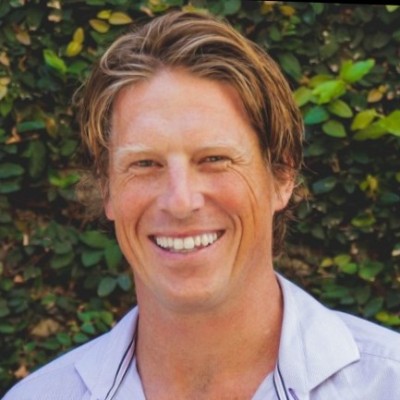
Manu Gupta is the Principal Partner of MG Arthur & Associates, a Sydney-based accounting firm. With over 15 years of experience in the accounting industry, Manu combines deep technical expertise with a strong focus on building scalable systems, leadership capability, and a sustainable firm structure.
MG Arthur & Associates
MG Arthur & Associates is a Sydney-based accounting firm specialising in tax advisory, SME services, and high-net-worth client solutions. The firm combines deep technical expertise with a strong focus on building scalable systems, leadership capability, and a sustainable firm structure.


Full transcript
Read the transcript
The realization is how much this business and how much these clients are dependent on me which is now weighing very heavily on me. Now I'm growing this firm from a two partner firm back to a four partner firm with about a total strength of 30. But I really don't want it to be anymore a manuptas four partner call right I want it to be a true four partner forms where all the partners are equally sought after and are independent of me. So there is a knowledge gap between me and my team which needs to be resolved or we need to bridge that crap very quickly. So it should be a 90 10 kind of a gap.
It's probably a 75 45 or 7030 kind of a gap that uh gives me a lot of satisfaction because I get to address. It's like a surgeon, right? Surgeon wants to do complex surgeries. I love doing that, right? But then it it shares my time.
Running a business can feel lonely, especially when the decisions get heavy. Welcome to CEO Rispro by Sora Jane. Practical insights from the boardroom and the meditation cushion. I'm Sora. I've done 10,000 hours in three major parts of my life. I spent 10,000 hours being a CEO, 10,000 hours being a board member, and 10,000 hours meditating. What we're going to do in each episode is really unpack a real business challenge that a CEO is facing and see if we can work through it together. Enjoy.
Welcome to another episode of CEO. I I have manu with me. Man, do you want to tell us a bit about yourself?
Right. Sure. So came to Australia in 2002. Belonged to a family business. So inherited a manufacturing business from my my father who passed away at an early stage for me. So my mother used to run the business. So I joined her ran the business for six seven years uh before I decided enough is enough. I can't handle that kind of economy and the ways there. When I came to Australia, I didn't know where to go, what to do. tried my hands on a couple of small things and loved tax. So it was just accidental that there was a job that said if you learn about tax and you pass an exam you'll get a job and been good with studies.
So I did that got into tax loved it and been in tax since then.
Yeah. Brilliant. So the way we run these podcasts is um we try to work on current problem that you have. So what's top of mind? What are you thinking about these days?
I run an accounting practice. So it's a two partner accounting practice with about 25 people. The name is MG Arthur and Associates. We've had a little bit of restructuring in the recent past. We used to be a four partner firm. Now we are two partner firm. What I have realized in this process is the transition happened very smoothly and the transition happened very smoothly. Transition from four part four partners to two partners. I was thinking the clients will have a bit of fear. They'll have some discomfort but most of the transers wanted to stay around right which was very good because it ensured that we were able to transition from a four partner to partner firm without any hiccups but the realization is how much this business and how much these clients are dependent on me which is now weighing very heavily on me.
So I'm now growing this firm from a two partner firm back to a four partner firm with about a total strength of 30. But I really don't want it to be anymore a manifas four partner call right I want it to be a true four partner firms where all the partners are equally sought after and are independent of me and the firm's independent let's stand up how do I scale outside myself?
Yes. Yes. and how things can happen without me being around or without you taking calls. Okay. Well, give us a bit more of the backstory like how did how did you decide to set up your chances firm? How did you get the other partners on? How have you built this business?
Um took up a job in 2002 in a very small firm in Tangi. Worked for that firm for six years. At that time I had to do all my studies again. So my Indian education was not accepted. That that was the period did that got my license because I loved this profession and because I loved this area of work I just wanted to do it at a scale or in a way that I could do free. So I left my job and
Actually, you know what? Come to think of it, it should have been a super hard decision, but maybe I didn't think about it.
I just blew it. Right. And it's
You just didn't know about
Yeah, exactly. I'm sure my wife was pregnant. We had our first baby that time. She went on maternity. Okay.
And I had no clients. So even higher risk.
Even higher risk. And I had a table in the office room. So we threw a dining table and we got a study table or a a client's table there. And that's how I started.
I would say I was crazy. Yeah. But touchful it worked out.
Yeah.
Yeah. So
how long was that?
Uh 2008.
Okay. So you've been what 15 years now? 17 years.
17 years. Okay. Yeah.
Yeah.
And how's the experience been growing this accounting practice?
It's been very gratifying. Yeah. It's been very satisfying. Uh because of my passion towards the stream, I've enjoyed pretty much every day of my work. It has been challenging. Challenging has been on the business side of office, not on the professional side of business.
Yeah. Yeah.
Okay. So, around managing people, clients, and all those kind of things.
Absolutely. People management is the hardest part. And people tell me I don't have a very high EQ. have a very very high IQ. That's a challenge.
Perhaps that goes into with the professional
possibly.
And perhaps that's why you're so successful at the professional. Very high in the It's rare to get high intensity and high IQ at the same time.
Yeah.
I don't know why, but one of them seems to take away from the other.
Yeah.
Michael do so much.
Yes. It it's a struggle to get the other one and a struggle to get my EQ up and be there. Yeah.
Yeah. Okay. And so how's the firm looking today? So what kind of work do you do? What the client clients that you have?
So we predominantly do work for SMMES and HNIS, financial individuals. So we've got about 250 business clients uh across the board and which they they are spread across five CRM. We call them client relationship managers. So I one of them are partnering with another two senior manager. Three senior managers will have a portfolio of their own clients. We have a portfolio of individual clients as well who predominantly people who have complex tax issues with properties, property development etc etc. The team split between Sydney and overseas. So half of us are here, half of us are overseas. Overseas team is our strength. They do all number crunching and they produce stuff that we need. The Sydney team including the admin team and the accounting team is all about client service.
Yeah. and and tell tell us some of the symptoms that you feel right now about you know everything relies on you or you're trying to scale outside yourself like what are the some of the things that happen to make you think that's an issue
yeah so it it probably also comes from so that we pride ourselves in providing very high-end tax solutions right so the queries that come to us from our clients are also complex the challenge I have is and that's one of the challenges the challenge I have is 60 70% of those queries can be uh can be addressed to by my team but there's a 30% of the queries that needs to come to me and I need to solve them. So there is a knowledge gap between me and my team which needs to be resolved or we need to bridge that crap very quickly. So it should be a 90 10 kind of a gap. is probably a 75 45 or 7030 kind of a cap that that uh gives me a lot of satisfaction because I get to address it's like a surgeon right the surgeon wants to do complex surgeries I love to do that right but then it constrains my time so I have to take care of my clients and I've got to take care of these queries
and then on top of that um I and my leadership team have to run the business we've got to take business decisions we got to and now technology is a big thing so We've done a lot of work in the last 6 months adopting and adapting to newer technology and on a daily basis we're looking at new technologies. So we spending a lot of time and effort in doing that that all comes together in me feeling that look if things can happen without me that would free me up to do better things right and that would free the business up to scale up much faster. So the one thing you touch on, right? So let's just say you and you can do 75% of the tax today.
Ideally 90% would be amazing.
Yeah.
How do you know they can do 75%. Cuz my explanation would be tax is so nuanced, right?
Mhm.
Um if I just ask simple question, hey, is this is this capital or is this expenditure? Anyone can can tell you that.
Yeah.
But if I ask you a complex question, hey, I want to sell this asset and I want to buy this asset.
You have to know all my historical context, right? Yeah.
You have to know how my companies are structured. making come comes from but I'm planning to do next year.
Absolutely.
Can a team member except for you you going to do 75% of that?
Yes. So using the same example and you've got a manager who handles your fix, right? So he knows your circumstances better than I do today. So he's got all that together and he'll come together on your query and he'll find a solution. But then two or three out of 10 times when he comes to me and learn the solution I will have a better solution of that because of not because of I understand your circumstances better but because I understand those nuances of tax law better which change the outcome for you
but wouldn't your solution be better 100% of the time versus the more junior person
no 70% or 80% of the time my solution would be exactly what you're thinking
okay so it's the same right it's only 20% of the time where because the situation was unique or the activity was unique they're not seen that and I've had that experience or I've studied that area that I can say no in this situation this happens like for example there was this scenario where a couple was separated right and as part of the separation the husband bought the property 3 days later he's selling the property and this his main residence now if it's a main residence sale the main reason exemption only applies if both spouses agree that that was their main residence The wife was not ready to sign the paper, right? So they said, "All right, he's going to get half the exemption, not full exemption." But there's a provision in the law which allows you full exemption in a separation case.
So those are rare cases, very cases and that's the technology side of it or the technical side of it which I want my people to grow quickly into.
Yeah. So I imagine I guess you know there's probably a long tail of these nuance things, right?
Yeah.
And you'll only see this once every couple of years. Certainly not always positive divorce.
Yes.
Every couple of years you'll have a client who's got a divorce and then had an ass and you'll remember oh I did that 10 years ago.
Yep.
And I I remember such and such and you can go search one of the website find it.
Yeah.
Is that teachable any quicker than a one by one experience example?
It is and that's and that's where the challenge exists with the new generation. So there are two ways of getting this knowledge. One is by experience. But not all of my knowledge has come from experience. A lot of it has come from structured education and unstructured reading. The new generation doesn't want to do that. They just want to get it by experience or through tax.
Well, you've got a 7-second um uh time scale in terms of attention.
Yes.
So, it's hard to sit down for an hour and actually read a document or or go to a course for an expert for
that's the true challenge we have industry. Not just in our phone but the industry across the board.
Yeah.
The way I can think about these kind of things is there's two things to do. One is to solve the problem. Hey, how do we increase my 75 cents a night for example?
Yeah.
Or one way is to find a way to not need to solve that problem.
So solving the problem was obvious do more training, spend more time with them, mentor them and all those kind of things.
Yeah.
Um sometimes that works, sometimes that doesn't.
Sometimes you're actually better off not need not needing to solve the problem by doing other things. So for example might be hey how do I not be busy on other things. So manupta is just the tax man and everyone comes in tax queries. Yeah
and you're just constantly hitting and doing 20 of them every day and you're talking team you know that's kind of all right but that that's your only job is to manage tax queries but that's that's a big chunk of your job. So then the other stuff that you do and you find someone else to do they're the two kind of macro options one has what would fit better in your oh that's so there's two ways to solve these kind of problems right one way is to not need to solve it so for example in your case it might be that um instead of uh you trying to get people from 75% to 90% you don't even bother and you just do every tax query or the other option is well you actually figure out how to get them from 75 to 90% and you train them and you mentor them.
Which of those two would work well in your in your world?
So if I was to pick one, I would love to just solve tax problems, right? So if I was able to do the other part which you're suggesting, it's a great idea is to build a leadership team which can solve people problem and business problems. So I don't have to be involved in that part which is currently taking about 354% of my time. U I would love to just be the techie in the room. Come to me with the tax problem. I'll do my research. I'll give you the answer. I'll give you written advice and I'll go home happy. So that that's exactly one of the things that I should be looking at. Thank you for that.
Cuz um one of the You're welcome. Firstly, um one of the ways to make money and be happy is to only do what you enjoy all the time.
Yeah.
Um and if emotional intelligence is not your thing, like they've got a Hindu saying for the first 40 years you make your habits. Second 40 years your habits make you.
Okay.
When you're over 40, you just can't change.
Yeah.
You can't learn something new. The mind just loses plasticity. You should have done that when you were 12.
Yep. Yep. Um, so trying to learn EQ and getting better at people management might not be the right strategy.
Yeah. It's not working anyways.
It's not working anyways. It'll be hard. It'll feel horrible. It'll be so uncomfortable.
Yeah.
And what you'll do, it'll be so uncomfortable you just won't do it
and you'll snap back into whatever you really like doing or what you're good at, what you enjoy.
Yeah.
So maybe you build a system around you where you just do your tax all the time. You just do your tax complex queries. Yes.
And you still educate people because one day you might not be there, but that's not your focus is to train. Your focus is do the query. Maybe you teach case by case by case y
to each of the guys in your team.
Y
and then you think about how do I get someone else to do all the other stuff.
So I guess what I'm hearing from you is create a leadership team which can do the business development and business management and growth side of it. Right? That's what we're leaning toward.
Kind of I'll take a tiny bit more nuance. It's um make sure everyone around you plays to whatever their comparative advantage is.
Okay.
So your comparative advantage is doing tax. Yep.
Um, does someone in your leadership team have a comparative advantage around people management?
Yeah,
perfect.
Um, someone in your leadership team have comparative advantage around, you know, systems and processes and tech.
Yep.
So, what if you just divided up all the tasks like that
and just said, "Hey, I'm not the people guy. I'm the tax guy." And the people guy says, "Hey, look, I might have fewer clients because I have a lot more people management issues."
And the tech guy focus on the tech, but he just knows any tax thing. He doesn't even need to spend the mind space if he's not interested. He knows money was always available. Y
and a quick phone call and lovely for thought of an email and he just knows that that will actually be taken care of.
Yep. So, and actually you're I think you're hitting the right spot there for me because I'm actually building a team around me on that. Right. So, we I've got a partner. He's great with people management and he is great with getting work done and delivery. So, he's the operations person. Right. Then I've got two young managers. One of them is the tech guy. He loves processes, systems, solutions, improving those solutions, right? The other one is more of a client service guy who loves getting work done and things that we've got a people and culture manager who does our HR and quality control. Right? I guess where I am placed at the moment, I'm still a N out of 10 on all of these fronts.
And these people are probably a five, six out of 10 on the other four or five fronts. And
in terms of time or in terms of competence,
in competence,
competence, right? Um, and it's probably a matter of time and just supporting them to grow back up to eight or nine of them that they will not need me and then I can just filter back into my sweet spot. Is that what and and I'll tell you why you're experiencing this. So this is completely normal. Cuz when you were just the main partner or was just you by yourself, you had to do everything yourself.
Absolutely.
And now you've got all these people around you might not be as good at you at everything, but you all of a sudden don't need to do everything yourself.
Yeah. And if I reflect that, sorry,
but if I reflect that sort of and you've known me for about 15 years as well,
I was probably the same as them or even not even as good as them 10 12 years ago. and I'm better than them today because I've got that 15 years of experience in my head. So maybe it's just a matter of time and encouraging them to get there.
Yes. Sometimes there's a reason you're the name partner and they're not like not all people are built to learn.
Y
and not all people are built to work hard.
Not all built people are passionate about what they are. But assume they're built to learn and they're passion about their work. They probably just need that time, that experience.
But what it means is what you'll teach them is is actually quite fundamentally different. You won't be teaching them tax.
Yeah, you Yeah, I get that.
I'm going to teach them people management. I'm going to teach them system processes
and you might have to double up the workload in the interim for a little while,
which is what I'm feeling now, right?
But are you feeling it because you're training them on people consciously or you doing the people task?
I'm doing both. So, I'm actually trying to not do it. I'm trying to put them in the front and ask them how you'll do it and then train them and get them to do it.
Okay.
Right. Which is three times the effort. I mean, I can get in and do it. It's an investment. Yes,
it's a complete investment.
Yeah, but I could have done it in 3 minutes, which takes 30 minutes for me to do it now.
Yeah.
So, yeah. So, that's what I'm doing.
So, I think that's I think I think that's that's the right strategy.
I think that's the right way.
How come how come it hasn't already worked? Cuz you worked with these guys for a long time. How come it they're not n out of 10 in these areas?
So, not the long time. So, as I mentioned, we had a bit of a transition recently. So, we had a team previously which I thought was the right team for this. I invested about 5 years into that team. Three, three and a half years down the line, I realized that team is never going to get up to speed with where I need them to be. Whether it was people management, whether it was processes, whether it was technology, they were very good with client service but not interested in business management. And that's what caused us to restructure or rejuggle our whole organization to now start from scratch. So I'm 5 years behind now in the whole process.
But why did it take you three and a half years to figure that out? I don't know. Yeah, maybe I was just I'm just I was just being an optimist, I guess, that now it's going to work out. No, I'll keep working. I'll keep making efforts. I'll keep trying to find solutions. It took me a long time and I was given warning signs earlier, which I didn't see. Everything happens, right? And it's all good at the end of the day.
Yeah.
Cuz one of the things you want to consider is how do you make sure that doesn't happen next time? How do you get some really early boarding sites about the no just be your partners other people in the team right
like what are the ones that I can bring along on the journey and I and just I just can't
yeah so yes and I have put together certain learnings that I've had from the past so one of the learnings that we have brought into our um team is sense of entitlement versus sense of gratitude um and contribution right so we or I personally am guilty of creating a sense of entitlement in people who work for us, right? I want this, I want this. Okay, I'll give it to you. I'll give it to you. Just just be around just get and now it's come to no that doesn't work. If you can't put work at par if not better than your personal life, then this is not the place for you to be. Right? So, we have absolutely cut down on sense of entitlement and we are looking at sense of gratitude.
How much do you value this place as being a part of your personal growth and success?
What about you made you want allowed people to get that sense of entitlement from you? What is it about Mund that actually let that happen or or allowed that to happen or made that happen?
I don't know maybe I was trying to step back from my business too early in my life. So I was wanting to cut back and for for those three or four years I was actually cutting back right. I was I had moved back to 4 days a week. I was doing lesser hours and there was this fear that if I have to do that I have to fulfill this entitlement to keep people around me and then it got to a stage where enough is enough man I'll just do it myself and if you want to be part of this you got to do it at par with me otherwise you're out
right so it was just it was just an overnight turning in my head I said enough is enough I'm not going to take it anymore
I mean that first part of what you kind of explained where you kind of thought you've got to make these guys happy. Give them what they want you to kind of keep them.
Does that mirror any other part of your historical context
in personal life?
Yeah. Because often it's a personal life that bleeds into the work life.
It does.
Possibly it did at family level as well. Yeah.
It's probably pretty standard in like Indian families.
Yeah. Absolutely. Yeah. Yeah. In in terms of even with my mom and whatever she says, I'll just do it for her just keep her happy. You know, it probably started from my childhood. Yeah. Yeah,
it probably is from my upbringing.
And then I wonder if even with your with your mom or with other personal relationships,
was it then that that turning point you said enough's enough?
There was actually there was Yeah, you you're right. And and and now that you talk about it, I can see that it has happened in most of my relationships. So I've let it go for a while and I said enough is enough. I said no more. You want to stay, you don't want to stay. I don't care. I'm not taking this anymore.
Yeah.
Yeah. So you've just been kind of playing the same play again and again in different scenarios because the interest thing one wants to consider is how do you make sure you don't play this play again? You don't watch this movie again. So you really want to understand like why have I done this
and one of the things that I've experienced as you meditate is we are so pre-programmed.
Yeah.
Not from like God or previous lives just from what happened to us in the past.
Yeah.
I mean this is probably a great example right you probably got pre-programmed. This is the way this is the way you form healthy relationships. That's probably what you thought
that I give, I give, I give, and then part of you at some point says, "I'm being taken advantage of."
And you snap back the other way.
Yeah.
Yeah. Very true.
So, what do we do to solve that?
What do we do to solve that? That
because I think even if you consciously say you want to go from gratitude away from enlightenment, it's hard to fundamentally change your personality and you'll slowly start let sliding back to wherever the base model was. Yes, that risk is always there. So, how do you do it? I mean, how do you keep it written on the wall in front of you say, "Man, I don't want to get there anymore."
Well, I think the problem is it's it's one of those problems that live in the unconscious mind, not the conscious mind.
Yeah.
So, you legitimately can't talk your way out of it.
Um, so you think about like what kind of guard rails can I can I do? Like, I know I can't do this. Um, let me just accept for a moment. I can't do this. It's not my personality. I've got to be nice to people. I just can't do this.
How do I put a guard around me so so this doesn't happen? So, I'll give you an analogy, right? I want to get fitter.
Yep.
Um, it's just too I don't have the discipline. I've just accepted over the last 40 years, I don't have the discipline. Um, luckily, I've got enough money. I'm happy enough, but without my health, nothing else really matters, right? As we all know.
Y. So, I think to myself, why don't I just get a personal trainer 5 days a week, spend 300 bucks a week on it? I've got it locked in my calendar because I've got a meeting in my calendar I always go to.
Y know, a meeting in my calendar with somebody else I always go to and I'll just get them to come to my house every single day, 5 days a week, and I'll just accept that's just a cost of life because then I don't have to actually make that decision. There's no conscious decision, no conscious thinking on my side. I made the decision and set up this system when I was when when I was of sound mind. Is there a similar world in your in your scenario where you can set up a system or guard rails or process or structure or surround yourself with somebody that will that will that sees this is your character and helps kind of buffer that?
So when it comes to our business, we have very recently started doing that. So we have engaged a business coach firm which is a specialist business coach firm for accounting practices. Right? Multiple reasons why I did that. One is obviously I don't want to make the mistakes again what I've made in the past. Two is I wanted my new upcoming leadership teaming to get not just from me but people better than me right and three was for them to be able to see and tell me where I'm going wrong right so have the courage to say that yeah so I guess that part from that respect in the business environment I think that would solve the problem because there's already an external person who's looking at us questioning us week basis and saying where are you heading what are you doing what are your decisions what are your problems thing
I think that's going to solve many of the problems that might not solve this core foundational problem.
Exactly. Yes. So, and I don't know how to solve that one because that's internal, right? That's just being Yeah. So, how do I watch myself for not doing it?
And to be honest, that's probably why you're so successful, right? Like you treat your clients really well. You let them take a bit of advantage of you, but then the clients know that you're you're there all the time. At 10:00, they can call you even when you're asleep and you'll pick up the phone. So don't try to change that but think about how do I build a system around me so the guys on the team
don't misuse this.
Yeah.
So for example in your accounting world the way you make sure people don't miss it is you just build them.
Yep.
Yep. You the next month they get an invoice that extra 1 hour consult. Awesome. That's solved. So they can they can take advantage as much as they want. You'll you'll make your fees out of it.
Not always but yeah often.
Yes.
Only from the good customers.
Yes. Yeah.
Yeah. Yes. But that again sort of so that solves my business side of it. But at the personal level and I'm now thinking deep of what you've poked out of me. Um at the personal level, how do I not create sense of entitlement in my relationships is the question that I'm starting to think.
So it's it's not the greatest analogy, but I'll tell you when I saw a documentary like a David Atenburgh documentary long time ago. Um there was a baby elephant um and it had been you know abandoned by its mom like for whatever reason the mom wasn't take care of it but it kept trying again and again to go back to it mother go back to its mother um because that's what um a child an abused animal does
they've got no concept that this person is actually not going to look after me then they constantly do it again again
and that what is what kind of happens to people
so I wonder whether there was a moment where um you didn't get whatever love or shelter or whatever it is you needed.
Mhm.
And you were taught the way to get that is to make someone else happy
possibly.
Yeah.
And and what that did is you would have felt something very uncomfortable inside. Like you you you've done the we passed the meditation course.
Yeah.
You would have felt something very very uncomfortable inside.
Um a horrible sensation.
And then you would have been like, "Oh, I actually don't like feeling that." Um, so when I I'll give you just I'll digress for a second. So usually when you meditate like in your past and the last one you would have learned is metab, right? Loving kindness.
Y
cuz you want to be able to share empathetic joy with someone else.
Yep.
That's super healthy. You don't want to share empathetic pain with anybody else.
Yeah.
If someone's in pain, you should be compassionate towards them. You should not be feeling that pain yourself.
Yeah.
But the default human thing is what especially kids kids are like the moment they're born whatever someone else arounds them feels they feel straight away. So if you're angry the kid will be angry. If you're happy the kid will be angry. The the kid will be happy. If you're laughing the kid will laugh. So that is how we're worried. But that's not how one becomes happy. One becomes happy where you only the only contagious emotion is a good emotion. So what might have happened when you were a child is that someone else might have been unhappy and you felt that unhappiness inside you and you thought now to fix that I need to control that person's emotion to make me feel happier.
So I need to please them. I need to do something for them. Does that kind Does that kind of make sense?
It does.
Yeah.
Goes very deep and very back. I mean I won't share story. Yeah.
Yeah. And I it's it's uncomfortable for me to share the story behind it. But I think that goes back to when my dad passed away and the home environment and the environment of my mother and things of that and I was very young. I was only six.
Oh my child. Absolutely child.
Yeah. And I felt that and I related to that and I had that need in me to create that happiness or to fulfill the desires and things like that. So maybe started there. probably would have because they're very formative years and a father passing is huge for a six-year-old child.
Yeah.
And imagine the the stress on your mother at the time and then
and then all of a sudden the six-year-old child needs to start acting like an adult.
Y
and needs to start managing other people's emotions.
I had to I grew up very fast.
Yeah.
Which um which that's what has to happen at the time.
But that isn't the way one gets happy.
Yes. Yes. And then if you were to replay that for example some of the partners that would have just left some of that might have kind of bled bled through into that. We actually felt the need to actually try to keep someone else happy.
Yeah.
And even till the end I was I mean I was doing the right thing by the business. I was doing the right thing by me but I was still feeling that burden on me whether I was doing the right thing and if I was doing the right thing whether I was doing enough you know to keep the other side happy. So it's the same emotion, right?
It's it's it's just another manifestation of of the exact same emotion.
Yes, exactly. Yeah, I can connect to that. Thank you for helping me discover that. This is big.
Yeah, it's huge. I mean, this is like a foundational character.
Yes. Yeah.
I mean, this is one of those things that would live with you till the day you die if you don't become aware of it.
And I guess with awareness, I can manage it, but I don't think I can release myself out of it any time.
No, cuz it's it's it's baked into you.
It's me. Yeah.
It's baked. You can do the deep foundational things you can meditate your way out of,
right?
You completely meditate your way out of.
Okay?
And the way you will do in the practice that you do is that feeling you felt as a six-year-old child at some point when you're meditating that will suddenly snap back to you and you'll suddenly remember exactly what happened at the time and you'll experience that again. And you'll constantly experience it again and again and again and it will torture you for days until until it passes and you don't react to it. And if it's been with you for like more than 40 years, like you could spend weeks just with this one horrible thing, but at some moment you'll be free of it.
I can't say I'm looking forward to it. I'm not sure about that.
Gym gym analogy. Everyone looks forward to looking better, feeling better, walking upstairs skiing.
Everyone hates going to the gym.
Yes. Yes.
Yeah. So true.
Yeah. No, that's that's a downside. The meditation path um that that you that you're trying
Yeah.
is it's a path of self- responsibility. You can't say, "Look, I believe such and such is the son of God, or I believe such and such is the one true God, and this is the only statue to pray to, and I'll do this ritual, and I'll be free of it." You got to do the work yourself.
Yes.
It's a horrible path in that sense.
It is hard. Yes. And I'm discovering it. It's hard, but it's very satisfying and very rewarding. I don't do as much as I would like to do, but whatever I do every morning, it starts me off very well. full of energy, full of uh positive energy in body and mind.
Yeah.
So, until you're freed of this, right? Um I hope one day before you pass, which which hope long time away um that you are freed of it, cuz by the way, most people don't free themselves off this.
Y
um like you'll see like 90 year olds that are um
I'll give you an example. I went to my mom's place the other day. Lovely lady. There was an 80-year-old one of my mom's friends. First time I met her, lovely, very smart, very clued up. She was telling her about her husband that died 39 years ago. and she was still sad about it. And I thought to myself, if he existed somewhere in heaven or the afterlife or the next life, how sad would he be, right? That 40 years after he passed away, his wife was still upset about him. And like if you watch, you know, those old war movies, like those people that are 100 years old are upset about something that happened 80 years ago.
So this will totally stay with you forever until you until you do the work to remove it. But until you do the work, what do we do? How do we kind of help buffer this from a work perspective? So combining vipasna with my other teaching from landmark which is
possibly the same outcome but a different pathway. Landmark is mind strength. Vipasna is medi uh meditational strength. Um what I learned in landmark was awareness is a big step towards releasing yourself out of it. Right? And when you're aware of yes this is what happened. this has created me as what I am today and this is how I'm going to respond to a similar situation come forward in the next any time in my life. Being aware can open doors for me to not walk into it and be very careful before I step into it.
Yeah, 100%. So even us having this conversation, this will stay with you. Yes.
And the next time it happens,
you probably solved half the problem already just by knowing that this is this is the pattern of life that you've repeated the other half. So the downside with the landmarks and the books and the self-help books they work on the on the conscious mind.
Correct.
But as I as I mentioned this this is deep in the unconscious mind. It's deep in the part of the mind that's connected deeply with the body and it doesn't know language.
It actually can't hear anything anymore. It evolved before hearing evolved. So landmark will help you prune the tree and you'll certainly be happier. You'll solve half the problem.
Yeah.
But you'll still have the deep roots stuck in the deepest part of your mind.
Yeah. Very well said. Yeah. That's actually true.
Yeah. You can make your life more beautiful and more pleasing by using lambma but the roots still there.
Yeah.
So that's you know the story of the Buddha was um so you know he left home with a wife and a kid learned from one teacher mastered his technique went to another teacher mastered his technique which was the hardest technique of the time 2 and a half thousand years ago. It's what they call the eighth Janna the eighth depth of concentration or absorption. And he realized there's still these sleeping volcanoes in my mind. I still miss my kid. I still miss my wife. So no matter what I've done on the conscious level with this form of meditation, I've not not gotten to the deepest part of the mind.
And then he went and tried something else for five, six years and that didn't work out and then he kind of figured out himself.
Um so you've got what they call sleeping volcanoes.
But start with the conscious process, right? That that's what you have today.
I guess this has to be both, right? It has to be conscious pro process to prevent yourself from making the same mistake again and be aware of it and then the subconscious process of going deeper into your meditation practices to if I'm lucky or brave enough to get there and get it out of me
and then I'm released.
Yeah.
Cuz what you'll find is there probably like a hundred complexes like this in all of our minds. Yes. We just spoke about one today but one by one you release them all. Release them all and as you keep working away so let's just close off the conscious one. So what do we do? How do we make sure this doesn't happen? Let's start with work environment is so much simpler.
Work environment is a lot simpler on multiple fronts like we've got the coaching team. We've got it very vocal of what we want to do. So sense of gratitude is absolutely a process or procedure or a philosophy in our work life always there and the leadership team is aligned with this. So we catch each other if something happens right. So we help each other like that. Have you got someone on your leadership team who's the opposite of you?
If you're the kind and happy to, you know, make people happy, which is still a fantastic quality.
Is there someone who's the opposite? Who's a bit mean, a bit of a bastard, can be a bit tougher?
I think nowadays they say I'm the tough one now. So I've switched, right? So I said enough is enough. I'm not going to anymore.
You're at that stage. You're at that stage.
I'm at that stage now. And the other saying, seriously, what? Is that the same one we talked about? So So yes, I'm now the tougher one. and they're trying to balance me down and say, "Look, in this situation, let's be a little bit more balanced and let's take it a little bit more slow or kind."
Yeah.
So, I don't know if that answers your question, but that's what it is.
It is. It's probably cuz it's probably hard to know where you are on that spectrum right now. It sounds like you're on the very strict side.
Yeah.
Explain at what stage does that happen. At what stage you say enough is enough and then you you snap the other way.
So, let me think of a very recent example. So we I won't say I snap the other way but I am not reluctant to take a strong stance in the interest of the business.
So for example we hired somebody overseas, got her to do the test. We got her to do some work. We saw that she was bludging around. Yeah. So because you're overseas, you can you know you bludge around a bit but it's very obvious. They think you don't see it but you can see it very easy. So we gave her a warning for in the second month a few times. Then the third month was still happening. Then I said, "Okay, we'll call it quits. We'll just tell her it's not working." Right. Um there were a couple of people who worked around her came back and said, "No, no, no. We'll make it work. We'll make sure she does it." I said, "No, the decision is made.
We're not going to roll back."
So it would have been a different me two years back. Said, "Okay, let's give her another try." And now I said, "No, the decision is made. Let's just move on." So I'm I don't know if I'm snapping. I don't think I am. I'm still taking a very informed conscious decision, but I'm taking those decisions earlier and I'm taking those decisions stronger. That's what I'm doing.
My only query would be, and I know so little context except for what you've taught me.
Yeah. is um I reckon the people that you let get away with a bit more are the ones that are emotionally close to you, you've known for a very long time, you've got a personal rapport with them, you share emotions with with them. They're the ones that probably are happy to become a bit more entitled versus the ones that you've only just met. You haven't formed a relationship with them. They're offshore. You don't really know them. You see them on on meter every now and then. They're much easier to be a proper manager with. I would agree with you and that's probably human nature. The difference would be that I am a lot more conscious about this now and I
the awareness is high. Yeah,
the awareness is there
and I'm pulling the strings a bit harder now than I would in the past. Even in the local team who've been with me say for 5 years, there was this girl who wanted to fly out for 2 weeks and those two weeks were just the wrong week when we wanted to have this transition our business and I sat down with her said no we're not doing that. this is not the right time for the business. Is is there a need in your for you to go for your trip or is just casual? She said it's just casual to me family. I said then it's not approved. You make your choice now.
Yep.
So probably I won't have taken that stance and especially when there was transition happening. I didn't want to rock the boat on other fronts. I said no we won't accept.
This has been like an amazing growth opportunity for you. The transition that you've gone through.
Yes.
It's given it's given the ability to I'll take a step back. So in life we're beaten down, right? Like all guys are beaten down by life.
Yeah.
I I think I think that's near universal either at home or at work or from friends or society or religion. Something somewhere beats us down
some of time. Yes.
It's
quite a few times. Yeah.
And there's a real emasculating feeling to that.
Yep.
Um and sometimes like when I got out of my second 45day course
um I feel like I got my raw back.
You got what?
I I got my raw back.
Raw back. a raw I feel like a like a large raw.
Yeah.
And maybe going through this experience and coming out successfully on the other side of this transition, it's given you the real money drawback.
I think it has. Yeah, I can I can connect with that.
Yeah. And and that and I I guess the positive spin to that is it's given me a lot of energy back. I'm feeling better. I'm healthier, right? Yeah. And and I'm wondering if this is what has happened in the business front or is the vipasa factor or the meditation factor or all of those.
It doesn't matter it's happened. It doesn't matter it's happened.
Yeah. All of them put together. Right. But yes, I I'm working harder and longer hours but I'm enjoying it so much that I feel like doing it. Um I'm enjoying time with family. I'm doing other things. So yeah.
Yeah.
So one of the top tips for the van to kind of keep that raw
is let nothing slide. Okay, even the smallest tiniest thing, even if it feels insignificant and just worth worth a 3second conversation,
have that 3-second conversation
cuz um as soon as you have this uncomfortable feeling between something's wrong, do I act, do I not act? As soon as you do that, do I act, not act, you like you'll lose that moment and your mind will form a habit. If you don't act um then you won't act again
and you'll get into the habit of not acting.
Not acting like a simple example. So I've just come back from my meditation course. I'm I'm still trying to figure out what's happened in my mind over the last you know 600 hours of meditation.
Um so I was in Lane Cove. Um there was a blind lady kind of walking around kind of she was obviously lost. The old me would have done nothing.
I would have been like hey it's not my place. I don't want to be like a creepy guy talking to somebody. But the new me said oh do I act not act. I was like I'm going to act. went helped her, point her in the right direction, got her something to hold on to, and she went off on her merry way. And so I've decided that every small little thing when there's a whenever there's a gap between my values and my action, so the action in this case would have been to not act, my value would be be nice to other people, I should always act.
Whenever there's a gap between what's happening in the world and my values, I should always act.
Always act in align with your values.
Yeah, totally. So, so whenever there's a whenever there's a contention between what's happening in the world and your values, you should always act. So, like an example would be like Martin Luther King, right? So, he used to say that there's a law of God, there's law of man, and whenever they're not aligned, men must stand up. And he said all men are created equal,
but you know, because of the American political system at the time, whites were considered superior to to black people. So, he's like, "No, that's not part of that's not part of the law of God. So, I must go act. I must do something." Accounting is probably not quite as dramatic. Thankfully, it's not
as dramatic, but what it might be is every little thing, just form the bias of action that every time, the littlest thing that normally you gloss over. No, no, I'm going to have to do it.
And then you might do that in other relationships in your life as well um with your friends, with your family. Um even if someone does something and you like normally you wouldn't actually tell them, hey, that's the wrong thing to do, you can still say it super nicely and super, you know, um caveant. Hey, I thought that. What do you think of this? Or I don't know if that how cool was that or why did you do that? It's worth it's worth doing.
Would you worry if you're doing it too far too much and creating problems or let let me add a bit of spin to that. Would you worry about managing emotions and egos when you're doing that?
Depends the problem you're trying to solve. So, um, one of one of our joint clients, they were looking to recruit, uh, 2 IC. So, I interviewed the guys, very competent, technical, amazing. Um, but it occurred to me, this guy's emotionally damaged.
Okay.
So, if we recruit him, we're going to have to manage his emotions.
Yeah.
I ain't got time for that. I ain't got time for that cuz cuz I've got so much to do in life. I just don't have time to manage someone's emotions.
So, let me surround myself around with people that I don't need to do that.
Yeah.
And if you need to manage their emotions, maybe they should not be on on a leadership team. If they're part of your family, maybe we got to do a bit more iteratively or a bit slower or help them understand how to manage their own emotions as they get criticized
because I think I think all feedback is a gift. Right. Right or wrong, all feedback is a gift.
Absolutely.
And it would be sad to not give that gift and you might be wrong half the time, right? And and they can decide, hey, I agree or don't agree with what man said, but your role might be just to at least have that conversation.
Yeah, fair enough. So, choosing the right person or right people is the starting point who can take feedback. That's that's I I think it's the biggest thing.
Yeah. Because I think and also you want the right to give feedback early. So your scenario where you had your partners for three and a half years towards the end of it you would have found it very hard to give them any negative feedback. I want to infer
because what what might have happened is they're like that's not the money we know. The money we know just lets all this stuff slide. Why is all of a sudden he's making me he's holding me account to something?
You're absolutely right. That's how it happened.
Yeah.
And now you've got this great reset opportunity.
Yes.
It's like going to a new school. You can be any personality you want.
Yeah. True. And that's and I think that's the good part of our current leadership team. We talk about leave your ego outside the door, right? We're going to give straight feedback and we're going to take straight feedback and we're going to be open about it and I'm receiving open feedback and I'm enjoying it actually.
Fantastic. Right. Fantastic.
It is. Yeah.
Cuz otherwise they would give open feedback about you to each other.
Yes. Yeah. Which is
and you would just never hear it.
Yeah.
Yeah. So it's great to get that feedback and know, oh that was going wrong for so many years on that front.
Yeah.
Life's a journey of of learning stuff, right?
Yes.
Yeah.
Every day.
Yeah. Okay. So what was our question? How do I scale outside um outside yourself?
What have we spoken about? What what have we taken there so far?
So what we've taken there so far is don't worry about every aspect of the business. um pick up the aspects of the business which you can find people who can do better than you and train them up or get them trained from people who know how
and they don't have to necessarily do better than you.
They might only do 80% as good as you do,
right?
Like I use AI models that are only 70% as good as I do, but they're good enough.
So I've got a model where I've got a property insurance. I'm like, "Hey, go get me 100 quotes for other insurance companies." It only comes back to 20 or 30 and they're half the time they're wrong. That's good enough. M so that so they don't have to be better than you in anything everything if they are amazing but they don't have to be
that's very important for me to hear from you because if I put that barometer they have to be at power better than me then becomes very hard right so accepting that that it doesn't have to be at power and still is good enough is
and you're not an objective judge of that
true as well right
only time will tell whether they were right or I was right and I could be wrong half the time
you're so true so surround yourself with people yep
yeah surround yourself with people who are open to listening, open to growing and open to aligned with the vision. That's very important. And taking those areas of business forward which they enjoy doing because that's what they will relate to doing, right? And that
they'll work harder. They'll enjoy it. They'll research on the weekend. Yes.
In the same way you love tax.
Yes. Exactly.
They will love that other stuff.
Yeah. Yeah. And then that will free me up to do the area of business I want to do and do it better.
I think that that's the solution.
So you just become hyper specialized, right?
Yes. And you'll you'll actually get better
like your 100% confidence will actually become 110% confidence and you'll be just known as Manu the guy that everyone goes to for tax
which could be a problem still.
How's that a problem?
Um let's let's uh workshop on that right. So say we've got a firm which is double than ours right and we've got partners and managers who are dealing with clients and they have the relationship with clients. No, that that could probably be the solution. So, so here currently what's happening is there is a solution problem and there's a relationship problem. So the clients want relationship with Manu which constrains Manu and constraints growth right. So what we want to build is clients wanting relationship with Lakshan Abbe Rajat in the team but the solution could come from one I think that's what we visualizing.
It's very dissimilar to like you've got the lawyer that you work with Max.
Yep.
I know nothing about Max. I just know I've paid some invoices. Yes,
because he goes off does some research, does some work, gives some advice.
Correct. Yeah, I think that I I get your point. Yeah. So that's where we are heading towards now, right? So we were heading towards them stepping up and building strong relationship with clients and the clients don't feel that they need Manu in the relationship. They just need Manu's brain to find the solution, but otherwise he might or might not be around. They don't care.
Yeah. Kind of. and and then all the transactional stuff, you know, the ABS, the Rogers, those guys can do
and he and the client just knows, hey, if something's very complex, if Rud doesn't know, he'll just know to go ask money or I can go ask one of myself. He's always available there. He's got plenty of free time now cuz he's only doing tax work.
Yeah.
Um that he's got plenty of time to work on my problems.
Mhm.
Yeah, that makes So the problem was already identified. The source of problem has been identified today. Thank you for going deep into that. The awareness has come of not what but why and that I think will only help me not slide and not take that easy path both at work and personal life and just stick to the ground that if this is a sense of entitlement I'm not going to accept it. If this is an area I need to act, I will act on it and I'm not going to be worried about the consequences of that. I think that's what I take out of it.
Yeah. Yeah.
Perfect. Brilliant. Anything else you wanted to add or wanted to ask? No, this is brilliant. This has been a journey in discovery. It's amazing you can get through in 45 minutes.
Yeah.
Amazing. Yeah.
Well, the way we close off, we always ask is what is something you've always known to be true that later on you actually found out wasn't
that I'm always right.
You're always right.
And that that's one of the things. Tell me more.
One of the things and this came from Landmark, right? Finished Landmark had a great discoveries, great outcome. And at that point of time, I had a bit of a falling apart with my brother-in-law. And that was because there was something going on in their business. Brother-in-law and sister both ran the business. I I felt my sister was taking the right position. So I said, "Okay, I'm going to side her." And that was right. And this is Craig is a great friend of mine who got me into Landmark. And I was discussing with him over this. And he talked me into realizing that the issue is different from the person. and it's your choice whether you want to fall apart or you want to build the relationship back on.
And then I said, "Yep, I need to give him a call and build up the bridge again." I said, "All right, in 2 weeks time it's his birthday and I'll give him a call." And Craig's words to me were and continue to live in this misery for another two weeks. Right? That was one. And he said, "Maybe someday you'll give up the right to be right." And that stuck with me and I said okay what does that mean? And in many of my uh arguments after that even with my spouse I said all right I'm right but I'm not going to argue that I'm right and I'm going to walk out of this right and the next day I discovered I was not right.
I was wrong. I was just looking at it differently. So that's one of the biggest discoveries I've had in life that I am wrong at least half the time.
Yeah.
Brilliant. Awesome. Thank you very much. Thank you for having
pleasure. Pleasure. Thank you.
Thanks for listening. I hope you enjoyed it. If you do want to be a guest, make sure you hit me up and do follow me on socials and make sure you check out