How to Build Sustainable Growth in Fintech
About this episode
Bruce Coombes is a chartered accountant who spent years watching accounting and law firms wait to get paid. Accountants are the second slowest paid businesses in Australia and lawyers are the slowest, so 15 years ago he built QuickFee to sit in the middle: the firm gets paid upfront, and the client gets up to 12 months to repay. Today QuickFee is listed on the ASX, originates around $100 million in loans a year across Australia and the US, and does it with a team of 16.
The problem Bruce brought to the room is an unusual one. QuickFee is a micro-cap that makes a profit and pays it out as dividends, trading on roughly a 12% yield, in a corner of the market where most investors are hunting for the next big growth story. After selling its US payments and e-invoicing businesses to a KKR-backed competitor for $40 million and returning 7.5 cents a share to shareholders, he now runs a utility-style business in a speculator's market. So how do you get that story heard?
We worked through the options together: educating investors to value a dependable dividend, or playing the game micro-cap investors already play by being clear about who the natural acquirers of the business are. Along the way Bruce shares hard-won lessons on taking an Australian business to the US (about 30% different, and that 30% matters), why founder-led sales matter early, why QuickFee won't loosen its lending standards to chase growth, and why authenticity always wins in the end.
What you'll learn in this conversation
- How QuickFee lets accounting and law firms get paid upfront while clients pay over time
- Why a profitable, dividend-paying micro-cap struggles to stand out on the ASX
- The case for paying out profits instead of burning cash to chase growth
- What it really takes to expand an Australian business into the US
- How COVID and a travel ban changed QuickFee's US strategy
- Why QuickFee sold its US payments and software businesses for $40 million
- Why staying a low-risk lender matters more than growing faster
- Where the next growth comes from: the legal sector and small bolt-on acquisitions
- Why every founder should know who the natural acquirer of their business is
- Why authenticity and trust always win in business
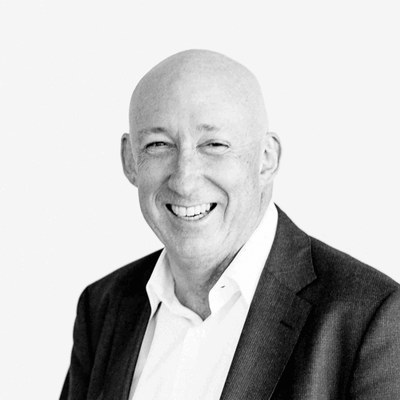
Bruce Coombes
Bruce Coombes is the founder and CEO of QuickFee (ASX: QFE). A chartered accountant since 1985, he was a partner at Macquarie Partners (now part of Deloitte) before introducing outsourcing to Australian accounting firms through Accountants Resourcing, a business later acquired by a major financial institution. He founded QuickFee in Australia and the United States and led it from start-up through to its 2019 ASX listing, and has spent his whole career working in, or building solutions for, the accounting and legal professions.
QuickFee
QuickFee is a fintech and B2B lender that provides payment and financing solutions to the clients of accounting and law firms. Firms get paid upfront while their clients take up to 12 months to repay, with the firm standing behind each loan. QuickFee also funds disbursements for personal injury and estate-related legal matters, operates across Australia and the United States, integrates with the Xero accounting platform, and is listed on the Australian Securities Exchange (ASX: QFE).


Full transcript
Read the transcript
Authenticity always wins. You know, you can fake it for a while, right? I've never chosen to do that. The reality is eventually they figure out if the emperor is wearing clothes or not.
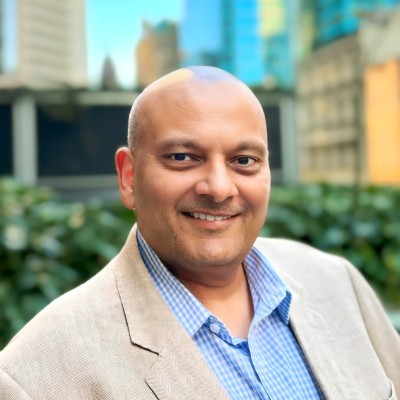
Running a business can feel lonely, especially when the decisions get heavy. Welcome to CEO Whisperer by Saurabh Jain. Practical insights from the boardroom and the meditation cushion. I'm Saurabh. I've done 10,000 hours in three major parts of my life. I spent 10,000 hours being a CEO, 10,000 hours being a board member, and 10,000 hours meditating. What we're going to do in each episode is really unpack a real business challenge that a CEO is facing and see if we can work through it together. Enjoy.
G'day, guys. Welcome to another episode of CEO Whisperer. Today I've got Bruce from QuickFee with me. Bruce, want to tell us a bit about yourself?
Great, good to be here. A little bit about me: a chartered accountant by trade. I ran an accounting firm for quite some time with a few partners, left that and started Australia's first outsourcing business servicing the accounting firm market, exited that successfully, and now sit here as the CEO of QuickFee.
Yeah. And tell us a bit about what QuickFee is.
So QuickFee is finance. We lend money to the clients of accounting firms and law firms so that they can pay their lawyer or accountant on time but enjoy 12 months to repay QuickFee. So it's a finance option, very similar to, say, paying your insurance by the month.
So it's almost like factoring what you have to pay, but factoring the other side. Is it reverse invoice factoring, kind of thing?
It's similar to invoice factoring, except that with invoice factoring, what normally happens is the person receiving the money pays the cost of factoring. In our case, the client pays the interest. So for an accounting or law firm, it's actually getting paid faster for free.
Yeah, sure. Okay, fair enough. Sounds good. So the way we run this podcast is we workshop a problem together. So what's top of mind? What's causing you grief right now?
I don't know if it's causing me grief, but it's certainly giving me something to think about. With our business, we operate in Australia and in the United States. We went to the US almost 10 years ago, and we built up three things there. We're a finance company doing exactly what we do here in Australia, which we still own. A payments business: for those who don't know, there are 18 billion paper cheques still flying around the United States.
Yep.
Truly amazing. So we built an online payments business for accounting firms. And the third thing we did was build an e-invoicing system for those businesses as well. We sold two of those, the invoicing and the payments business, kept the finance company, and we got $40 million Australian for that. We returned 7.5 cents per share to shareholders by way of capital return a while back. And my challenge right now is I've got a micro-cap company with a market cap of around the $30 million mark that's making profits and paying dividends, which is pretty unusual at that end of the market, I think.
That is very unusual.
So my challenge is, to some extent, differentiating ourselves from the rest of the micro-cap world, which is usually the place for a small biotech, maybe a small miner, a bunch of people setting up a software company or whatever, where they're raising capital and investing it in building out something for the future. Building out a growth story. In our case, we've got a profits and dividends story. So distinguishing us from the rest of the micro-caps is interesting.
That's a fascinating problem, because I don't know any other micro-cap that actually makes any money.
There are some, but yeah, we're certainly unusual. We're trading on, you know, 7 cents, and we trade on about a 12% yield. So it's not unattractive.
So you're worth about eight times your EBIT?
Yep. Well, a little bit less than that, because we're trading on a 12% yield on the basis of the dividends we're paying, and dividends are 100% of profit.
Right. So it's even less than that.
Exactly right. We published guidance last year and achieved exactly the midpoint of our guidance. We've already published guidance for financial '27, and we've indicated a desire and expectation to continue to pay the dividends. We think that's important to our shareholders, but it's about getting that story out and making sure people see it as sustainable.
Interesting. So I'll write this down. Basically, as a micro-cap, how do you differentiate yourself from the other micro-caps, because you guys are a profit and dividend producing entity. Is that right?
Correct.
Okay. Brilliant. So tell us the backstory. How did you start this business? Where did this all begin?
So, being an accountant by trade, one of the things I used to do when I was actually in practice was economic loss reports in various litigation matters. So I have a bit of understanding of the legal system as well as being an accountant by profession, and from that I understand quite well some of the challenges that accounting and law firms face. Accountants are the second slowest paid business in Australia, and the slowest paid are lawyers. So I said, well, why don't I build a business which helps to solve that problem for those two particular professions? And that's how QuickFee started, 15 years ago. Understanding the challenge meant it was a lot easier to go, okay, the way to solve this is to find a bag of money to sit, literally, as a bridge between the firm's right to be paid and the client's desire to pay over time. We did that, and here we are today. We originate 70-odd million dollars in loans in Australia, and probably 100 million across Australia and the United States.
And is that 70 million per year, or is 70 million your loan book?
No, $100 million a year across both countries would be the loans we originate, and the loan book would be around 55 to 60 million Australian dollars.
Oh, because loans are probably shorter term, I'm guessing. What is the typical loan length for you guys?
Typical loan length in Australia is about 11 months. In the US, probably closer to nine. I should point out we actually have a separate product for personal injury law firms. What that product does is help them cover the hard costs, like medical reports, economic loss reports and specialist medical consultations, when they're running a personal injury matter like a slip and fall, a motor vehicle accident or workers compensation. We provide essentially a line of credit the firm can use for that very specific purpose.
Yeah. Okay, fair enough. And how big was the company when you first started? Within a year, what was the size?
We started from a zero base, and I would say by the end of the first year we were probably originating maybe $5 million a year, a twentieth of what we're doing now. And there was some excitement when, probably about two and a half, three years in, we got to $1 million in one month.
That would have been a big month.
That was exciting. It was a big number, seven digits in it. So we've obviously moved on a fair way from there, and we're very, very fortunate to have an amazing team of experienced people who understand our customers. They've made this growth happen.
And when did you guys go public?
That was July 2019.
So about seven years ago now.
Yeah, absolutely. We did it the day after my birthday, in fact. So there you go.
There you go. And what made you guys go public?
A desire to get capital to go to the United States. I think every Australian businessman knows that the US is a big market, but it's not easy to penetrate. And we needed capital, particularly given we were on a journey to build out a payments and software solution.
And just so I can understand, is it mostly a financing product, or financing plus tech? What do you guys offer?
In the US today, we only have our finance product. We sold the technology and payments products back in September last year, almost a year ago now, to our major competitor. It was a great transaction, and that realised 40 million Australian for our shareholders.
And why did you sell just those two? Why not sell those plus the third, plus the Aussie business?
The acquirer is a software company, so they didn't want a capital-heavy finance company as part of it.
Oh, okay. Fair enough. So seven years ago you went public, got a bunch of cash, went to the US and tried to grow that market. How was that experience for you?
Well, you might recall there was a small matter of COVID that came along about a year after we listed, in fact. So that was a very challenging time, for a couple of reasons. Number one, as a financier, demand for our product actually went down, because I think we all know Western governments were printing an enormous amount of money in Australia, the US and the UK. That meant there was literally money everywhere and less demand for finance. So we had a tough couple of years. We tried a few other things and raised some capital to test a product that had a different sort of lending profile. But ultimately we returned to what we did know, which was the accountants and lawyers. And when we finally got to the point where we were out of COVID, able to travel again, back and focused, we had something that our major competitor decided they wanted to buy.
And what made you decide to sell it? Why not persist? Why not grow it yourself?
The attraction of a large amount of money from a KKR-backed competitor is pretty compelling. Firstly, because it's a good transaction creating value for shareholders. Secondly, they had a lot more money than we did, from a very deep-pocketed private equity investor. I'm not sure you want to be playing first grade when you've only got second grade money.
Sure. Fair enough. And what was the net result of the money you invested versus the money you got out at the end of the transaction?
The money we put into a range of software developments and building market share was enough to shelter the entire gain from tax. So we basically walked out of this with $40 million tax-free. Compared to money in and money out, they're probably not dissimilar, in terms of the gain to our shareholders: 7.5 cents a share back to them, tax-free.
Yeah. Okay, fair enough. So in hindsight, was it the right decision to go to the US, do you think?
Without a doubt, it was the right call. I think you can't sit here and blame COVID for everything that might have happened to any business whatsoever.
It might have been a factor, right?
It was definitely a factor. It changed the way the business was run. And in my personal case, Australia of course had a travel ban, which made it impossible to visit the place where we'd actually invested most of our money.
And you probably had staff there that you weren't physically seeing or being around, all that kind of stuff, I imagine.
That's exactly right. We ended up putting in some US-based management, in part because we couldn't travel. None of us could travel from Australia. And that put a different slant on things, and perhaps a less founder-driven approach to the business.
Yeah. Look, often when you go to another region, you want the CEO, the founder, the best person to be there to run it, because they get your DNA. They're not there to exploit the foreign company. They're there to work properly.
That's exactly right. And also, they're a long way away. You haven't even physically met some of these people. There's a lot of literature, a lot of data points, around what you would call founder sales. They're not the be-all and end-all, but they're extraordinarily important at the get-go.
Yeah.
I think any listener can really look that stuff up. There are some very good training programs to teach founders how to stop being the sales leader eventually. But in the early days, I think it's very important.
And so what advice would you give to someone here with a SaaS or fintech business who's attracted by the shiny lights of the States?
It's a big market, and you can be number 20 in your sector and still do very, very well. But I would put it at 30% different to doing business in Australia, and the 30% is extraordinarily important. It looks like English. There are a few more Z's and a few less U's in some of the words, so it looks the same, but it is a very different market. I've worked in Asia, and doing business in Asia is of course different to doing business in Australia. Don't underestimate the differences. I think that's one key point.
Yep. And so how does one mitigate against that? Because normally it would be, well, let me go get local staff. But I would have thought that's probably the worst thing to do.
Yeah, you've got to be careful. There are a lot of people who talk themselves up.
I'm pretty sure there's an interview school there that people go to.
I think they've all been to the same one. But you do find some amazing diamonds. We were very fortunate. We met a truly incredible gentleman very early in our journey, and honestly, if he'd been sitting here in Lane Cove, you wouldn't have been surprised. Very Aussie. They do exist. If you can find some experts who truly understand it, I think that's extraordinarily helpful. Frankly, there are other people out there like me who've been there a decade who can give you a bit of advice on how that works. Speak widely. Maybe find an international accounting firm in Australia that has connections in the US who can truly explain it. There's more to it than meets the eye. Go in with your eyes wide open. You are not doing business in Australia, that's for sure.
Yeah. Okay. And how long ago did you exit those two businesses?
September last year.
Oh wow. So it's been less than 12 months now.
Yep.
And so what's the business looking like here in Australia now, and that smaller part in the US? What do you focus on now?
Our business in Australia in financial '25 set a record for the highest level of originations ever, and all credit to the team for doing that while I was quite distracted. And then in financial '26 they beat their record again. So in terms of our Australian business, I'm very proud of our team and what they've done here.
You've done your annual results this year, have you? Your final figures?
Yeah, Thursday last week. A profit, well, EBITDA, of $4 million, which was fantastic. A further dividend of half a cent, for a total of 1 cent for the year. Revenue in Australia at a new record, the loan book in Australia at the highest it's ever been, and originations the highest.
What was your revenue?
For Australia on its own, or across both? Across both, about $17 million.
Okay. So like I said, it's very unusual for a company of that size to be listed as a micro-cap. Why do you give back dividends? Why not keep that to reinvest? That's the traditional micro-cap thinking.
It is. Well, we run a business which doesn't have any high level of capex at all. It doesn't have a high level of customer acquisition cost. It isn't a startup trying to do a land grab like most micro-caps would be. As a result, we don't need the money. So let the shareholders decide what they want to do with their money, is our message there. If we were five years earlier, when we were building our software in the US, of course we wouldn't be paying dividends. Today, we're spinning off cash. Let the shareholders enjoy it.
Okay. And what would your revenue have been a year ago, if it's 17 million this year?
The like-for-like revenue was probably similar, but the total revenue was significantly more.
Because one school of thought, and I'd love to get your view, would be: no, don't pay out dividends. You should actually use that money to reinvest and accelerate growth, grow 10, 20, 30%, whatever you can. Burn the money growing. How come you guys don't do that?
Our customer acquisition cost is nothing like that. We are not there in a digital land grab. We're not doing consumer credit cards, for example, where you spend $300 to acquire a customer, and the more lots of $300 you spend, the more customers you'll get. It's a much more personal, trust-based style of selling. We're not trying to capture 100,000 new users. We're not running AT&T or Telstra. We're running a business focused on quality accounting and law firms.
And what percentage of those would you have in the country?
We would have around 60 to 65% of the top 100 accounting firms, in one or more states, using our solution.
That makes a lot of sense. You've kind of exhausted your TAM. The other 35 are going to be hard to get. They may never want a product like yours anyway.
Correct.
Are competitors doing similar things?
We've got a company similar to ours, another competitor, which is much more focused on a technology-based way to solve the problem. In fact, what they've built is similar to what we built in the US and sold on. So they take a technology-driven approach to solving the problem, and we take a finance-driven approach. But between us and them, that's pretty much the market. And that's why our focus right now is very much on law, where we have a much smaller footprint.
Okay, fair enough. And what kind of growth are you expecting? What's your guidance for next year?
Our guidance for next year is 4.5 to 5.5 million in EBITDA.
And do you guide revenue?
No.
Okay, fair enough. So you've got 10, 15%-ish growth, and you just see how you go. That makes sense. You've kind of exhausted your market, there's not a lot to grow, so you might as well make it a heavy cash generating business, and the growth is now in a slightly different segment.
I wouldn't say exhausted. I'd say we've achieved a good footprint in accounting, and we have an enormous upside on the legal side of what we do. That includes our personal injury disbursement funding product, as well as our commercial product for commercial law firms. There is upside in accounting too. We're very fortunate to have built an integration with the Xero accounting platform. We have a very deep integration there, and that continues to see more customers join us.
So I see the problem now with micro-caps. As a broker I once used very elegantly said, what do crypto investors, biotech investors and micro-cap investors have in common? They're all addicted gamblers. It can often be a very binary outcome. So you invest in a $30 million company, you've got a one in 10 chance of success, if that, and you're hoping it's going to go to 200, 300, 400 million dollars, and across a portfolio you kind of make your money back.
Yeah.
But you're in that segment without that upside. You've got other upside, which is very safe and very dividend driven.
Right. So we're operating a company that looks like a utility-style company but is in fact in a micro-cap world. So, like we said right at the start, that's part of the quandary here.
Yeah. Wow. How does one even think about that?
And also, most retirees and self-managed super fund investors can tell you the yield on CBA. They've got a bit of Telstra, they might have a bit of BHP, a little bit of divvies out of all of those, spin it around a bit, all the rest of it. They're not looking at our end of the market, and they would see it as high risk. Whereas in fact the yield is strong and the credit risk is extraordinarily low. Getting that message out is part of the challenge.
Yeah. And how effective has that been, getting the message out to retail? I imagine it's mostly retail investors.
Our retail base is probably 35 to 40%. We're very fortunate to have some institutional support, plus myself and another major shareholder: our chairman, Dale Smorgon, is a major shareholder. We did our results on Thursday last week, did an investor presentation in the usual way, and we did see a bit of movement in the share price. When you're trading where we are, a cent is a decent movement. So I think we've done okay in terms of getting that message out there, at least in the short term. But you've got to keep saying it. People move on. Their attention span, like you say, moves on to the next micro-cap.
Yeah. And my experience in the market has been that when you get instos in, and they want to keep buying and build a position, that's actually what drives up the share price. Retail investors are very finicky.
Yes.
They'll just add to volatility, maybe not to long-term growth.
Yeah.
The problem is maybe you just don't fit the algorithm. The algorithm for micro-caps is huge upside: don't need dividends, don't need revenue. And I reckon for the investors, whoever the key investors are, whatever their thesis is, it often doesn't include organisations like yours.
Oh, I don't disagree at all. And I think some of our instos have been with us for some time, and they were there when it was the high growth story, building out the software in the United States and all of this. So we achieved what we set out to do. The question then becomes, do they still want to be part of your business? And in a micro-cap, liquidity is limited.
So you've got two ways to solve this, in my mind. One way is: how do you educate them? How do you somehow build a brand around this, make them understand, and then find the right investors who are after dividends, not necessarily growth? The downside would be that as soon as you get a bit of share price appreciation, the dividend yield drops, and you'll probably plateau at some point.
Correct. There has to be some natural selling on it, absent significant growth. We do have a group of investors matching that profile who are readily buying on any dip, bulking up, and literally happy to be there receiving dividends. But that's not every micro-cap investor, let's face it.
That is the rare minority. Now, the problem with that strategy, as I think about it, is that you almost have to change the market, re-educate people, play a game that doesn't exist right now. And I wonder if there's an alternative strategy where you just play the game. The game is that micro-caps should be high growth, not cash generating, and that's how you drive up the share price. Is there a world where that would make sense for a business like yours?
It's interesting, right? If you're running a SaaS business, you might do a 90% discount run for six months, get all these customers locked on, do the freemium-style model with low features, get them hooked a bit, then move them up to a higher payment per month subscription model. All of that's fine, and you can do that through digital acquisition. In our case, you're running a finance company. It's only a loan when you get it back. So you're very cautious, particularly in the current economic situation, and particularly here in Australia, where the risk of bad debts has gone up. The papers are filled with it. For every significant property developer that goes belly up, there's an enormous number of tradespeople, and they're the sort of borrowers we and other small business lenders have. Now, in our case, we've got the accountant or the lawyer standing behind every loan.
So the accountant or lawyer is on the hook if it goes bad.
That's exactly right. That is the unique feature.
Very, very safe debt, I would have assumed.
Extraordinarily safe. We've got significant logos standing behind our entire loan book, and in addition to that, all of our fee funding in Australia is actually insured. So the chance of QuickFee actually losing money is very low. Therefore, we don't want to change that profile of being an extraordinarily low-risk lender.
Because the risk you have is that as you grow into more areas, you've lowered that bar.
Exactly. And then you've gone from a low-risk, profit-making money lender to one that's taking a bit more risk, not necessarily for any more profit.
Yeah. Because one theory could be... what percentage of the legal fraternity would you have signed up?
Small. That's where the big upside is. Look, if we said we had 10% of the legal fraternity, we'd be overstating it. So that's where we've got some incredible levels of opportunity, and that's where my team are focused.
But is there a model where, instead of generating $4 or $5 million of EBIT, you generate $2 or $3 million and overinvest in that segment to grow faster? Or does it not work that way?
Look, if you said overinvest in that segment, you're probably talking $250,000 to $500,000. So you're not going to make a material difference to EBITDA by doing that. And in fact, we've got campaigns running right now to address that.
Okay. So there isn't a lot of money you could usefully spend for growth, then?
You don't need to spend millions. You can spend 200,000 or you can spend a million, and you'll get pretty much the same outcome.
So what is your historical growth rate? I know last year was kind of like-for-like, and you've had lots of distractions.
Yeah.
Historically, what has it been?
15% a year.
15%. And is that about as high as you can get with this model?
There's a desire to ensure the loan book continues to be very high quality, so we do reject a bit.
And do you reject on the firm side or the customer side?
The legal and accounting firm side. We'll decide we're not necessarily happy with the profile of a particular practice and not take them on. The chance of rejection of a client is very low. Having said that, in the current climate, small accounting firms are just another SME. They're the Chinese restaurant you walk past that seems to have no customers. All of a sudden, one in four people have stopped buying takeaway coffee in Australia.
Because it's like eight bucks a coffee these days.
That's exactly right. And that's money they've got to spend on something else. Another data point is the reduction in school children participating in sport outside school. So when you look at those examples, an accounting firm or law firm is also an SME. You don't want to go too low in terms of the firms we accept, because they're just as likely to feel the pressures as the shops in the mall in Lane Cove.
Because what I assumed, perhaps incorrectly, is that accounting firms and law firms would be very safe. Kind of recurring revenue, very low cost base.
Accounting firms have very high recurring revenue. About 90% of an accounting firm's revenue can be regarded as recurring. Law firms can be more transactional. The risk you run is that the small ones make a mistake, something goes wrong. Once you get above three partners, and they stick to accounting or law, the default rate is extraordinarily low. So that's where we focus.
Okay, fair enough. So you've got a good, steady business, you get your 15% growth, you grow your EBITDA, and you give a whole bunch of dividends out. But your share price is just in the wrong segment for that. And the share price has a kind of terminal value, right? People after dividends want more than 10%, give or take.
At the end of the day, if you call a big four bank deposit virtually the risk-free rate, and below 250 grand it's government guaranteed, you've got to beat that. And you've got to beat it by a bit to justify the risk. Unless, of course, the investor accepts that they're getting their 12% QuickFee dividend and the business is growing at 15% a year as well, in which case you go...
It all compounds together. The share price goes up 15%, so I've got a dividend plus, hopefully, some capital growth.
The midpoint of our EBITDA guidance for next year is 25% up on last year. So if you're getting a dividend now, and the dividend is going to go up, you can start to value it on forecast dividends. And you've got some share price appreciation, even if it's just at the NTA level. That helps to underwrite it a little bit.
Yeah. I'm thinking back to when you listed seven years ago, when you were building a SaaS business. That made perfect sense. Does it make sense for a company like yours to be listed now?
It's a great question, and we get asked it often: should QuickFee be listed? Number one, it already is. You've got a sunk cost, so accept that. Number two, we're not spending a lot of money on investor relations and trying to go to every HotCopper retail investor conference or whatever. We believe that if you pay dividends, the share price should start to look after itself over time. You'd probably still want to be audited, and our senior lenders would insist on it in any event, so that cost is there anyway.
Some of your insurances would be less. Insurance cost as a listed company is much higher than private, overall. There's probably another 100 grand there in insurances, or something.
But you're still going to want your cyber cover. We provide an online payment gateway in Australia, so you need cyber insurance for that. You've got to accept that some of this stuff is going to be there anyway. Say it's 200 grand a year you'd save by delisting. There are a lot of things you've got to do to get there, so I'm not sure we want to do that right now either.
It's complex to delist. The only reason I ask that question, not so much from a cost perspective, is: would the private markets value you better than the public markets? That might be the only thing. I don't really know the answer.
And somebody could see synergies in what we do. You've got a footprint with 65% of the top 100 accounting firm logos, in one or more states. Accountants as a channel are extremely well trusted by their clients. Look at what Xero's done. Xero pretty much didn't exist in Australia 15 years ago. They're now the dominant SME platform, and they did that through the accountants vertical. Accountants are very powerful.
Okay, that makes sense. So maybe one day that's the big capital return, right?
Yep. One day, when someone sees a great synergy.
Sometime between now and the end of life. They'll see a great synergy, and that's when everyone gets their capital back plus some kind of margin.
Exactly. And a couple of years of sustainable profit helps. We had a great year last year. If we can do the same again in financial '27, you certainly get consistency there, which helps to increase valuation as well, particularly in a private market situation where PE comes in and sees value.
I wonder if that's the investor pitch: sure, you get great dividends, you get your 10 to 12% yield that will go up by 10 to 15% every year, but perhaps the public market is not the natural owner of this entity. Perhaps there are five or six different segments, and at some point, when it makes sense for shareholders, there might be an exit. That would be the upside, if that made sense.
I think you make a good point. One of the things I love about being in a finance company is the sheer scalability. We've got 16 people.
That's it?
That's it. We don't have a crazy cost base with hundreds of people. And if you win a $5 million increase in lending, you don't have to go and employ five people to do it. It's not like you're building houses and need more tradespeople. You just put some more zeros in your ABA file, right? That's a real joy. So then you take what we've got, and say there was a synergistic buyer out there: they add that on, they enjoy some synergy, and there's no real change in their cost base either.
So there's upside. Is that part of your investor presentation today, who the natural owner of a company like yours is?
I think we fit very well alongside similar low-risk SME lending and other financing products on either side of the segment. Or others who are already serving the accounting and legal professions, where this is an add-on to their existing customer base and our customers are an add-on to theirs. Of course, that's out there.
But if I looked at your investor pitch from last week, would that have been part of the deck?
No, that wasn't part of it.
Should it be? Is that one way to differentiate yourselves?
We have a little bit of inorganic opportunity too. There are a couple of small bolt-ons that we could do pretty much off our existing capital. That was part of the investor presentation last week, and I think we should continue to be open to those sorts of ideas.
Yeah. I wonder if there's value in putting it on the slides, because you want to cater for the degen gang like me, to go: okay, that's cool, they make money. That's cool, they grow 15%. That's great, I get a bit of a dividend. But maybe there's some 30 or 40% upside if someone buys this company.
Yep.
Maybe it's a $30 million market cap and maybe they exit at 50, 60, 70. I don't know.
Great.
And they slowly grow in the meantime, and in the meantime it's fairly safe. It's a micro-cap, so it's fairly illiquid, which kind of sucks, but maybe that's still okay.
Yeah. And also, if somebody was buying and merging it into something that's already serving the same sort of verticals, or an existing finance business...
Maybe some synergies.
Of course, some funding synergies. The more money you borrow, the cheaper it gets. So there is some upside in growing inorganically, for QuickFee or for an acquirer.
Because I remember back when I was CEO of a public company, maybe 10 years ago now, we started off with a market cap of 20 million. In hindsight, it was my first CEO job, so this wasn't intelligent design, this was accident. But part of my pitch was always the natural acquirer.
Yes.
And that's what drove the share price from 20 to 40 to 60 to 80 to 100. People assumed that at some point... I mean, we still grew. Well, we lost money, it was a SaaS business, but we still grew, we dominated our market, great product. But all the micro-cap guys at the time always thought, I wonder who's actually going to buy this company one day.
And I think if you're a young founder sitting in this room, both of us would give the same advice there. If you're starting a business, work out who's going to buy it when you want to exit. Otherwise, you haven't really created any value.
Yeah. But the difference, and I did this by mistake, is that it was actually part of my investor presentation at the time.
Right. Okay. Interesting.
It was actually part of my investor presentation. Not that we're selling, but this is the market, and this is who we see as the natural owners. We don't think we're the natural owners of this company. We're great custodians, but these are the four or five players in different segments that we think of as the natural owners.
It's an interesting approach, and there would be a good fit for QuickFee with other financiers in particular.
So I reckon it would be a fantastic experiment to run. Tell me if you do this, and I'll check out the share price, to see whether it actually scratches an itch for some of those instos.
That sounds good.
It does sound like there's some disproportionate upside. What do you reckon? Is there any other idea, or is that the only one I've come up with?
Well, I think one of the great things is that if we just keep doing what we're doing, we're still going to keep returning money to our shareholders. At the end of the day, they invested for a return, and I'm here to get them a return.
Yeah. Perfect. Awesome. Anything else you wanted to add?
I'm happy with that, mate. I think it's good. The landscape in Australia for young entrepreneurs is probably a little jaded at the moment, a bit of carry-on post budget, but there is always a market to fill with a great new idea, well executed.
Oh, always. Perfect. So one question I always ask to finish up the podcast: what's something you've always known to be true that later on you found out actually wasn't?
Oh, in my early 20s, I thought most people could be trusted. I think you learn over time that there are dishonest people on this planet. One thing you learn, more so outside Australia, and you don't know this until you've worked outside Australia and done business in other countries, is that doing business with Australians is pretty good. With many, many Australians, their word is their bond and their handshake is binding. You don't see that everywhere in the world. One thing I would say, as almost the opposite to your question, is that authenticity always wins. You can fake it for a while, right? I've never chosen to do that, but you meet plenty who do. The reality is, eventually they figure out if the emperor is wearing clothes or not.
Yep. Totally. Perfect. Awesome. Thank you very much. Thanks for your time.
Great. Thanks.
Thanks for listening. I hope you enjoyed it. If you do want to be a guest, make sure you hit me up, do follow me on socials, and make sure you check out future episodes. Thanks, guys.